Two First Nations are concerned with a newly announced month-long closure of one of B.C.’s most popular provincial parks, as they say it is only a fraction of the dates they had asked for.
The provincial government announced Tuesday that Pipi7iyekw/Joffre Lakes Provincial Park will be closed to recreational visitors between Sept. 2 and Oct. 3.
But that’s not as long as the Lil’wat Nation and N’Quatqua First Nation, on whose unceded territories the park lies, had requested.
Dean Nelson, political chief of Lil’wat Nation, said it’s “disappointing and disheartening” that the province did not honour the nations’ request.
“This is not reconciliation,” he said. “This is a continuation of colonial decision-making, you know, disregarding our needs and values on the land.”
Last year, Joffre Lakes Park was closed for 60 days, according to the province, and in 2025, B.C. Parks has agreed to close the park for a total of 68 days.
“The [nations] requested 103 days of closures, beyond what we felt able to accommodate while supporting continued public use,” the Environment Ministry said in an emailed statement.
Joffre Lakes, before this crap , had 180,000 annual visitors in 2021
This is kind of what I deduced would happen….these First Nations feel emboldened and are acting like vampires sucking us dry and running roughshod over the rest of us ,moreso after the COWICHAN case. They feel they have the duty / right/ obligation to throw their weight around, acting like “God”. and bullying the rest of us after our very own elected representatives sold us out.
In the Joffre Lakes issue..they aren’t happy with exclusive use of the area for 60 days……they actually wanted over 100 + days of exclusive use.They wanted August 23 to Oct.22. Huh ?
These obnoxious and UNgrateful First Nations have a population in BC of approx. 290,000 or 6% of the 5,700,000 TOTAL BC citizens.
I really don’t think the other 94% …or 5,400,000 of the rest of BC… ..is going to tolerate this much longer and if the First Nations continue with these ill-advised threats and cowardly bullying it won’t end well….. as HISTORY has shown,universally, various levels of tolerance have limits and resultant action are proportional to given threats and bullying.
The use of the new term ” Indian Fatigue” is growing.
The new tunnel replacing the George Massey Tunnel on Highway 99 will be named in collaboration with First Nations communities. The project, officially known as the Fraser River Tunnel Project, is replacing the aging George Massey Tunnel with an eight-lane immersed tube tunnel. The province is working with Indigenous groups, local governments, and stakeholders to find a suitable name that reflects the project’s significance and the region’s history.
Details:
Collaboration:The Ministry of Transportation & Transit is engaging with First Nations, a technical advisory committee, and the public to determine the best way to assess the project’s environmental impact and find a suitable name.
Public Engagement:A public comment period will be announced soon to gather input on the project.
Meaningful Name:The goal is to find a name that is significant to the province or the specific area where the tunnel is located, possibly referencing someone who has made contributions to British Columbia.
History:The original George Massey Tunnel was named in 1967, following the death of George Massey, who was a strong advocate for the tunnel project.
Project Details:The new tunnel will be an eight-lane immersed tube tunnel and is part of the larger Highway 99 Tunnel Program. It will include dedicated rapid-bus lanes and separated bicycle and pedestrian access, and will be toll-free,
Here we go again..another story re: “Reconciliation” industry buried deep in the more obscure media .
In another e-mail I provided evidence the First Nations will give the Pattullo Bridge replacement an Indigenous Name.
Again..in this case, can anyone cite historical examples of First Nations Tunnel construction ?
WTF?
In this case…the Massey Tunnel replacement …will again have First Nations “consulted” …which likely translates into the new tunnel also being assigned an Indigenous Name… which 99% of the population ( plus tourists ) will have no clue how to spell nor pronounce or even find on a map.
All this does is increasingly embolden and encourage these First Nations Bands to make more and more demands..till what???.
Yet another sign of being conquered via Cultural Marxism tactics via wiping out First World History.
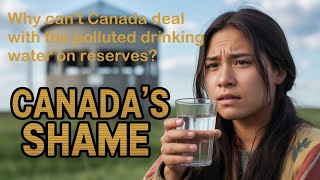
The real reasons Native Reserves can’t get clean drinking water in CANADA
Unless one is familiar with the First Nations governance system, and “RESERVES” , it ends up an emotional dysfunctional issue.
With few exceptions ( See OSOYOOS BAND success ) they have a Chief and possibly a Band Council as well.
Their Reserves’ ” land ” are held in trust by the Federal Gov’t…. aka it can NOT be sold.
No band member can own land…the Reserve is shared as a collective. They get homes provided , but do not own them.
The Chief (and Council ) rule over the entire Band with an iron fist. They are THE Law….. case closed.
Cory Morgan video ( below ) is one of many he’s done re: the Reserves.
We see in the news constant stories about primitive Reservations with LACK of clean drinking water.
QUESTION: Who is to blame ?
ANSWER = NOT US !
Either the money is embezzled ….or the facilities are built and poorly maintained
In another Cory Morgan video ( forthcoming ) he says that Housing is provided..then later some are arsoned by the Band members as a means of getting a new (clean) house.
The Gov’t continually cuts ( blank ) cheques to the Band = The Chief .
Steven Harper had introduced a Law that proper and transparent accounting of the Band was required (which Trudeau later killed).
It is quite clear the Federal money is effectively mismanaged if not outright stolen.
Personally, I don’t/can’t feel sorry for the given Band.
My sympathies go to the hard -working taxpayer whose $$$ MILLION in Tax $$$ go to these Band’s ad- nauseum.
These Bands governance models are perfect examples of the ” COMMUNIST MODEL”.
“You’ll Own Nothing and be Happy”.
Property is not owned…it’s part of the great collective.
Democracy doesn’t exist..the rules and law are either from their cultures or simply at whims of the Chief.
The Chiefs’ (control) role to Band Members = much the same as Rabbi’s to Jews.
Final Comments:
Are we NON First Nations about to come under the same governance model……moreso as our Gov’ts are continually surrendering OUR lands to First Nations and thus we are becoming increasingly beholden to a given ” Chief “?
Reducto ad Absurdum.
……there are approx 200 First Nations Bands in BC...hence will these 200 Chiefs ultimately become THE rulers over ALL BC collectively ?
Roland
The real reasons Native Reserves can’t get clean drinking water in CANADA
British Columbia continues to rename streets, provincial parks and even entire cities in Indigenous languages that the United Nations Educational, Scientific and Cultural Organization classifies as “critically endangered.”
One prominent example came in 2018, when the province renamed Roderick Haig-Brown Provincial Park—home to one of North America’s largest sockeye salmon runs—to Tsútswecw Provincial Park.
To receive more up-to-date news from British Columbia to the rest of Canada, consider becoming a subscriber.
The new name, pronounced “choo-chwek,” is a Secwepemc term meaning “many rivers.”
Located between Adams Lake and Shuswap Lake, Roderick Haig-Brown Provincial Park was established in 1977 to conserve and protect the spawning beds used by various species of salmon.
The park’s former namesake, Haig-Brown, was a conservationist who wrote several books educating the public about the importance of protecting salmon, watersheds and sustainability.
Despite his efforts — and both historical and personal significance to the park — the B.C. government went ahead with the name-change as part of its “reconciliation efforts with Indigenous peoples.”
More recently, the City of Vancouver made headlines this year when it renamed Trutch Street to šxʷməθkʷəy̓əmasəm following a unanimous 2021 city council vote in favour of the name change.
The new street name translates from the hən̓q̓əmin̓əm language to “Musqueamview,” referring to a vantage point or perspective overlooking traditional Musqueam territory.
According to the most recent comprehensive report on British Columbia First Nations languages, there are just over 100 fluent speakers of the language — and far fewer are capable of reading or writing in it.
Delivery agents, banks, emergency responders, city systems, and even agencies like Canada Post and ICBC have said they’ve had trouble displaying and processing the new name.
On Vancouver Island, meanwhile, the city of Powell River, which has a population of about 15,000, faces a possible name change in 2026 following calls from the Tla’amin Nation to drop the colonial name.
The local visitor information centre has already rebranded as the “Qathet Visitor Centre,” adopting the Tla’amin word for “working together.”
A newly installed poster at the centre instructs visitors to “identify your intentions and willingness to abide by Tla’amin protocol,” though staff have admitted they cannot explain what those protocols entail.
The Tla’amin Nation estimates only 68 people speak its language fluently.
British Columbia is home to roughly 30 Indigenous languages, all of which UNESCO categorizes as “critically endangered.”
That status—Grade 1 on the organization’s vitality scale—generally means a language is spoken almost exclusively by great-grandparents or older generations, with little intergenerational transmission.
But that hasn’t stopped the B.C. government from utilizing these languages—rarely spoken, even amongst the Aboriginal populations that created them—to rename everything from streets to community centres to entire communities.


 Tiktok failed to load.