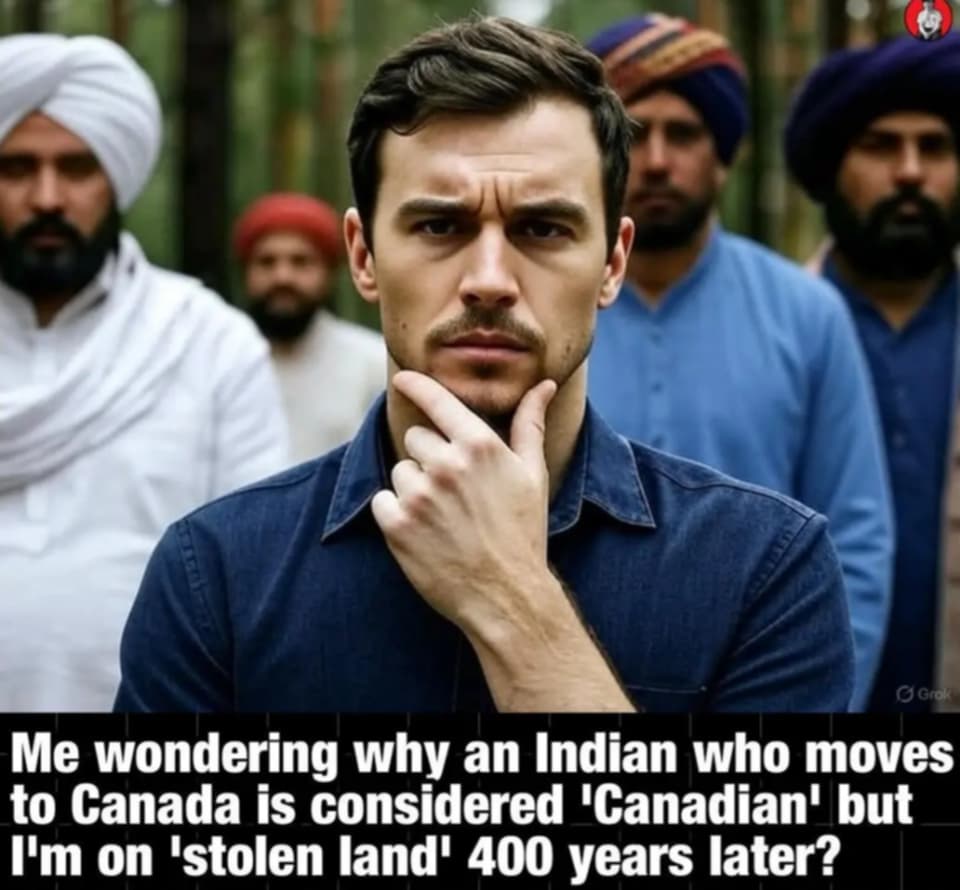
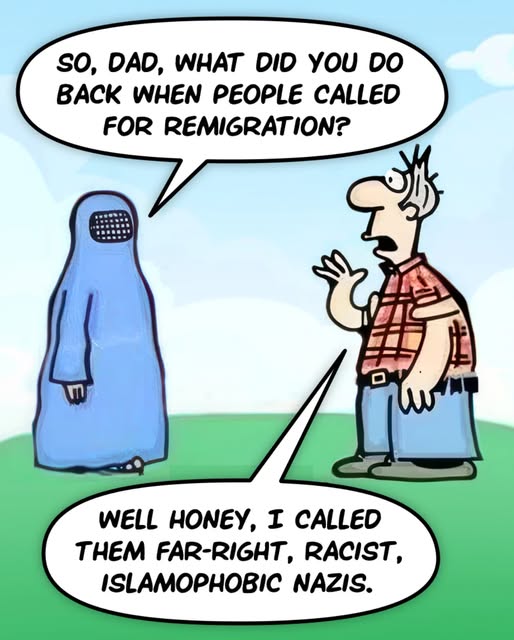
Joyless Woke Hallowe’en Instructions to Children in Lous Riel District School Board, Winnipeg
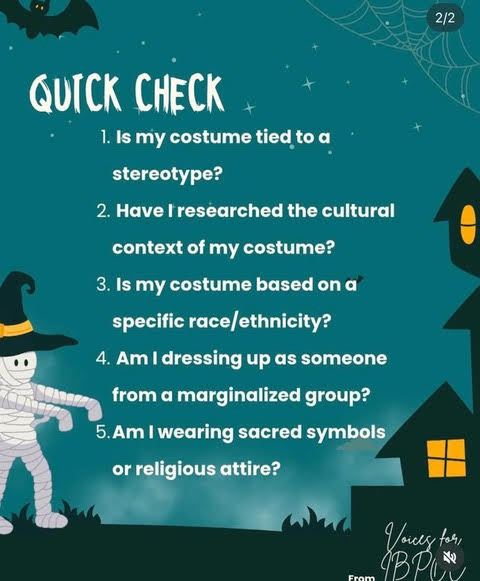
Joyless Woke Hallowe’en Instructions to Children in Lous Riel District School Board, Winnipeg
| White Guilt, Made Up Native “History”, Out-of-Control Courts: Could this be the end of private land ownership in Canada? |
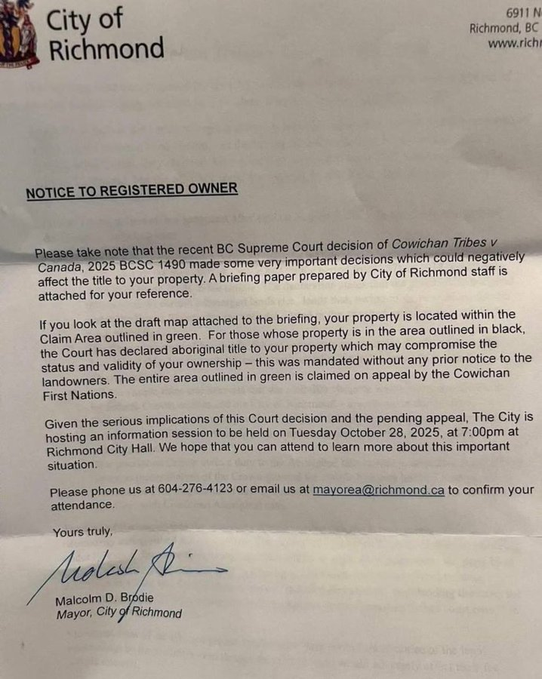
All eyes are on Richmond, B.C., a Vancouver suburb now at the centre of a growing storm over private land rights in Canada. A recent Supreme Court ruling granted Aboriginal title to the Cowichan Tribes on privately owned land. Days later, homeowners opened their mail to discover something shocking — they might not fully own their homes after all! Amid a nationwide push for “reconciliation,” many Canadians are now asking the same question: Are our homes truly safe? This decision has reignited the debate over land acknowledgements —the scripted rituals repeated in schools, workplaces, and government meetings. If these acknowledgements declare that Canada sits on “stolen land,” are they quietly laying the groundwork for more claims like the one in Richmond? That’s why OneBC Leader Dallas Brodie introduced the Land Acknowledgement Prohibition Act last week. It’s a bill she calls a stand against “the anthem of a suicidal nation.” I sat down with Brodie and her Chief of Staff Tim Theilmann, a former Aboriginal law attorney, to talk about why this bill mattered. I also spoke with B.C. Conservative MLA David Williams to discuss why most of his party joined the NDP in killing this bill. Click here to watch my report. Land acknowledgements have gone from symbolic to absurd ritualistic mantras that humiliate ordinary Canadians and deny our country’s sovereignty. Unfortunately, Brodie’s bill never got a fair hearing, thanks to the NDP, and shockingly, most of the B.C. Conservatives. (If the so-called Conservatives won’t defend land rights, what exactly are they conserving?) This situation is directly connected to B.C.’s adoption of the United Nations Declaration on the Rights of Indigenous Peoples (UNDRIP) — now law in the province. Brodie’s bill was an opportunity to push back against compelled speech and to stand up for B.C.’s sovereignty. Instead, the political class chose cowardice and wouldn’t even allow the bill to pass first reading. If you want to help fight back against this UN-fuelled overreach and support our independent reporting that defends Canada’s sovereignty, visit StopUNDRIP.com. Yours truly, Drea Humphrey P.S. B.C.’s UN-inspired Declaration on the Rights of Indigenous Peoples Act creates a two-tiered society where an elite group’s influence and legal authority take precedence over the interests of the vast majority of Canadians. That’s not reconciliation. It’s discrimination. Help us stop it by visiting StopUNDRIP.com and sending a one-click email to B.C. Premier David Eby demanding this dangerous law be repealed. |
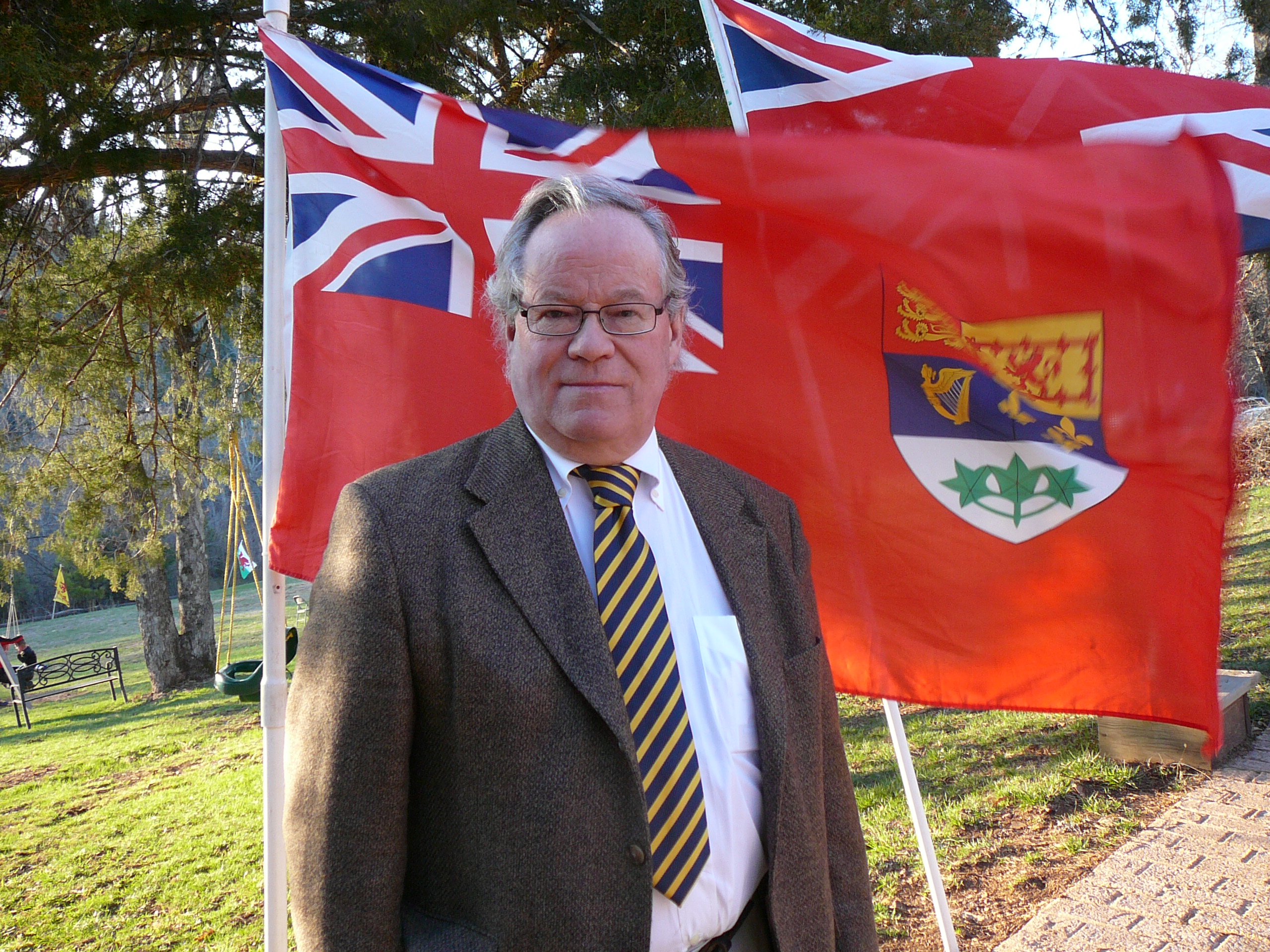
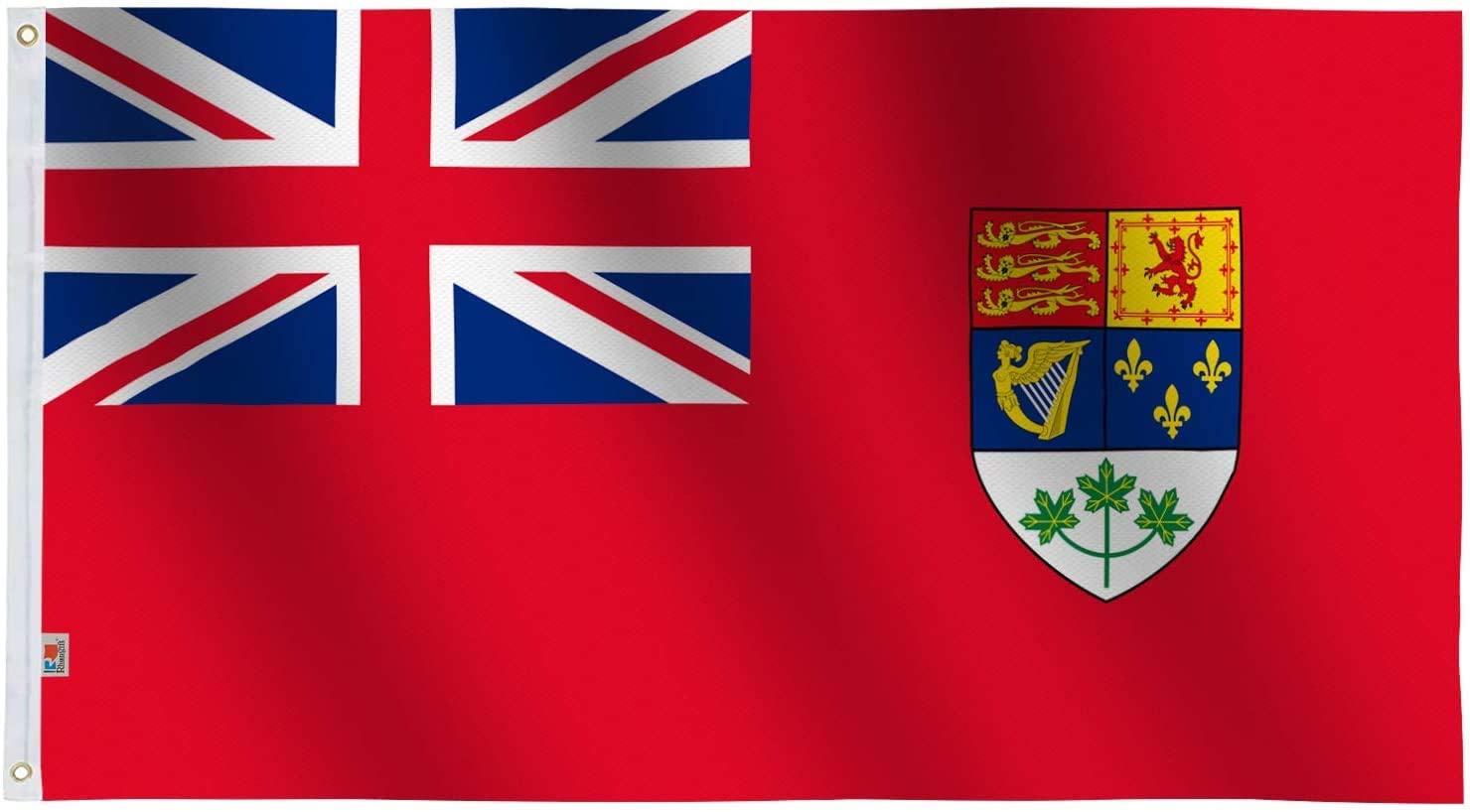
The Red Ensign — The Flag of the REAL CANADA. https://www.facebook.com/share/r/1FnZeiEao7/
| Forwarded this email? Subscribe here for more Sovereignty at Stake: Why Parliament Must Review Treaties Before They’re Signed Oct 23 READ IN APP Dear Family, As you know, for years I have been closely following the activities of the World Health Organization and Canada’s involvement with the Global Pandemic Treaty. Thanks for reading! Subscribe for free to receive new posts and support my work.Subscribed This treaty, once ratified, will directly influence the public health decisions and responses of all signatory countries. I have raised red flags about its implications on Canada’s health sovereignty and the federal government’s willingness to enter a legally binding treaty of this weight without any input from Parliament. In May 2025, after many rounds of negotiations, the World Health Assembly adopted the main text of the treaty. However, it has not yet been signed or ratified – meaning Canada has not yet agreed to be legally bound by the treaty. We are now in a critical window of opportunity to ask tough questions and debate the treaty before it is signed by the Minister of Foreign Affairs and binds our nation. What You Can Do We need your help to get this treaty before Parliament so that your elected Member of Parliament can ask questions and hold the government accountable on Canada’s behalf. Here’s what you can do: Sign this petition that calls on the Prime Minister to allow Parliament the opportunity to review and debate the pandemic treaty before it is signed and ratified. Write to your Member of Parliament to ask that they publicly support that same call for parliamentary review. Share this post and the petition to drum up the momentum and pressure in Ottawa. Why This Matters During the COVID-19 pandemic, we witnessed the WHO’s failures at a global level;. and, nationally, under the expansive claim of the “health and safety of Canadians,” basic civil liberties were suspended broadly and at length. Canadians are rightly concerned that a legally binding agreement could cede too much authority to an unelected and unreliable international organization the next time a pandemic is declared. Meanwhile, five years after COVID-19, the government has yet to show it is serious about improving its pandemic response, with no public inquiry into its actions and decisions during the crisis. The Background Story of the Global Pandemic Treaty In December 2021, while the world was still in the grip of the COVID-19 pandemic, the WHO proposed a Pandemic Treaty, known as the Pandemic Prevention, Preparedness and Response Agreement. This would be a legally binding framework that, would seek to prevent and manage future pandemics. Once in force, the treaty would “guide” each country’s response through recommendations to adopt specific measures, such as those related to vaccines, surveillance, data sharing, and travel. In parallel, the WHO moved to amend the International Health Regulations (IHRs) – the existing legal framework that governs its authority. Over 300 amendments were proposed and later adopted, including a new category called “pandemic emergency” – giving the WHO broader authority to trigger a global response. Both the treaty and the IHR amendments sparked scrutiny worldwide over the expanded legal powers they could grant the WHO. Many expressed great concern about the level of powers that the WHO would have over national and provincial decision-making during a global public health emergency – concerns that continue with the final treaty text. Here at home, I launched petitions to call attention to the treaty and its implications – particularly the fact that Parliament had neither debated nor voted on Canada’s participation in a legally binding treaty. I repeatedly urged the government to reject certain amendments or opt out entirely. I wrote to the Minister of Health multiple times to demand answers and transparency. On May 20, 2025, after three years of negotiations, the World Health Assembly adopted the treaty by consensus. (Notably, the United States did not participate in the negotiations and is not bound by the treaty.) One key component of the WHO Pandemic Treaty — an annex on sharing pathogens and vaccines — is still being negotiated. Once that section is finished, countries, including Canada, can sign and ratify the agreement. Canada is currently reviewing domestic laws to make sure they align with the newly adopted IHRs, and plans to table the amended regulations in Parliament this year. The Pandemic Treaty, which is distinct yet negotiated in parallel, will likely be tabled in Parliament only after the annex is complete. Together, the two pieces will form the core of the WHO’s new pandemic response framework. How You Helped Shape the Final WHO Pandemic Agreement Early drafts of the WHO Pandemic Agreement included broad provisions on global surveillance, misinformation control, and travel or vaccine measures that raised serious concerns about transparency and national sovereignty. It was the pushback from concerned and informed citizens like you that forced these changes. Your sustained engagement led negotiators to scale back or remove the most contentious sections. By the time the final text was adopted in May 2025: References to “misinformation” and “infodemic management” were removed entirely, ensuring the WHO has no authority over domestic speech or information controls. Clauses that could have enabled travel bans, vaccine mandates, or lockdown coordination were replaced with explicit guarantees of national sovereignty. Provisions on surveillance and data sharing were narrowed to voluntary cooperation, with safeguards for privacy and domestic law. This outcome is a direct result of public vigilance and civil-society advocacy, proving that when citizens engage, international negotiations become more accountable, transparent, and respectful of national democracy. We Must Insist on Parliamentary Oversight Many people are unaware that Parliament is not required to debate or approve international treaties before ratification. MPs may request debate, but it is not guaranteed. Canada’s treaty ratification process is governed by policy, rather than law, and remains fully controlled by government (through Cabinet), which can waive or bypass when necessary. In Canada today, the government — not Parliament — has the final say on signing and ratifying international treaties. The Minister of Foreign Affairs is supposed to table new treaties in the House of Commons for 21 sitting days so MPs can see them, but this review is only a formality. Parliament can debate the issue or pass laws to make the treaty work inside Canada, but it never votes to approve or reject the treaty itself. If the government wants to move quickly, it can even skip the 21-day waiting period. In fact, Canada’s Parliament has never fully reviewed or voted on a treaty before it was ratified — not once in our history. Every other G7 country has a legal process that gives their parliaments that power. Canada is the only one that doesn’t, and as such major international agreements can be signed without real parliamentary oversight or accountability. A Proposed Law to Review Treaties Before Ratification There is a private member’s bill before Parliament — Bill C-228 — that aims to make Canada’s treaty process more transparent and accountable. It’s written in the right spirit, recognizing that major international agreements should be reviewed by Parliament before Canada is bound by them. However, the bill is technically weak and poorly structured, which could make it hard to review the number of international documents that Canada signs each year. Still, it raises an important principle: Canadians deserve strong oversight when their government makes binding commitments abroad. International cooperation is important, but only Canada’s Parliament should set our national direction. Safeguarding sovereignty and democracy means ensuring the people’s representatives—not the government in power alone—have a voice in every major decision. Before Canada Signs, Canadians Must Be Heard Thanks to the engagement of countless Canadians and concerned citizens around the world, the most extreme provisions in the WHO Pandemic Treaty were removed ——these measures would have undermined national healthcare sovereignty and given international bureaucrats sweeping powers. The removal of provisions on vaccine mandates, misinformation and disinformation, censorship requirements, travel restrictions, global surveillance, and mandatory health measures happened because people paid attention and spoke up! But Canadians should not have to fight this hard every time. We need a permanent, transparent process in our own Parliament to review and debate major treaties before Canada commits to them. A national treaty review law would act as a democratic safeguard, ensuring that future agreements are examined openly, that overreach is checked, and that the voices of Canadians are always heard before any government binds the country to new international obligations. Until that safeguard is in place, let’s continue to raise our voices. Before Canada ratifies the Pandemic Treaty, sign the petition, write to your MP, and share this call to make sure Parliament, and Canadians, have a say about which international treaties will bind our nation. In Your Service, Leslyn Lewis Member of Parliament for Haldimand—Norfolk |
| Dear Family, As you know, for years I have been closely following the activities of the World Health Organization and Canada’s involvement with the Global Pandemic Treaty. Thanks for reading! Subscribe for free to receive new posts and support my work.Subscribed This treaty, once ratified, will directly influence the public health decisions and responses of all signatory countries. I have raised red flags about its implications on Canada’s health sovereignty and the federal government’s willingness to enter a legally binding treaty of this weight without any input from Parliament. In May 2025, after many rounds of negotiations, the World Health Assembly adopted the main text of the treaty. However, it has not yet been signed or ratified – meaning Canada has not yet agreed to be legally bound by the treaty. We are now in a critical window of opportunity to ask tough questions and debate the treaty before it is signed by the Minister of Foreign Affairs and binds our nation. What You Can Do We need your help to get this treaty before Parliament so that your elected Member of Parliament can ask questions and hold the government accountable on Canada’s behalf. Here’s what you can do: Sign this petition that calls on the Prime Minister to allow Parliament the opportunity to review and debate the pandemic treaty before it is signed and ratified. Write to your Member of Parliament to ask that they publicly support that same call for parliamentary review. Share this post and the petition to drum up the momentum and pressure in Ottawa. Why This Matters During the COVID-19 pandemic, we witnessed the WHO’s failures at a global level;. and, nationally, under the expansive claim of the “health and safety of Canadians,” basic civil liberties were suspended broadly and at length. Canadians are rightly concerned that a legally binding agreement could cede too much authority to an unelected and unreliable international organization the next time a pandemic is declared. Meanwhile, five years after COVID-19, the government has yet to show it is serious about improving its pandemic response, with no public inquiry into its actions and decisions during the crisis. The Background Story of the Global Pandemic Treaty In December 2021, while the world was still in the grip of the COVID-19 pandemic, the WHO proposed a Pandemic Treaty, known as the Pandemic Prevention, Preparedness and Response Agreement. This would be a legally binding framework that, would seek to prevent and manage future pandemics. Once in force, the treaty would “guide” each country’s response through recommendations to adopt specific measures, such as those related to vaccines, surveillance, data sharing, and travel. In parallel, the WHO moved to amend the International Health Regulations (IHRs) – the existing legal framework that governs its authority. Over 300 amendments were proposed and later adopted, including a new category called “pandemic emergency” – giving the WHO broader authority to trigger a global response. Both the treaty and the IHR amendments sparked scrutiny worldwide over the expanded legal powers they could grant the WHO. Many expressed great concern about the level of powers that the WHO would have over national and provincial decision-making during a global public health emergency – concerns that continue with the final treaty text. Here at home, I launched petitions to call attention to the treaty and its implications – particularly the fact that Parliament had neither debated nor voted on Canada’s participation in a legally binding treaty. I repeatedly urged the government to reject certain amendments or opt out entirely. I wrote to the Minister of Health multiple times to demand answers and transparency. On May 20, 2025, after three years of negotiations, the World Health Assembly adopted the treaty by consensus. (Notably, the United States did not participate in the negotiations and is not bound by the treaty.) One key component of the WHO Pandemic Treaty — an annex on sharing pathogens and vaccines — is still being negotiated. Once that section is finished, countries, including Canada, can sign and ratify the agreement. Canada is currently reviewing domestic laws to make sure they align with the newly adopted IHRs, and plans to table the amended regulations in Parliament this year. The Pandemic Treaty, which is distinct yet negotiated in parallel, will likely be tabled in Parliament only after the annex is complete. Together, the two pieces will form the core of the WHO’s new pandemic response framework. How You Helped Shape the Final WHO Pandemic Agreement Early drafts of the WHO Pandemic Agreement included broad provisions on global surveillance, misinformation control, and travel or vaccine measures that raised serious concerns about transparency and national sovereignty. It was the pushback from concerned and informed citizens like you that forced these changes. Your sustained engagement led negotiators to scale back or remove the most contentious sections. By the time the final text was adopted in May 2025: References to “misinformation” and “infodemic management” were removed entirely, ensuring the WHO has no authority over domestic speech or information controls. Clauses that could have enabled travel bans, vaccine mandates, or lockdown coordination were replaced with explicit guarantees of national sovereignty. Provisions on surveillance and data sharing were narrowed to voluntary cooperation, with safeguards for privacy and domestic law. This outcome is a direct result of public vigilance and civil-society advocacy, proving that when citizens engage, international negotiations become more accountable, transparent, and respectful of national democracy. We Must Insist on Parliamentary Oversight Many people are unaware that Parliament is not required to debate or approve international treaties before ratification. MPs may request debate, but it is not guaranteed. Canada’s treaty ratification process is governed by policy, rather than law, and remains fully controlled by government (through Cabinet), which can waive or bypass when necessary. In Canada today, the government — not Parliament — has the final say on signing and ratifying international treaties. The Minister of Foreign Affairs is supposed to table new treaties in the House of Commons for 21 sitting days so MPs can see them, but this review is only a formality. Parliament can debate the issue or pass laws to make the treaty work inside Canada, but it never votes to approve or reject the treaty itself. If the government wants to move quickly, it can even skip the 21-day waiting period. In fact, Canada’s Parliament has never fully reviewed or voted on a treaty before it was ratified — not once in our history. Every other G7 country has a legal process that gives their parliaments that power. Canada is the only one that doesn’t, and as such major international agreements can be signed without real parliamentary oversight or accountability. A Proposed Law to Review Treaties Before Ratification There is a private member’s bill before Parliament — Bill C-228 — that aims to make Canada’s treaty process more transparent and accountable. It’s written in the right spirit, recognizing that major international agreements should be reviewed by Parliament before Canada is bound by them. However, the bill is technically weak and poorly structured, which could make it hard to review the number of international documents that Canada signs each year. Still, it raises an important principle: Canadians deserve strong oversight when their government makes binding commitments abroad. International cooperation is important, but only Canada’s Parliament should set our national direction. Safeguarding sovereignty and democracy means ensuring the people’s representatives—not the government in power alone—have a voice in every major decision. Before Canada Signs, Canadians Must Be Heard Thanks to the engagement of countless Canadians and concerned citizens around the world, the most extreme provisions in the WHO Pandemic Treaty were removed ——these measures would have undermined national healthcare sovereignty and given international bureaucrats sweeping powers. The removal of provisions on vaccine mandates, misinformation and disinformation, censorship requirements, travel restrictions, global surveillance, and mandatory health measures happened because people paid attention and spoke up! But Canadians should not have to fight this hard every time. We need a permanent, transparent process in our own Parliament to review and debate major treaties before Canada commits to them. A national treaty review law would act as a democratic safeguard, ensuring that future agreements are examined openly, that overreach is checked, and that the voices of Canadians are always heard before any government binds the country to new international obligations. Until that safeguard is in place, let’s continue to raise our voices. Before Canada ratifies the Pandemic Treaty, sign the petition, write to your MP, and share this call to make sure Parliament, and Canadians, have a say about which international treaties will bind our nation. In Your Service, Leslyn Lewis Member of Parliament for Haldimand—Norfolk |
EXPOSE’ on Land Claim Judge Barbara M. Young >>> The Fix IS In !!!
Patience, Persistence and Luck triumph again.
 | Barbara Mary Young was appointed to the Supreme Court of British Columbia to fill a new position |
Justice Barbara M. Young
https://en.wikipedia.org/wiki/Barbara_M._Young
Barbara M. Young is a judge on the Supreme Court of British Columbia.[1][2]
Barbara Young studied law at the University of Calgary, graduating with an LL.B. in 1985.[1] She was admitted to the Bar of British Columbia in 1986, practised primarily in family law, personal injury and bankruptcy in Vancouver and was appointed the Queen’s Counsel in 2005. She was appointed to the Supreme Court of British Columbia on June 19, 2015.[1]
Young became a certified family mediator in 1996 and was admitted to the child protection mediation roster in 2003. She was appointed Queen’s counsel (QC) in January 2006.[
NOTE:She became a Supreme Court Judge in 2015.Only (4) years later she became THE SOLE Judge for the jaw- dropping Cowichan Land Claim case commenced in 2019.
No evidence she was a Judge in Lower Courts to gain experience……..instead she goes right to the head of the line(Supreme Court).Her resume’ shows no sign she is competent to Judge this HUGE Cowichan Land Claim case.
===================================================================================
The PLOT THICKENS:
Justice Barbara M. Young
WEB SITEhttps://www.gangsterismout.com/?p=11162
QUOTE/S:
“…..While the press are filling in details of the property effected by the Cowichan Tribes v. Canada, 2025 BCSC 1490 ruling, we have yet to see a single reporter fill in the details of the Justice who made that ruling….”
( WHAT IS her background ??? )
“….Barbara M. Young was grossly inexperienced and completely unqualified by virtue of obtaining her position on the British Columbia Supreme Court through a Bill C-31 hire, which perferred her over far more qualified candidates because she is a native woman….”
“…..Bill C-31, officially titled “An Act to Amend the Indian Act”, was passed in 1985 to address gender discrimination in the Indian Act and to restore Indian status to those who had lost it due to discriminatory provisions, predominantly women who had lost their Indian status or band membership due to marriage to non-natives. Barbara M. Young wasn’t appointed to the high court because of merit, she was appointed to the Supreme Court of British Columbia because she is a native woman….”
Justice Young : The evidence shows she is:(i) WOKE /DEI appointment .and (ii) First Nations ie Native Woman.
CONFLICT /s from the start?
It is difficult to find much infomation on her…takes a lot of digging.
Is she some sort of Puppet/Manchurian Candidate?Something is amiss.
She became a SUPREME COURT Judge in 2015.….the Cowichan Land Claim case commenced Sept. 2019 ….and this rookie Judge took (6) years(2025) to submit a Judgment that 100% favours her fellow First Nations?
WTF?
—she was and is in waaaayyyyy over her head, she is not competent ….nor neutral …nor unbiased to have been a Judge in this HUGE landmark case.
Also recall that the Cowichan Land Claims case was filed in Sept. 2019…and then DRIPA was unanimously adopted by all BC MLAS in Nov. 2019, 2 months later.
DRIPA’s passage helped the Land Claim judgment become a fait accompli.
BC was THE FIRST Province…. and currently the only PROVINCE in CANADA…. to adopt UNDRIP/DRIPA.
NO OTHER JURISDICTION IN USA OR CANADA HAS ADOPTED THIS UNDRIP or DRIPA.
Just BC.
Again we in BC are set up as the Global Guinea Pigs/Lab Rats for this Communist agenda ?
From AI Overview
(i) Only British Columbia has adopted legislation specifically to implement the UN Declaration on the Rights of Indigenous Peoples (UNDRIP) into its provincial laws. While other provinces have taken steps or have expressed interest, BC is the only one with a dedicated act, the Declaration on the Rights of Indigenous Peoples Act, which came into force in 2019
USA?
(ii) No US states have adopted DRIPA or UNDRIP because they are UN declarations and not state-level laws.
While the US initially voted against UNDRIP, it has since reversed its position to support it, though this is not legally binding at the state level.
Thus BC is THE ONLY jurisdiction in all North America(US and Canada) to have turned a touchy feely UNDRIP declaration into a draconian law DRIPA that steals private property rights.
DRIPAhttps://www.bclaws.gov.bc.ca/civix/document/id/complete/statreg/19044
The “dripa bc laws” refers to the Declaration on the Rights of Indigenous Peoples Act (DRIPA), a British Columbia law that aligns provincial legislation with the United Nations Declaration on the Rights of Indigenous Peoples (UNDRIP). Key aspects include the government’s mandate to bring laws into alignment with UNDRIP, the requirement to create and implement a collaborative action plan with Indigenous Peoples, and annual reporting on progress to the legislature.
Again: OUR laws are subservient and to be trumped by Indigenous Laws .
…..aka OUR Non Indigenous Laws must align with THEIR Indigenous laws via UNDRIP ( UNDRIP created by COMMUNIST UN.)UNDRIP:https://www.un.org/development/desa/indigenouspeoples/wp-content/uploads/sites/19/2018/11/UNDRIP_E_web.pdf
Again the FIX WAS IN !!!
BC’s First Nations members are approx. 280,000 ie 5% of the BC Population.
The Judge has created a precedent/process to give her 5% Native brethren the start of the proceedings to control BC’s other 95% of BC citizens and their legal property.Recall 95% of BC Lands are owned by the Crown
The Judgment by this incompetent Judge is effectively saying that 5% of the BC land base which is privately(fee simple) owned, mainly by 95% NON Indigenous is now under attack and could be claimed by 5% of the population(ie Indigenous).
IMHO this was rigged from the start .
The Judge and thus the Judgement were fixed…..Lawyers got filthy rich.Regardless, their hands in the cookie jar and a rigged legsal process have exposed these charlatans ,criminals and traitors.They have NO wriggle room.
Again,…something smelled fishy from the start.
Now I know why.
Best Regards:
Roland
This man deserves a standing ovation & the Order of Canada
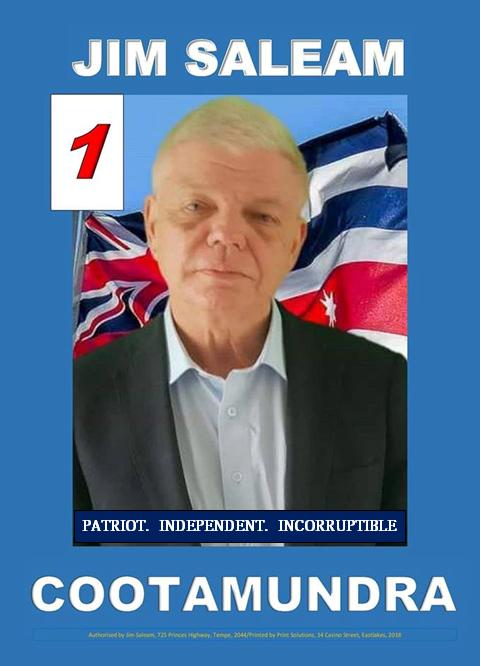
Dear Dr. Saleam:
I am happy to send fraternal greetings to yourself and all those attending the Australia First conference. We the European founding/settler people of Canada and Australia are in a fight for our very existence.
We are being replaced by government policy in both our countries, a not-so-slow form of White genocide. Our job opportunities, especially for our youth (our hope) are blighted by anti-White “diversity, equity, and inclusion policies.” This “diversity” ironically does not include us Europeans and our traditions, like Christmas, nor does the equally misleading “inclusion.”
But awareness and resistance is stiffening in Canada. We finally have a federal party, Maxime Bernier’s People’s Party of Canada that stands for a moratorium on immigration, which the Canada First Immigration Reform Committee has called for for 30 years.
Equally many young people are organizing themselves in small groups that carry out unannounced actions saying “White Lives Matter” or calling for “Deportation Now.” These demonstrations are quick and dramatic and then widely circulated on the social media, thus resulting in considerable impact and much reduced risk of confrontation with Antifa or self-hating White loonies.

Many of these actions fly the old Red Ensign, which I call the flag of the Real Canada.
These young groups are actively discussing what many of our European colleagues are and that’s the next step to reversing the invasion — ‘re-migration” or repatriation.
Paul Fromm
Director
Canada First Immigration Reform Committee
Challenging Liberal-Induced White Guilt