
Did Charles Lindbergh ever acknowledge or regret his stance on Nazi Germany after the war ended?

Follow
Charles Lindbergh flew 50 combat missions for the U.S. in WWII. Yet when the war ended, he refused to apologize for his Nazi sympathies, believing the Allied victory was a tragic mistake.
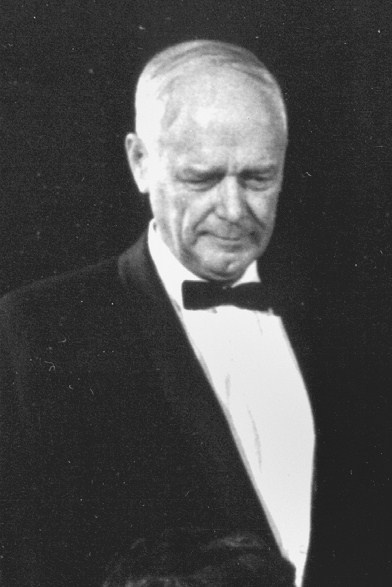
Charles Augustus Lindbergh in 1968.
Before the war, Lindbergh was a leading voice for the isolationist America First Committee. He made several highly publicized trips to Nazi Germany in the late 1930s, expressing admiration for the Luftwaffe and even accepting the Service Cross of the German Eagle from Hermann Göring. Lindbergh controversially argued that the United States should stay out of the European conflict, famously delivering a 1941 speech in Des Moines, Iowa, where he blamed British, Jewish, and Roosevelt administration interests for pushing America toward war.
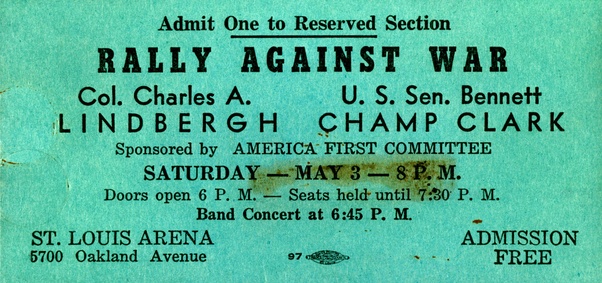
A ticket for a 1941 America First Committee rally featuring Charles A. Lindbergh as a speaker.
Following the attack on Pearl Harbor, Lindbergh supported the American war effort, flying those 50 combat missions as a civilian consultant in the Pacific Theater. However, as the horrors of the Holocaust and the destruction of Europe were laid bare after the Allied victory, many expected him to retract his earlier views. He did not.
Instead, Lindbergh viewed the outcome of World War II as a disaster for Western civilization. In his 1970 book, The Wartime Journals of Charles A. Lindbergh, he argued that the conflict had merely replaced the threat of Nazi Germany with the threat of the Soviet Union. He maintained that the defeat of Germany left Europe uniquely vulnerable to Soviet communism, which he viewed as a far greater long-term danger to the West.
Furthermore, Lindbergh continued to view geopolitics through a racial lens. In his postwar writings, he expressed sorrow over what he viewed as the destruction of Europe’s genetic heritage and culture. He insisted that his isolationist stance had been strategically correct, maintaining that the United States should have allowed Germany and the Soviet Union to fight each other to mutual exhaustion rather than intervene.
Until his death in 1974, Lindbergh firmly believed history would vindicate his non-interventionism. He never publicly renounced his anti-Semitic remarks or his initial assessment of the Nazi regime, leaving behind a legacy shaped by his refusal to reconsider his pre-war ideology