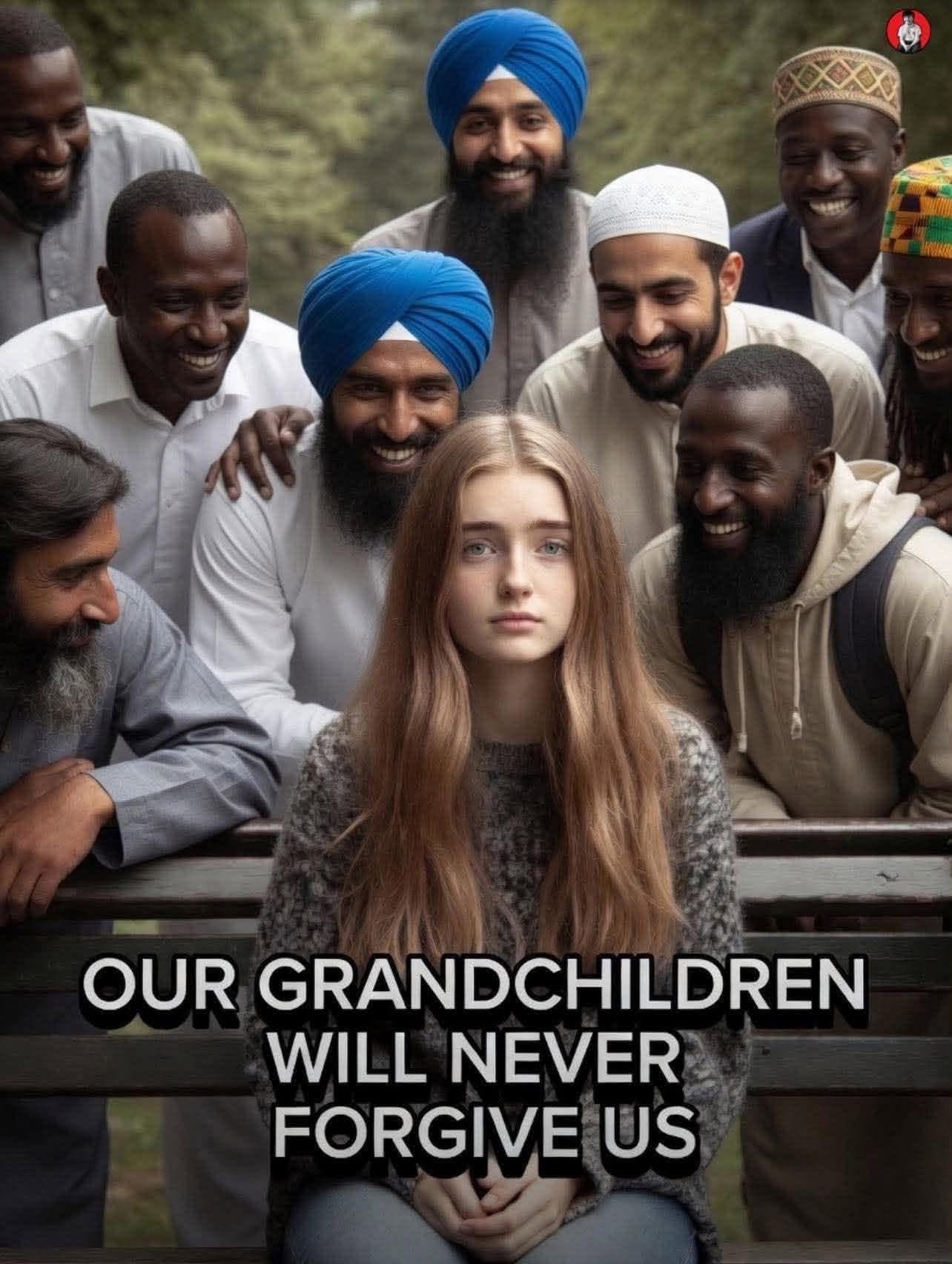
NERVE WITH A CAPITAL “N”: MOSLEM FATHER SAYS WATERLOO CATHOLIC SCHOOLS ARE TOO CATHOLIC
There’s at least one Muslim father in Waterloo region who apparently thinks that the Waterloo Catholic District School Board is not… Islamic enough.
Mohammad Faisal sends his kids to a Catholic school in Waterloo region. But in a letter he has sent to candidates running for Catholic school board trustee, he seems to be concerned that there’s not enough reasonable accommodation for… Muslim students.
Again, let us re-state: we’re talking about Muslim students who are freely and willingly attending Catholic schools. But never mind…
And if you think we’re making this up, we’re not. In fact, we have a copy of Mr. Faisal’s letter in which he provides seven questions to those running for school board trustee.
Here goes:
Faith accommodation: Will you support a clear board policy guaranteeing Muslim students space and time for daily prayers, as required under the Ontario Human Rights Code?
Ramadan: What will you do to ensure Muslim students fasting during Ramadan are supported – for example, alternative spaces during lunch, flexible participation in phys-ed, and awareness among staff?
Halal food: Will you advocate for halal food options in school cafeterias and at school events?
Anti-Islamophobia: Do you support mandatory anti-Islamophobia and anti-racism training for teachers and staff, and inclusion of Muslim experiences in equity education?
Inclusion and Safety: How will you ensure Muslim students feel safe, respected, and fully included, particularly Muslim girls who wear hijab, and how will you respond if Muslim families report discrimination?
Engagement: Will you commit to meeting with local Muslim community organizations (such as the Islamic Centre of Cambridge) at least once per school year to hear our concerns directly?
Exemption from religion classes and religious activities: Non-Catholic students have the legal right to be exempted from religion classes and Catholic religious activities (such as Mass and retreats). However, many Muslim families find this very difficult in practice; the exemption often requires repeated requests, and is denied indirectly in some schools. Will you commit to making this exemption simple, granted on first request, and dignified – with a proper alternative such as a supervised study time or another course?
Holy smoke, where does one even begin?
Well, we guess we need to begin at the beginning: if Mr. Faisal believes Catholic schools are too “Catholicy”, then why does he send his kids there? Why doesn’t he send his children to a private Islamic school?
If money is the issue, then surely he could send his kids to a school in the public system. Trust us: the Waterloo Region District School Board is perhaps the most woke school board in all of Canada. It is also arguably the worst school board in Canada. Funny how that works, eh?
But we’re certain if Mr. Faisal were to ask the educrats at the public board to exclusively serve halal food and remove bacon from the menu — you know, like Kentucky Fried Chicken restaurants in Ontario — oh, they would do so in a heartbeat in order to further embrace their unholy trinity of diversity, equity and inclusion.
Oh, by the way, consider this interesting fact: Catholic schools have the right to refuse non-Catholic students. So it would appear to us that Mr. Faisal’s kids are already being very much accommodated from the get-go to begin with. But zero gratitude here. You see, it’s not enough; it’s never enough. As the saying goes, give ’em an inch, they’ll take a kilometre…
Now Rebel News did reach out to Mohammad Faisal to interview him. But our email went unacknowledged. So we’re going to guess why Mr. Faisal doesn’t want to have his kids going to the public schools in the region. Because that would mean they would be exposed to rainbow mafia propaganda, including pornography in the school library.
So, we’re guessing Mr. Faisal is all about inclusion when it comes to Islamic values. When it comes to inclusion of other values? Hey, what’s with all this inclusion stuff?!
Of course, wouldn’t the best solution entail Mr. Faisal moving to an Islamic country like, say, Afghanistan? Oh, you’ll get your halal menu, all right. You’ll get girls forced to wear burqas. You’ll have a curriculum focused on labelling anyone who is not an Islamist as an infidel. We guess the only drawback would mean living in a shite-hole. But sometimes you gotta take the bad with the good, we suppose…
The fact is that Canada was founded on Judeo-Christian values. The fact is, unlike just about every Islamic nation on the planet, those of different faiths are free to live freely here and worship freely here and prosper here.
But for the Mohammad Faisals of the world, it’s all about more-more-more. And so it is they embrace the playbook of manufactured victimhood to further press their agenda.
After the victimhood shtick, then comes the weaponization of our system. Notice his reference to the Ontario Human Rights Code. We interpret that as a veiled threat along the lines of gimme what I want, or I’ll see you at the Ontario Human Rights Tribunal in the near future. And with the woke wackadoodles who comprise the tribunal, we bet Mohammad Faisal would win big time.
In this respect, our system is being effectively gamed. And it’s quite fascinating: Islamists in western nations are using everything that makes a western nation a bastion of freedom to pursue their agenda. They are falling back on lawfare and spineless politicians who advocate on their behalf. That’s why we have Prime Minister Mark Carney saying things like, “Muslim values are Canadian values.” Really? Such as… sharia law? Female genital circumcision? Throwing gays off rooftops? Golly, that doesn’t sound very Liberal to us…
And as their numbers grow, Muslims pursuing a radical agenda are not appeased by concessions, but rather, they continue to push the envelope.
And you know what? Slowly, ever slowly, the line moves, doesn’t it? Case in point: do you know there are now 85 sharia courts operating in the United Kingdom? Eighty-five! We can only think of that haunting lyric from Thomas Dolby’s ballad, One of Our Submarines is Missing. Namely, “Bye-bye empire, empire bye-bye.”
In the final analysis, so much for when in Rome do as the Romans do. Because this is all about the tail wagging the dog. And the tail is winning.
And this is how the descent into darkness begins, really. It starts off as “reasonable accommodation.” It continues with “diversity is our strength.” And it ends… well, it ends with Paris, France.(Rebel News, October 23, 2026)
All that I have to say about this group in particular is that while they claim to speak for all of their province, I have too high a regard for the province named after Queen Victoria’s fourth daughter than to believe it to be entirely populated by inbred, knuckle-dragging, troglodytic, ass-tards as would have to be the case for these to be their legitimate spokesmen.
The results of the Alberta referendum on Monday have, I believe, proved my judgement to be sound on this point. There were ten questions, the relevant one being the tenth, which read:
Should Alberta remain a province of Canada, or should the Government of Alberta commence the legal process required under the Canadian Constitution to hold a binding provincial referendum on whether or not Alberta should separate from Canada?
In the end, Alberta voted overwhelmingly to remain in the Dominion, with a little over three-quarters voting to remain and a little under a quarter voting for pursuing the path of separation.
The referendum and the separatists calling for it had been heavily promoted by the neo-conservative media. The same people who, rightly, have decried the war which progressives have been waging against the memory and legacy of, among others, our first prime minister Sir John A. Macdonald, have been the loudest cheerleaders of a movement aimed at undoing that legacy, defeating the Confederation Project that Macdonald spearheaded, and breaking up the Dominion he and the other Fathers of Confederation fought so hard to build. Canadian neo-conservatives are in no danger of succumbing to Ralph Waldo Emerson’s hobgoblin, with or without the oft-dropped “foolish”.
It was with much amusement that I read the headline of the article by Clayton DeMaine reporting the results on Juno News, the neo-conservative e-zine on Substack founded and edited by Candice Malcom and Keeane Bexte. The headline read “Nearly 1 in 4 Albertans Vote Against Staying in Canada.” Bravo. If there is an agency somewhere that hands out awards for spinning your side’s loss as a win, this surely deserves at least a nomination.
When I refer to such people as neo-conservatives, note that I am using the word in its Canadian sense. The American sense of the word is more familiar. In the United States the term neo-conservative refers to the most hawkish element of the Republican Party, those who believe in a Pax Americana in which the United States is the world’s policeman, perpetually toppling regimes that they supported up to yesterday, in order to keep the world safe for democracy, capitalism, and Israel, not necessarily in that order. In Canada, neo-conservative refers to those who say they are conservatives, small or big c, but give to this term its contemporary American meaning rather than its traditional Canadian meaning. As a further point of clarification, it is Canadian neo-conservatives of the small-c variety, especially the alternative media and social media types, rather than those of the big-C variety (i.e. the Conservative Party, its members and supporters) who have been cheering on the Alberta separatist movement.
Traditional Canadian conservatism is the more legitimate type. The United States was built on the foundation of classical (Lockean) liberalism and its two parties are not the equivalent of the Canadian Conservative and Liberal parties. If there is any direct correspondence between American and Canadian parties it is between the American Republican party and the Canadian Liberal party, both of which are descended from seventeenth century Whiggery. The United States neither had nor wanted a “conservatism” at the national level until the middle of the twentieth century.
Canada was founded on her older, more traditional and more legitimate, conservatism. The original English Canadians were the Loyalists who opposed the American Revolution. Their conservatism was that of Great Britain, modified by the acceptance of some early Modern innovations but still recognizably descended from the seventeenth century Toryism that opposed the Puritan Whiggery that was the ancestor of classical liberalism and the American, French and eventually Bolshevik Revolutions. French Canada, which having been ceded to the British Crown shortly before the American Revolution and thereby avoided going through the French Revolution that followed on its heels, was less Modern and more traditional than English Canada prior to the Quiet Revolution of the 1960s. When the two worked together in Confederation in the 1860s to form the Dominion of Canada, it was in order to build a country that did not throw away her past in revolution, that adapted the time-tested institutions of parliamentary government under a reigning royal monarchy that she inherited to her situation rather than inventing new ones, and that tried to hold on to the older idea that there are virtues higher than those of commerce and industry and that it is the pursuit of these rather than the other that is the foundation of civilization.
It will come as no surprise to long-time readers that I have no sympathies whatsoever with Canadian neo-conservatism no matter how often their views on such-and-such a particular issue may happen to line up with my own. My long time wish for my country, Canada, is a restoration based on the principles of Confederation in 1867, and for Canadian conservatism that it would remember and recover its roots, preferably bringing into itself more of the Toryism from which it is descended. These are moves in the opposite direction to that the neo-conservatives desire. David Warren once said that a conservative is a Tory who has lost his religion and a neo-conservative is a conservative who has also lost his memory. As someone who both by instinct and by application of the principles of orthodox Christianity is a royalist and monarchist rather than a worshiper of the Modern idol of liberal democracy, I call myself a Tory rather than a conservative and am also quite comfortable with the self-application of the term reactionary. As someone who calls himself a patriot rather than a nationalist and knows that true patriotism is a natural love of country akin to love for one’s family rather than the internal compulsion to see one’s country through the eyes of an ideal of “greatness” I see no reason why the stupid things that the Liberals have done while in power should lessen my love of Canada. I naturally, therefore, have no sympathies with those who are incapable of criticizing the Liberals without turning it into an opportunity to condemn our country in the process and who wish to throw away our country’s older, better, more authentic conservatism for the latest model of the American conservatism that is less than a century old and whose roots run no deeper than Modern liberalism. Especially when they wish to do so at this moment in history when American conservatism has been captured from within by a movement, MAGA, which has betrayed the promise and potential it showed at its start about a decade and a half ago and rapidly become a cult that idolatrously worships its thuggish leader even as he degenerates into more and more of a caricature of what his enemies have thought him to be all along on a daily basis.
Had the Canadian neo-conservatives been more interested in our country’s own traditional Tory conservatism they might have been familiar with Stephen Leacock who in 1937 published a book entitled My Discovery of the West. In this Governor General’s Award winning book, an account of a lecture tour he had given in western Canada after his retirement from McGill University the previous year, he wrote the following:
It used to be said that the last shot fired in defence of British institutions in America would be fired by a French-Canadian. It looks now as if there would be one more shot after his. It will be from the gun of an American whose name will be something like John Bull McGregor. His people will have been among the McGregors of Mississippi and the Bulls of the New York police: so he won’t miss what he shoots at.
Had they read this with any degree of comprehension they might not have been so quick to pin their hopes of undoing Confederation, tearing Canada apart, and fulfilling the nineteenth century American dream of Manifest Destiny on a separatist referendum in Alberta.
All that I have to say about this group in particular is that while they claim to speak for all of their province, I have too high a regard for the province named after Queen Victoria’s fourth daughter than to believe it to be entirely populated by inbred, knuckle-dragging, troglodytic, ass-tards as would have to be the case for these to be their legitimate spokesmen.
The results of the Alberta referendum on Monday have, I believe, proved my judgement to be sound on this point. There were ten questions, the relevant one being the tenth, which read:
Should Alberta remain a province of Canada, or should the Government of Alberta commence the legal process required under the Canadian Constitution to hold a binding provincial referendum on whether or not Alberta should separate from Canada?
In the end, Alberta voted overwhelmingly to remain in the Dominion, with a little over three-quarters voting to remain and a little under a quarter voting for pursuing the path of separation.
The referendum and the separatists calling for it had been heavily promoted by the neo-conservative media. The same people who, rightly, have decried the war which progressives have been waging against the memory and legacy of, among others, our first prime minister Sir John A. Macdonald, have been the loudest cheerleaders of a movement aimed at undoing that legacy, defeating the Confederation Project that Macdonald spearheaded, and breaking up the Dominion he and the other Fathers of Confederation fought so hard to build. Canadian neo-conservatives are in no danger of succumbing to Ralph Waldo Emerson’s hobgoblin, with or without the oft-dropped “foolish”.
It was with much amusement that I read the headline of the article by Clayton DeMaine reporting the results on Juno News, the neo-conservative e-zine on Substack founded and edited by Candice Malcom and Keeane Bexte. The headline read “Nearly 1 in 4 Albertans Vote Against Staying in Canada.” Bravo. If there is an agency somewhere that hands out awards for spinning your side’s loss as a win, this surely deserves at least a nomination.
When I refer to such people as neo-conservatives, note that I am using the word in its Canadian sense. The American sense of the word is more familiar. In the United States the term neo-conservative refers to the most hawkish element of the Republican Party, those who believe in a Pax Americana in which the United States is the world’s policeman, perpetually toppling regimes that they supported up to yesterday, in order to keep the world safe for democracy, capitalism, and Israel, not necessarily in that order. In Canada, neo-conservative refers to those who say they are conservatives, small or big c, but give to this term its contemporary American meaning rather than its traditional Canadian meaning. As a further point of clarification, it is Canadian neo-conservatives of the small-c variety, especially the alternative media and social media types, rather than those of the big-C variety (i.e. the Conservative Party, its members and supporters) who have been cheering on the Alberta separatist movement.
Traditional Canadian conservatism is the more legitimate type. The United States was built on the foundation of classical (Lockean) liberalism and its two parties are not the equivalent of the Canadian Conservative and Liberal parties. If there is any direct correspondence between American and Canadian parties it is between the American Republican party and the Canadian Liberal party, both of which are descended from seventeenth century Whiggery. The United States neither had nor wanted a “conservatism” at the national level until the middle of the twentieth century.
Canada was founded on her older, more traditional and more legitimate, conservatism. The original English Canadians were the Loyalists who opposed the American Revolution. Their conservatism was that of Great Britain, modified by the acceptance of some early Modern innovations but still recognizably descended from the seventeenth century Toryism that opposed the Puritan Whiggery that was the ancestor of classical liberalism and the American, French and eventually Bolshevik Revolutions. French Canada, which having been ceded to the British Crown shortly before the American Revolution and thereby avoided going through the French Revolution that followed on its heels, was less Modern and more traditional than English Canada prior to the Quiet Revolution of the 1960s. When the two worked together in Confederation in the 1860s to form the Dominion of Canada, it was in order to build a country that did not throw away her past in revolution, that adapted the time-tested institutions of parliamentary government under a reigning royal monarchy that she inherited to her situation rather than inventing new ones, and that tried to hold on to the older idea that there are virtues higher than those of commerce and industry and that it is the pursuit of these rather than the other that is the foundation of civilization.
It will come as no surprise to long-time readers that I have no sympathies whatsoever with Canadian neo-conservatism no matter how often their views on such-and-such a particular issue may happen to line up with my own. My long time wish for my country, Canada, is a restoration based on the principles of Confederation in 1867, and for Canadian conservatism that it would remember and recover its roots, preferably bringing into itself more of the Toryism from which it is descended. These are moves in the opposite direction to that the neo-conservatives desire. David Warren once said that a conservative is a Tory who has lost his religion and a neo-conservative is a conservative who has also lost his memory. As someone who both by instinct and by application of the principles of orthodox Christianity is a royalist and monarchist rather than a worshipper of the Modern idol of liberal democracy, I call myself a Tory rather than a conservative and am also quite comfortable with the self-application of the term reactionary. As someone who calls himself a patriot rather than a nationalist and knows that true patriotism is a natural love of country akin to love for one’s family rather than the internal compulsion to see one’s country through the eyes of an ideal of “greatness” I see no reason why the stupid things that the Liberals have done while in power should lessen my love of Canada. I naturally, therefore, have no sympathies with those who are incapable of criticizing the Liberals without turning it into an opportunity to condemn our country in the process and who wish to throw away our country’s older, better, more authentic conservatism for the latest model of the American conservatism that is less than a century old and whose roots run no deeper than Modern liberalism. Especially when they wish to do so at this moment in history when American conservatism has been captured from within by a movement, MAGA, which has betrayed the promise and potential it showed at its start about a decade and a half ago and rapidly become a cult that idolatrously worships its thuggish leader even as he degenerates into more and more of a caricature of what his enemies have thought him to be all along on a daily basis.
Had the Canadian neo-conservatives been more interested in our country’s own traditional Tory conservatism they might have been familiar with Stephen Leacock who in 1937 published a book entitled My Discovery of the West. In this Governor General’s Award winning book, an account of a lecture tour he had given in western Canada after his retirement from McGill University the previous year, he wrote the following:
It used to be said that the last shot fired in defence of British institutions in America would be fired by a French-Canadian. It looks now as if there would be one more shot after his. It will be from the gun of an American whose name will be something like John Bull McGregor. His people will have been among the McGregors of Mississippi and the Bulls of the New York police: so he won’t miss what he shoots at.
Had they read this with any degree of comprehension they might not have been so quick to pin their hopes of undoing Confederation, tearing Canada apart, and fulfilling the nineteenth century American dream of Manifest Destiny on a separatist referendum in Alberta.
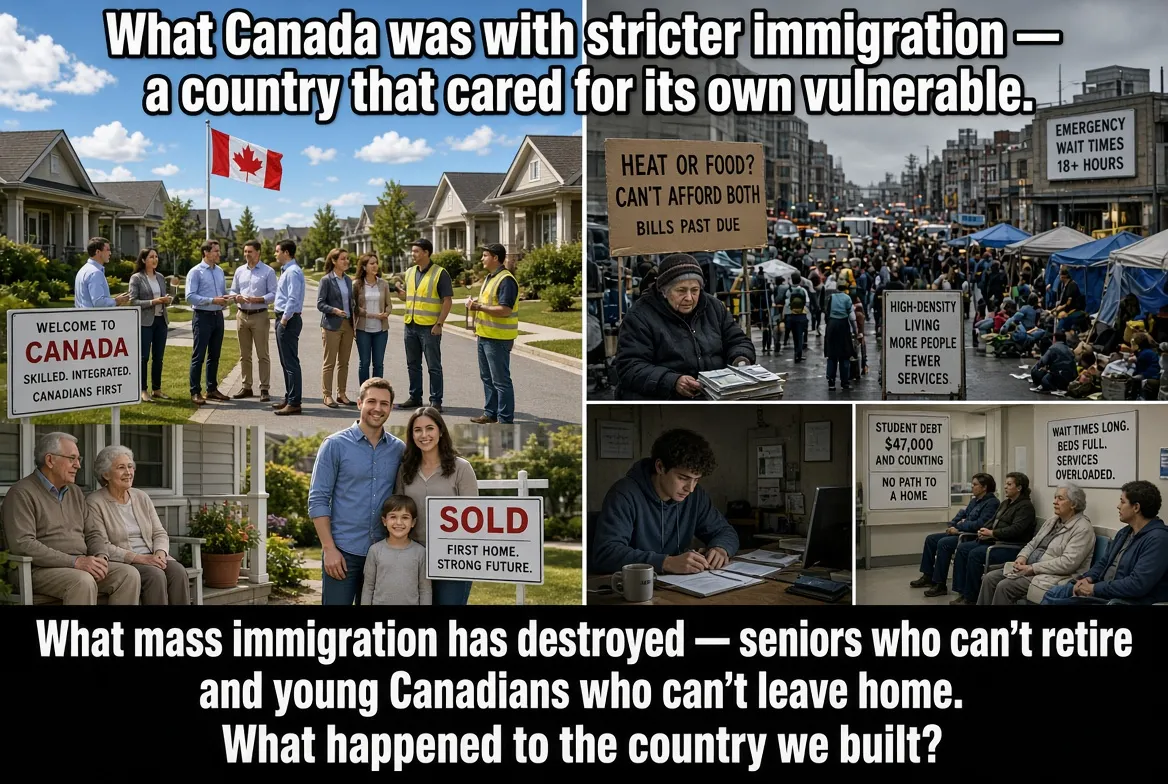
From immigrants who arrived with nothing and built a future, to seniors who cannot afford to retire and young Canadians who cannot afford to leave home, I keep asking myself:There are days when I come home from speaking with Canadians and I genuinely want to cry.Not because of something I’ve seen on television or read in the newspaper.Because of the people I’ve met.The elderly woman who worked for 40 years and now has to choose between heating her home and putting food on the table.The homeless woman I met near Burlington Mall who once owned a condominium and now struggles to find somewhere that will accept her and her service dog.The parents whose adult children have moved back home because they cannot afford rent, let alone a house of their own.And the tradesman who tells me that after years of developing his skills, he’s watching Canadian workers struggle to find employment.
These are not abstract political arguments to me.These are people I’ve met, people who have written to me, people who have trusted me enough to share their stories.And I keep coming back to one question.What happened to the Canada we built?The Canada People Once Came Here to BuildI want to take you back to the 2021 federal election.I was canvassing, knocking on doors, and meeting people from every imaginable background.Earlier that day, a Canadian man in his thirties had called me a racist. I asked him why he believed that. He couldn’t give me a specific reason, but he was adamant.Later, I approached a home where a gentleman had turned his Conservative lawn sign around to display a PPC sign.
As I walked up, his landlord, a gentleman originally from India, was there.He asked to see my pamphlet.After the confrontation earlier that day, I wasn’t sure what to expect.But instead of an argument, he told me his life story.He was born in India and had immigrated to the United Kingdom in search of a better life. But the opportunities he had hoped to find simply weren’t there.So he decided to try his luck in Canada.He left the United Kingdom and arrived in Canada with just £500 in his pocket, a Canadian sponsor, and a dream of becoming a landlord.He started out living in a basement, determined to build something for himself.He and his partner worked seven days a week. Eventually, they purchased their first home, a fixer-upper. They poured their own labour and skills into restoring it and sold it.Then they did it again.Over the years, they acquired several properties.He had become what he dreamed of becoming.A landlord.But what struck me wasn’t simply his success.It was how angry he was about what he saw happening to Canada’s immigration and social-support systems, even back in 2021.He believed that people were taking advantage of programs that taxpayers worked hard to support. He was particularly upset by examples he’d seen of people teaching others how to exploit benefits and food banks.Whether every example he had encountered was representative is another question. But his frustration was unmistakable.He knew what it meant to start with almost nothing.He knew what it meant to sacrifice.And he believed that opportunity, responsibility, and hard work were values worth protecting
.I left that conversation thinking about the contrast with the accusation I’d received earlier that day.Here was an immigrant who had built a successful life and was deeply concerned about the same policy questions I was raising.It reminded me why we should listen to people rather than assume we know what they think based on their background.Another Immigrant. Another Dream.I remember another story, this time about a master electrician who came to Canada with his three children.Like the landlord, he arrived with a sponsor and started out in a basement apartment.His family lived in the basement of an Oakville townhouse while he established himself.Within a year, they had purchased a rural home in Acton, Ontario.Imagine that.Three children. A new country. A new beginning.He came with skills, a willingness to work, and a determination to provide for his family.And within a year, he had taken a major step toward the life he wanted.I think about stories like these when I hear people argue that concerns about immigration policy must come from hostility toward immigrants.That simply doesn’t reflect the conversations
I’ve had.I’ve met immigrants who love Canada, believe deeply in personal responsibility, and worry about the future of the country just as much as anyone born here.The question isn’t where someone was born.It’s what kind of country we’re building together, what opportunities it offers, and what responsibilities we share.She Worked for 40 Years. Now She Must Choose Between Heat and Food.One of the most heartbreaking experiences I’ve had while canvassing was meeting an elderly woman who had worked for approximately 40 years.She was still healthy and managing on her own.But she was struggling to afford her home.She was facing the kind of decision no elderly Canadian should have to make.Do I heat my home, or do I buy groceries?When I spoke publicly about her situation, I said I wanted to cry.I meant it.And her circumstances were getting worse. I feared she might eventually have to leave her home.Think about what that means.A person spends decades contributing to society, working, paying taxes, and building a life.And in the years when she should finally be enjoying some peace and security, she’s worried about whether she can afford to stay in her own home.What are the fruits of a lifetime of labour supposed to be?Surely they should include the dignity of growing old without fearing the next heating bill.
A Message From a 66-Year-Old Canadian Woman. After I shared that story, another woman reached out to me privately.She’s 66 years old and still working. She expects to continue for several more years, if she’s fortunate enough to remain employed.She told me she felt deeply let down by the system she had contributed to throughout her life.She questioned the fairness of government priorities, including the support available to newcomers compared with the circumstances of some struggling seniors.Her concerns about the direction of the country went beyond money.She felt that the culture she grew up with was changing and that the values she cherished were being lost.Then she wrote four words that stayed with me.“My heart is broken.”She asked me to protect her identity because she feared that speaking openly might affect her employment.She loves her job. She wants to keep working. But she doesn’t feel comfortable expressing her political concerns publicly.I find that deeply troubling.In her next message, she acknowledged that many other Canadians were experiencing far greater hardship than she was.Even while worrying about her own future, she was thinking about others.
That’s the kind of person whose story deserves to be heard.Judy Marie: From Homeowner to HomelessnessIn January 2026, I spoke with Judy Marie, a woman experiencing homelessness in Canada.Judy told me she had once owned a condominium in Burlington.Now she was struggling to find somewhere to live.She described difficulties with her credit rating, the challenge of finding housing that would accept her service dog, and the long wait for subsidized housing.She had spent time in a shelter and described an experience that left her feeling unsupported.What struck me most was the disbelief in her voice.She couldn’t believe she’d ended up in this situation.Judy also spoke about an Afghan family she had encountered whom she believed had received substantial housing assistance.She was upset by what she perceived as a disparity between the assistance available to that family and her own struggle to find a home.I cannot independently confirm the details of that family’s circumstances or the source of its housing support.But Judy’s underlying question deserves an answer.How does someone who once owned a home in this country end up struggling to find somewhere to live, and what are we doing to help?
A compassionate country should be able to support people fleeing hardship while also providing meaningful help to its own vulnerable residents.Those responsibilities should not have to compete.I don’t want to see Judy forgotten.And I don’t want her story reduced to another statistic about homelessness.She’s a person.She had a home. She had a life. She still has hopes for her future.We should care about what happens to her.The Young Canadians Who Cannot Get StartedDuring my canvassing, I met many parents whose adult children were living at home.Some had moved back because rent had become unaffordable.Others had never managed to leave.These weren’t necessarily young people refusing to work or take responsibility.They were trying to make a start in a housing market that seemed increasingly beyond their reach.I think back to the immigrant landlord who arrived with £500 and eventually built a property business.I think about the electrician who came with three children and bought a home within a year.Those stories represent the kind of opportunity that attracted people to Canada.Now I meet Canadian parents who wonder whether their own children will ever be able to afford a home.I’m not suggesting that homeownership was easy for everyone in the past, or that every newcomer today faces the same opportunities and obstacles.But I do believe we’ve lost something important when so many people can no longer imagine achieving the milestones their parents took for granted.The ability to establish a home, raise a family, and build some security is about more than economics.It’s part of the foundation of a stable society.The Workers Who Feel ReplacedTed Irwin, a drywall tradesman in British Columbia, contacted me with his concerns about the construction industry.He believes Canadian workers are losing opportunities to companies employing lower-paid foreign labour.He described experienced tradespeople struggling to find work and employers he believes are exploiting the labour system.His message ended:“Canada is broken.”I haven’t independently verified his estimates about the proportion of foreign workers in his trade, and we should be careful not to confuse legitimate foreign-worker employment with violations of labour rules.But Ted raises questions worth investigating.Are Canadian tradespeople receiving fair opportunities?Are employers complying with wage requirements?Are our labour and immigration policies serving workers, employers, and the long-term interests of the country?These questions shouldn’t be dismissed simply because they’re politically uncomfortable.And the people raising them shouldn’t be ignored.We Are Losing More Than Purchasing PowerThe more stories I hear, the more I believe this conversation is about something deeper than the cost of living.It’s about culture.Not merely the food we eat, the languages we speak, or the traditions we celebrate.I’m talking about the values that help a society flourish.Responsibility. Family. Community. Hard work. Compassion. Honesty. Freedom of conscience. Respect for our neighbours.The belief that effort should lead to opportunity.The belief that contributing to your country should mean something.The belief that when someone falls on hard times, we help them regain their footing rather than abandon them.I worry that we’ve begun to confuse spending money with solving problems.We can announce another program, another initiative, another funding commitment.But what does it mean if the elderly woman still cannot afford to heat her home?If Judy still cannot find housing?If Ted still cannot find work?If young adults still cannot afford to leave home?These are the outcomes that matter to me.How We Treat the Vulnerable Says Everything About UsI’ve often believed that you can judge a nation by how it treats its most vulnerable people.And I have serious concerns about how we’re approaching some of the most difficult issues facing Canadians.When I see people suffering from addiction or serious mental illness, I want us to ask whether they are receiving meaningful treatment, recovery support, and a realistic opportunity to rebuild their lives.When I see the expansion of medical assistance in dying, I believe we must ask whether people facing severe illness or disability have genuine access to the care, support, and dignity they deserve.When I think about women facing difficult pregnancies, I want to see stronger practical support for mothers and families, including those who may wish to pursue adoption.These are deeply sensitive issues. Canadians have different convictions about the appropriate role of government and individual choice.But surely we can agree that vulnerable people deserve more than slogans, paperwork, and announcements.They deserve care that actually reaches them.They deserve dignity.And they deserve hope.Who Is Government Supposed to Serve?I keep hearing that Canada is a wealthy country.I keep seeing governments announce enormous spending commitments.And yet I keep meeting people who feel they have been left behind.The senior who cannot retire.The homeowner who cannot afford heat.The homeless woman who cannot find housing.The tradesman worried about his livelihood.The young adult who cannot afford a place to live.The parents wondering what kind of future awaits their children.I believe government has a fundamental responsibility to the people it serves.That responsibility includes making difficult decisions about spending, immigration, housing, health care, and public safety.It also includes being accountable for the results.We can welcome newcomers and value their contributions while still having serious conversations about immigration levels, integration, housing capacity, and the responsibilities of citizenship.We can care about people suffering from addiction while also insisting that families deserve safe parks and neighbourhoods.We can recognize the needs of vulnerable people without forgetting the seniors and working families who are struggling.These things should not be mutually exclusive.But when government priorities seem increasingly disconnected from the daily experiences of ordinary Canadians, people understandably begin asking whom those priorities are serving.And government owes them an answer.What Happened to the Promise?I think again about that immigrant landlord.A man who came to Canada with £500 and a dream, after leaving India and discovering that the United Kingdom wasn’t offering the opportunities he had hoped to find.He worked seven days a week, invested his labour, took risks, and built a future.I think about the master electrician who brought his three children to Canada and purchased a home within a year.I think about the elderly woman who worked for 40 years and now worries about heating her home.And I think about the young Canadians whose parents tell me they cannot afford to move out.Those stories span generations and backgrounds.
But together, they raise a question that I believe we can no longer afford to ignore.Are we preserving the kind of country where hard work, responsibility, and sacrifice can still lead to a better life?I don’t expect government to guarantee that every Canadian will be successful.Life doesn’t work that way.But I do expect our institutions to protect the conditions that make success possible.And I expect us to remember the people who helped build the prosperity, communities, and institutions we inherited.We owe something to those who came before us.And we owe something to those who will come after us.I Haven’t Forgotten Their FacesOne of the things canvassing has taught me is that every door has a story behind it.Some people are angry.Some are frightened.Some are exhausted.And some simply want someone to listen.I haven’t forgotten the elderly woman.I haven’t forgotten Judy.I haven’t forgotten the parents worrying about their children.And I haven’t forgotten the immigrant who arrived with almost nothing and built the life he dreamed of.Their experiences are different, but they all have something to teach us about the country we are becoming.I want Canada to be a place where our seniors can live with dignity, where working people have a fair opportunity, where newcomers can contribute and build a future, and where our children can look forward to lives at least as promising as our own.That’s the Canada
I believe is worth working for.And that’s why I intend to keep listening, asking questions, and sharing the stories of people who too often feel unheard.Through Pulse of the People, I hope to bring more of those voices into the conversation.Not because every person will agree with me.But because their experiences matter.We inherited a country built through generations of work, sacrifice, and hope. Our responsibility is not simply to enjoy what they built, but to preserve and improve it for those who come next.And right now, too many Canadians are wondering whether we’re living up to that responsibility.— Michael Bator
He watched the evening news, paid his taxes, voted responsibly and believed what respectable people told him.
1. France needed immigration because the economy needed workers.
2. Diversity was an opportunity.
3. Public services were under pressure because they lacked funding.
4. Disorder at school was caused by inequality.
5. Crime statistics required context.
6. Anyone who connected these things too quickly was probably an extremist.
Then his children started coming home from school saying they could barely hear the teacher. Half the lesson was spent restoring order. Teachers changed constantly. Some simply disappeared for weeks.
Jean-Pierre complained once, politely. The administration explained that the situation was “challenging” and that the school was developing an “inclusive pedagogical response.” Jean-Pierre went home reassured. There were professionals dealing with it.
His neighbourhood changed too.
Shops closed. Others appeared. Groups of men occupied the same corners every evening. His wife stopped taking one street after dark.
Jean-Pierre noticed all of this, but he had also learned that noticing patterns was dangerous.
So every event remained an isolated event. One closed shop meant nothing. One assault meant nothing. Ten incidents meant ten unrelated incidents. Only a racist would connect dots.
Then his daughter was sexually assaulted by a man who had recently arrived in France.
Jean-Pierre was devastated.
But almost immediately he began policing his own thoughts. The attacker was an individual. Of course. One must never generalise. The television explained that exploiting such crimes politically was irresponsible. A minister warned against “stigmatisation.” Jean-Pierre found himself nodding through tears. What had happened to his daughter was monstrous, but the truly frightening possibility, apparently, was that somebody somewhere might vote for the wrong party because of it.
Nothing changed.
His son’s school became worse. His daughter stopped going out alone. His wife wanted to move. The police were exhausted. The teachers were exhausted. The hospitals were exhausted. Jean-Pierre was exhausted.
Yet every explanation he had been given required him to believe that each deterioration was temporary, accidental, exaggerated or caused by something entirely unrelated to the deterioration immediately beside it.
And whenever somebody proposed that perhaps the country had made serious mistakes — about migration, authority, education, policing, integration, punishment or borders — Jean-Pierre knew the correct answer.
“Careful. That sounds like the far right.”
So he remained reasonable.
He remained moderate.
He remained informed.
He remained completely incapable of drawing a conclusion from his own life.
There have been important immigration related developments in the last week.
As we both agree that this is the most important issue facing Canada today, I wanted to send you a quick update.
Since he became Prime Minister last year, Mark Carney has made significant changes to address the immigration crisis.
Of course, these changes are not nearly as drastic as what is needed but they have been undeniably a step in the right direction after the absurd policies of his predecessor Justin Trudeau.
In 2025 Carney slashed intake levels of permanent and temporary migrants, set record levels of deportations, and imposed stricter rules for international students.
For the first time in Canada’s history we had negative population growth.
All of these were welcome changes and gave reason for hope in the new Carney administration.
But throughout 2026, and in the last week in particular, the shine has started to wear off.
Last week Statistics Canada issued a correction to their population stats. They found they had not be accurately tracking visa renewals by temporary residents or people transitioning from study to work permits.
It turns out Canada did not actually have negative growth last year, in fact our population continues to grow.
After setting a record of 23,160 deportations in 2025, figures have stagnated through 2026 to only an average of 1,862 per month — 22,345 projected by the end of year.
Not only is it disappointing to see these figures falling rather than rising, even the record is nowhere near high enough.
It is projected that there are more than 500,000 illegal migrants in Canada. There are about 100,000 more on failed asylum claims and 2 million expiring visas throughout 2026.
The government needs much more robust deportations capabilities to simply enforce our own laws.
At less than 25,000 deportations per year, this problem will never be fixed.
And to make matters worse, in an interview with the New York Times earlier this week, Carney signaled that increases to immigration were on the horizon.
In the interview, Carney focused on the rise in temporary migration since 2023.
He pointed out that the temporary migrant population had rapidly expanded from 3% to 7.5% of the overall population and that this was putting pressure on education, housing and other things.
As a result they issued reforms to reduce and cap the number of temporary migrants.
Carney is acting as if the situation is solved, but the reality is his changes have hardly made a difference.
The temporary migrant population has dropped by less than 1% to 6.7% in 2026.
After only a year of modest reductions, Carney is signaling that Canada is ready to start increasing immigration levels again:
“When do we resume some controlled increase in the population, which is the nature of Canada. So that will happen, and we just want to make sure that we’ve got it under control.”
This is completely absurd.
After a decade of Trudeau’s radical policies, Canada needs much more significant reforms to get our country back on track.
This is a huge opportunity for the Conservatives who have the chance to own the position of immigration restrictionism, or better yet, remigration.
The Conservatives have been quick to jump on this issue but they are still not going far enough.
It is not enough to reduce the numbers, we must to reverse the flow.
This is why an organization like the Dominion Society is important. We need a force outside of the political system to represent the interests of Heritage Canadians and put pressure on all existing parties.
We need to be able to punish the Liberals for this shift, and we need to be able to push the Conservatives to go even further.
Just In From The Fraser Institute: The true cost of ‘Truth and Reconciliation’
A new Fraser Institute study says inflation-adjusted federal Indigenous spending surged nearly 300% over a decade — more than seven times faster than overall federal program spending.
Federal spending on Indigenous programs has nearly quadrupled over the past decade, climbing from $10.3 billion in 2014-15 to $40.8 billion in 2024-25 after adjusting for inflation, according to a new Fraser Institute study.
The study, The Cost of Federal Spending for Indigenous Peoples in British Columbia, found Indigenous spending grew at an average annual rate of 17.1 per cent from 2015-16 to 2024-25, compared with 4.3 per cent annually between 1969-70 and 2014-15.
“Ottawa’s Indigenous spending has skyrocketed in recent years, even more so than general federal spending which itself has increased substantially,” said study co-author and Fraser Institute senior fellow Tom Flanagan.
Overall, Indigenous spending increased 297.7 per cent over the decade, compared with 42% for federal program spending excluding interest — more than seven times the rate of growth.
The figures exclude spending on Indigenous lawsuits and settlements from 2015-16 onward.
Researchers estimate $8.8 billion in Indigenous spending went to Ontario and $6.3 billion to B.C., though the figures include administrative costs — not money directly received by individuals.
But the study questions whether the spending surge has produced corresponding improvements in living standards.
Statistics Canada’s The Community Well-Being gap barely changed from 1981 to 2016, while researchers attributed later gains largely to the Canada Child Benefit rather than Indigenous-specific spending.
Federal auditors have raised similar concerns about results.
In October 2025, Auditor General Karen Hogan found Indigenous Services Canada had made “unsatisfactory progress” on 18 of 34 recommendations examined across areas including drinking water, health care and emergency management.
The department’s spending increased roughly 84 per cent between 2019-20 and 2023-24 — from $13.3 billion to $23.9 billion. Yet 35 long-term drinking-water advisories remained as of April 1, 2025, including 9 that had lasted at least a decade.
A separate 2024 audit found Indigenous Services Canada and the Canada Mortgage and Housing Corporation spent $3.86 billion over five years on First Nations housing but achieved “no meaningful improvement” in overall housing conditions.
The Fraser Institute also raised concerns about financial transparency, saying Ottawa is not enforcing the First Nations Financial Transparency Act. Financial reports were publicly available for just 41 per cent of First Nations in 2024-25, according to the study.
Indigenous Services Canada previously reported compliance with the Act fell from 99 per cent in 2013-14 to 64 per cent by 2019-20, citing factors including capacity issues and community emergencies.
Ottawa stopped enforcing the Act’s compliance measures in 2015, shifting toward First Nations-led accountability, though the law remains in force.
Ottawa stopped using the Act’s discretionary compliance measures in 2015 as it shifted toward First Nations-led accountability. The law remains in force, and the department says more than 300 First Nations financial administration laws contain provisions requiring audited statements to be shared with citizens.
The transparency fight has also reached Federal Court.
In a recent case involving Frog Lake First Nation, Hans McCarthy sought band council records held by Indigenous Services Canada concerning payments from his community’s trust fund to council members for salaries and expenses.
According to the Canadian Taxpayers Federation, which partnered with McCarthy, the fund contained approximately $102 million in 2013 but less than $9 million remained by 2024.
After Indigenous Services Canada refused access-to-information requests seeking Band Council Resolutions authorizing payments from the trust fund, McCarthy challenged the decision.
“If the purpose of the [Access to Information Act] is to enhance ‘accountability’ and ‘transparency,’ ‘promote an open and democratic society,’ and ‘enable public debate,’ the governance relationship between the Applicant and Frog Lake First Nation cannot be ignored,” the court said.
The court rejected the department’s blanket refusal and sent the matter back for redetermination concerning specific information. It also found information concerning chief and councillor remuneration was intended to be publicly available under the First Nations Financial Transparency Meryl Sarty – Political Activist
Indigenous Services Canada subsequently prepared a December 2025 briefing note titled “Appeal of the Hans McCarthy v Indigenous Services Canada Decision,” which was submitted to the department’s deputy head for a decision.
McCarthy has called for a dedicated First Nations auditor general. The idea is not new: the Assembly of First Nations and Ottawa previously commissioned research into establishing such an office as part of their work on a new fiscal relationship.
Ottawa says increased Indigenous spending is intended to advance reconciliation, improve services and support greater Indigenous self-determination.
The federal government estimated annual spending on Indigenous priorities rose from $11.4 billion in 2015-16 to $33.1 billion in 2024-25 and said more than $60 billion had been provided since 2016 to resolve Indigenous claims and compensate for historical harms.
Ottawa’s $33.1-billion figure is not directly comparable with the Fraser Institute’s $40.8-billion estimate because they use different definitions and accounting methods. The Fraser Institute focuses largely on Indigenous Services Canada and Crown-Indigenous Relations and Northern Affairs Canada and removes lawsuit and settlement spending from its post-2015-16 figures.
“Canadians need to understand the magnitude of Ottawa’s Indigenous spending in recent years if they’re ever to properly assess what that additional spending is achieving in terms of results for Indigenous people,” Flanagan said.
The study is the first in a planned series examining government spending on Indigenous peoples towards the goal of ‘Truth and Reconciliation