Humility and Hubris

Posted on by

Throne, Altar, Liberty

The Canadian Red Ensign

The Canadian Red Ensign

Wednesday, January 15, 2025

Humility and Hubris

Canada is a Commonwealth Realm, a country within the British Commonwealth of Nations which governs herself through her own Parliament but which shares a reigning monarch with the United Kingdom and the other Commonwealth Realms.  Progressives, especially of the woke, “anti-colonial”, “anti-imperial” type, don’t like this and periodically call for us to “severe our ties to the monarchy.”  This expression demonstrates just how little they understand our country.  We don’t have “ties” to the monarchy as if it were something external that can be lopped off.  It is integral to our constitution and for that matter to our history.

When our current king was crowned in Westminster Abbey on 6 May, 2023 he was greeted by a young lad of His Majesty’s Chapel Royal who welcomed him “in the name of the King of kings.”  To this, His Majesty replied “In His name and after His example I come not to be served but to serve.”  This was an addition to the coronation service requested by His Majesty himself although it expresses the attitude of humility appropriate to the tradition of the king coming to Church to be crowned by priestly representatives of the King of kings.

What a contrast between this attitude of humility on the part of the man and appropriate to the office he fills with the insufferable arrogance that has been characteristic of his Canadian prime minister for the last decade.  Thankfully, that prime minister will soon be history.  On Epiphany he announced his upcoming resignation, to take effect after the Liberal Party has chosen its new leader which is set to take place on 9 March.  Unfortunately, the joy of hearing that he is finally stepping down, nine years after he should have resigned, has been dampened by the noise coming from south of the border.  For as big as the contrast between His Majesty’s appropriate Christian humility and the vainglory of his rotten Canadian prime minister may be there is an even bigger contrast between that humility and the hubris of the festering anal sore who is set to be sworn in again as American president on 20 January.

Yes, that last sentence expresses a rather different character evaluation of Donald the Orange than the one I have been expressing for the last eight years.  As recently as last 5 of November, Guy Fawkes Day and the day of the American presidential election, after declining to endorse either candidate on the grounds that it was an election in another country and for an office, president of a republic, of which I don’t approve, I did say that “If someone were to ask me which of the two candidates I like better as an individual person and which of the two has, in my opinion, the better ideas and policies, my answer to both questions would be Donald the Orange.”  I can no longer say this, although my opinion of Kamala Harris has in no way improved.  One’s insight into another person’s character gets a lot clearer when he is holding a gun to one’s country’s head and screaming “Anschluss!”  Whether he is joking or serious, literal or non-literal, is entirely immaterial. Since he is holding a gun to another country’s head and screaming “Lebensraum” and demanding from yet a third the return of his “Danzig Corridor” he has clearly gone stark raving mad.

Enough, however, about the wounded head, now healed of the revived Roman Empire to our south who has been given a “mouth speaking great things and blasphemies” whose followers all wear a sign of allegiance on their foreheads. I do not wish to write an essay all about him because he thinks everything everywhere should always be about him and I have no desire to indulge him on that.  Rather this essay is about Canada’s small-c conservatives and how the behaviour of some of them over the past week has made me abundantly glad that in my 1 January essay this year I distinguished my own Toryism, not only from big-C Conservative partisanship but from small-c conservatism as well. 

John Casey, writing in the 17 March, 2007 issue of The Spectator, in an article entitled “The Revival of Tory Philosophy” recounted a conversation that had taken place between Enoch Powell and Margaret Thatcher in the Conservative Philosophy Group, which Hugh Fraser, Casey, the late Sir Roger Scruton and others had founded back in the 1970s.  The meeting was just before the Falklands War and in it Edward Norman had given a presentation on the “Christian argument for nuclear weapons.”  In the discussion that followed according to Casey “Mrs. Thatcher said (in effect) that Norman had shown that the Bomb was necessary for the defence of our values.”  Then this exchange took place:

Powell: ‘No, we do not fight for values. I would fight for this country even if it had a communist government.’ Thatcher (it was just before the Argentinian invasion of the Falklands): ‘Nonsense, Enoch. If I send British troops abroad, it will be to defend our values.’ ‘No, Prime  minister, values exist in a transcendental realm, beyond space and time. They can neither be fought for, nor destroyed.’ Mrs Thatcher looked utterly baffled. She had just been presented with the difference between Toryism and American Republicanism. 

I very much doubt that many of the small-c conservatives in Canada today would have understood Enoch Powell’s point any more than Margaret Thatcher did although Toryism is the traditional Right of Canada as well as the UK.  One’s country is a concrete good for which a patriot fights regardless of what he may think of the people in government at the moment and what their ideology may happen to be.  Of course many, probably most, on the Right today, would call themselves nationalists rather than patriots and would probably not understand this difference either.  Here it is as explained by American paleoconservative/paleolibertarian Joe Sobran in a column from 16 October, 2001:

This is a season of patriotism, but also of something that is easily mistaken for patriotism; namely, nationalism. The difference is vital.

G.K. Chesterton once observed that Rudyard Kipling, the great poet of British imperialism, suffered from a “lack of patriotism.” He explained: “He admires England, but he does not love her; for we admire things with reasons, but love them without reasons. He admires England because she is strong, not because she is English.”

In the same way, many Americans admire America for being strong, not for being American. For them America has to be “the greatest country on earth” in order to be worthy of their devotion. If it were only the 2nd-greatest, or the 19th-greatest, or, heaven forbid, “a 3rd-rate power,” it would be virtually worthless.

This is nationalism, not patriotism. Patriotism is like family love. You love your family just for being your family, not for being “the greatest family on earth” (whatever that might mean) or for being “better” than other families. You don’t feel threatened when other people love their families the same way. On the contrary, you respect their love, and you take comfort in knowing they respect yours. You don’t feel your family is enhanced by feuding with other families.

While patriotism is a form of affection, nationalism, it has often been said, is grounded in resentment and rivalry; it’s often defined by its enemies and traitors, real or supposed. It is militant by nature, and its typical style is belligerent. Patriotism, by contrast, is peaceful until forced to fight.

Joe Sobran, sadly, passed away far too early in 2010 and so did not live to see the “Make America Great Again” movement.  The paragraphs quoted above, however, are a good indication of what he would have thought of it, especially in its current revised version.  In 2016, the movement used nationalist rhetoric but when it spoke of putting “America First” it sounded like it was echoing what those words meant to Sobran’s friends, Sam Francis and Pat Buchanan.  Neither man took it to mean that the United States should be telling the rest of the world “we’re the best, we’re the strongest, so all the rest of you have to do what we say,” quite the contrary.  Buchanan campaigned for American president three times on a platform of doing the opposite of that.  In 1999 he published a book entitled A Republic not an Empire: Reclaiming America’s Destiny.  In 2016, American neoconservatives, the most vehement supporters of American imperialism, shunned the MAGA movement because it sounded to them like Buchananism.  It was thought by many that MAGA had taken its playbook from Sam Francis, who predeceased Sobran in 2005 and his “Middle American Radicals” strategy.  The MAGA of 2024-5, however, is clearly the nationalism Sobran wrote against, taken to the nth degree, in both rhetoric and reality.  Note that the neoconservatives who shunned it in 2016 are flocking to it today.  Compare the Ben Shapiro of 2016 to the Ben Shapiro of today, for example.

John Lukacs, the Hungarian born historian who fled the Nazi and then Communist occupations of his home country and immigrated to the United States was another who understood the difference between nationalism and patriotism.  He was a man of the Right, but was very skeptical about the American conservative movement which popped up after World War II in a country that had always considered itself to be founded on liberalism.  Lukacs, like his friend Erik von Kuehnelt-Leddihn, another refugee from Europe whom he succeeded as history professor at Chestnut Hill College in Philadelphia when Kuehnelt-Leddihn returned to Austria after the war, he was a Roman Catholic royalist, the continental equivalent of a Tory, and always referred to himself as a reactionary.  I learned to self-apply this favourite epithet of the Left from his example.  In his Democracy & Populism: Fear and Hatred (2005) which I reviewed here, he predicted that a new type of Right was on the ascendency, but warned that it might be an unpalatable sort of Right that blended populism, the demagogic exploitation of dissatisfaction with elites with nationalism rather than traditionalism with patriotism.

The MAGA movement in the United States is, of course, a blend of populism and nationalism.  It is at its best when playing the role of the “agin man”, that is, someone identified by what he is “agin” (against).  It opposes globalism, uncontrolled and illegal immigration, the soft-on-crime policies that are wreaking havoc in places like New York and California, and to the whole combination of racial, sexual, gender and other identity politics that is woke ideology.  MAGA did not invent the opposition to these things, however, and one does not have to be either a populist or a nationalist to oppose them.  The term “woke” in its political sense had not yet become a household word when Joe Sobran died, but he opposed everything the term denotes and we have already seen his opinion of nationalism.  John Lukacs’s mini-book “Immigration and Migration: A Historical Perspective” which can be read in .pdf on the American Immigration Control Foundation’s website here was originally published in 1986, decades before MAGA, the embodiment of the populist nationalism or nationalist populism he foresaw in 2005 and saw unappealing, arrived on the scene.

All of these things that MAGA opposes, the Liberal Party under its present leadership has embraced, taken to their most absurd extremes, and made into its own platform.  This was not in response to MAGA, since Captain Airhead was promoting these things from the moment he became Grit leader, which was a couple of years before he became prime minister the year before that in which Donald the Orange defeated Hilary Clinton.  He did, however, take his cues from the man who was president of the United States at the time, Barack Obama.  Liberal prime ministers in Canada have always taken their cues from the United States.  The Liberal Party has always been the party of Americanization.

In 1891, when Sir John A. Macdonald won his last Dominion election, he was campaigning against Sir Wilfred Laurier’s Liberals who were running on a platform of “unrestricted reciprocity” or what today would be called “free trade” with the United States.  Macdonald has overseen the construction of the railroad in his premiership both to promote trade within Canada, uniting our economy, and to resist pressure to become dependent on trade with the United States, because he correctly foresaw trade dependence on the United States as a step towards falling into the cultural and political gravitational pull of the American republic and so undermining the Confederation Project.  Macdonald won his last majority government in that election, shortly before he passed away, by campaigning against any such outcome.  His campaign posters bore the slogan “The Old Flag, the Old Policy, the Old Leader.”  William Lyon Mackenzie King, who led the Liberal Party for much of the early twentieth century was even more of a free trader and Americanizer than Laurier. 

Now someone might point out that Mackenzie King represented a different wing of the Liberal Party big tent than that which today is identified with the Trudeau family.  That is true but it is also true that the Trudeau Liberals as much as the Mackenzie King Liberals took their cues from the United States.  Indeed, the very celebrity of the Trudeau family in Canada is an imitation of that of the Kennedy family in the United States.  Americans should be grateful that they have not had a second Kennedy presidency.

When Pierre Eliot Trudeau became prime minister he began to expand federal social programs in an unveiled imitation of Lyndon Johnson’s similar expansion in the United States.  More importantly, in 1977 Pierre Trudeau introduced the Canadian Human Rights Act and in 1982, he introduced the Charter of Rights and Freedoms in imitation of the US Bill of Rights.  The Charter gave the Canadian Supreme Court the type of powers the American Supreme Court has and after 1982 Canada began for the first time to experience the kind of cultural revolution through liberal judicial activism that had plagued the United States for decades prior.  The American Supreme Court, for example, threw the Bible and prayer out of American public schools two decades before Pierre Trudeau introduced the Canadian Charter of Rights and Freedoms.  They were still in Canadian public schools when I attended and I would have been in Grade 1 when the Charter passed.  The Morgentaler ruling of the Canadian Supreme Court came in 1988, 15 years after Roe v. Wade in the United States. Such a ruling would not have been possible prior to 1982.

As for the Canadian Human Rights Act, this was an imitation of the United States’ unnecessary 1964 Civil Rights Act prohibiting private discrimination that capped Martin Luther King Jr. phoney career as a civil rights crusader which started a year after segregation had been ruled unconstitutional by the American Supreme Court and was hence already legally dead.  Most of the free speech battles in Canada during my lifetime have been because of problems that go back to this Act.  Those who maintain that we would not have had these problems if we had the American First Amendment are grossly mistaken.  From 1949 to 1987 the American communications regulator the FCC had a policy called the Fairness Doctrine that amounted to what Jordan Peterson calls “compelled speech”, which transgresses freedom of speech worse than “prohibited speech.”  The Fairness Doctrine required broadcasters, if they expressed editorial opinions, to give equal time to the opposite view, thus forcing them to subsidize views they disagreed with.  It was not evenly enforced but was enforced against right-wing broadcasters while left-wing broadcasters were generally left alone.  The Rev. Carl McIntire ran afoul of it, for example, on a number of occasions.  It was not struck down by the US Supreme Court on the grounds of the First Amendment, although challenges on that basis were made.  After pressure from Congress and the Reagan administration, the FCC repealed it itself in 1987.  So no, the American First Amendment is not the sacred guarantee of freedom of speech that some think it to be.  Furthermore, and this is actually the main point, the enforced racial, sexual, and gender identity politics of today’s wokeness, at least insofar as it touches on public policy, in Canada can be traced directly to Pierre Trudeau’s introduction of an Act in 1977 based on an American Act of 1964.  This, coupled with the fact that the biggest agent for promoting wokeness in popular culture, not only in North America but throughout the civilization formerly known as Christendom, has been the mass culture production industry centred in Los Angeles, California demonstrates that wokeness comes stamped with “Made in the USA.”

In 1980 at the beginning of the Reagan administration in the United States and a year into Margaret Thatcher’s premiership in the United Kingdom, Sir Roger Scruton wrote The Meaning of Conservatism to demonstrate that while Reagan and Thatcher had their good points, conservatism was not what they thought it was, free market ideology, but rather the instinct to preserve and pass on the good things that others have built before you because these things are much easier to destroy than to build.  Towards the end of the 1980s, a movement arose in Canada that completely ignored Scruton’s message.  It called itself small-c conservative to distinguish itself from the party, and it took the position that Reaganism/Thatcherism is the standard to which conservatism should hold itself.  While the movement loathed the Liberal Party, its foundational misconception meant that it would never be more than an imitation of the centre-right wing of the Liberal Party.  When it founded an alternative party to the old Conservatives, it gave it the name that the movement which became the Liberal Party had gone under in the years leading up to Confederation, the Reform Party.  It promoted more economic integration between Canada and the United States, the Liberal Party’s position, rather than the economic nationalism traditional to both Canadian Toryism and American Republicanism.  Lacking historical depth and a proper understanding of Confederation it wanted to make Canadian provinces more like American states and the Canadian Senate more like the American Senate.  The social and cultural conservatism of the movement and the Reform Party initially attracted me to them until I realized that these were entirely expendable to the movement and that it would always put business interests ahead of traditions, institutions, and basically all those good things Scruton said that a conservative instinctually defends. 

It is understandable, perhaps, that small-c conservatives, after almost a decade of misrule by the Liberal Party at its worst as far as extreme Leftism goes, would look to the success of the MAGA movement in the United States, but it is a huge mistake to follow the example of the Liberal Party in taking cues from the United States.  Since Epiphany, small-c conservatives have demanded that the prorogation of Parliament end and that we go into the next Dominion Election right away.  I, as well, would like to see that happen.  Challenging the prorogation in court is not the way to go about it.  Should the challenge go through this would weaken the Crown’s reserve powers and that outcome would be worse for us than having to wait until March for the no confidence vote that will inevitably bring down the Liberals.  We should be strengthening, not weakening, the Crown, so as to check any future prime minister from becoming as autocratic as the current one.  What this means is that the role of recommending whom the King appoints as Governor General must go to someone other than the prime minister.  The Governor General should have refused to prorogue Parliament to give the Liberal Party time to choose a new leader, just as Lord Byng refused to dissolve it to save Mackenzie King’s skin 99 years ago.  The solution is not to have the use of the Crown’s powers subjected to judicial review but to take control over the appointment of the Governor General away from the prime minister.  Lord Byng was not appointed at the prime minister’s recommendation.

Furthermore, it is one thing to accuse the prime minister of abusing the process and putting party ahead of country by asking for Parliament to be prorogued until the eve of Lady Day to give the Liberals enough time to choose a new leader.  It is quite another to complain that the Liberal Party choosing a new leader before the dissolution of Parliament that will lead to the Dominion election in which the Liberals are defeated is letting Party insiders choose the next prime  minister rather than the people.  Small-c conservatives, like Ezra Levant and Candace Malcolm, have perhaps not thought through the implications of this talk.  There will be another Dominion Election by October.  There will be one a lot sooner than that, because whoever the Liberals put in as their next leader will be brought down almost immediately when the House sits again.  The next Liberal leader may technically be the next prime minister but it will be a very, very, short premiership.  What Levant, Malcolm, et al., are demonstrating, however, is a lack of understanding of the Westminster Parliamentary model, which allows for the premiership to change hands between elections.  In Dominion elections, we do not vote for the prime minister in the same way Americans vote for their president.  We vote individually for the representative of our constituency, and collectively for a Parliament.  The results determine who will be the next Prime minister – the person who has the confidence of the House – but not directly.  It has been a huge mistake over the last thirty years or so to increasingly treat each Dominion election as if it were a direct vote for the prime minister.  The last thing we need in this country is to import more of the American cult of the leader.  Green Party leader Elizabeth May showed more understanding of our Parliamentary system and more basic constitutional conservatism than anyone at True North or Rebel when she schooled the American president-elect on why Wayne Gretsky can’t run directly for prime minister.

Then there are those who think Kevin O’Leary’s proposal of an EU style, common market, common currency has merit.  This appears to include Brian Lilley.  Has it perhaps eluded their notice that the result of this experiment in Europe was that each country involved began to face a migration crisis and related problems similar but on a larger scale to those that conservatives in Canada and the United States say they want to solve rather than exacerbate?

The small-c conservatives who have annoyed me the most have been those who have suggested one anti-patriotic response to Trump’s obnoxious behaviour or another.  Laughing alongside Trump as if his “51st state” remarks were jokes only at Trudeau’s expense rather than that of the country as a whole is one example, excusing his remarks on the grounds that this is how he does business, “it’s all in the Art of the Deal” is another.  If that is how he does business that compounds the charge against him it does not excuse it.  Going around saying “I’m bigger than you and stronger then you therefore you have to do as I say or I’m going to take your toys” is bad behaviour in the schoolyard and it is no more acceptable anywhere else.  It is just as reprehensible in business as it is in geopolitics.  Then there is the response of emphasizing what good friends Canada and the United States have been.  That is not the way to talk at this time.  As Joe Warmington in the Toronto Sun put it “Trump can no longer claim to be a friend to Canada. No friend talks like this.”  The problem with these anti-patriotic small-c “conservatives” is that while they lack true patriotism, that love of Canada like unto their love for their own immediately family, they do have a Nietzschean worship of power and strength which they direct towards the United States that in certain respects resembles what Joe Sobran called nationalism except that it is worse because it is focused on a country other than their own.  Mercifully, these types are, I think, a small, if loud, minority.

The prize for the most reprehensible attitude goes to Stephen K. Roney who has been positively salivating at the idea of becoming the 51st state.  He seems to be under the impression that those of us who love our country bear the burden of justifying her continuing independence of the United States.  My answer to him is that if he wants to be an American so badly he is free to move there if the Americans will let him.  I wouldn’t let him if I were the Americans.  Someone who has that kind of attitude towards his own country cannot be trusted to be loyal to any other.

Yes, if these types are what it means to be “conservative” today, I am glad that I am a Tory rather than a conservative, just as I am very glad to be a Canadian, a citizen of a Commonwealth Realm and the subject of a king who went to his coronation to follow the example of the King of kings, not to be served but to serve, rather than the citizen of an imperial republic, whose incoming president is so full of himself, that I half expect him to raise a statue of himself in the National Cathedral in Washington DC and demand that not just Americans but everyone in the world worship before it.

God Save the King. Gerry T. Neal

The DEI Grift

Posted on by

Future generations will study this scene as the historical culmination of DEI. Everything encapsulated in a single image. A perfectly composed snapshot of our time. The banal grift at the end of equality. Black girl magic. Allies doing the work. Cash App in bio.

Category: Uncategorized | Tags: ,

Deport Illegals Now Campaign Spreads Across the Dominion

Posted on by

Deport Illegals Now Campaign Spreads Across the Dominion

Immigration reformers are spreading our demand all over. Stop the costly dangerous nonsense now Deport all illegals.Calgary, Manitoba, Hamilton, London. Tell Poilievre: Deport all illegals. They’re costing taxpayers millions.

Category: Uncategorized | Tags:

Michael Murphy: Britain’s mass child rape horror and the price of not being called

Posted on by

Michael Murphy: Britain’s mass child rape horror and the price of not being called racist

Thanks to Elon Musk, the grooming gangs scandal is finally getting the outrage it deserves

Author of the article:

Michael Murphy , Special to National Post

Published Jan 09, 2025  • 

409 Comments

Keir Starmer
UK Prime Minister Keir Starmer answers questions on January 06, 2025 in Epsom, England. (Photo by Leon Neal/Getty Images)

For years, the British establishment ignored the mass rape of thousands of English girls by predominantly Pakistani-Muslim mena crime it still refuses to confront. Embarrassment over the ethnic profile of both abusers and victims enabled networks of rapists, known as “grooming gangs,” to prey on vulnerable children with impunity. Driven partly by racial and religious contempt for their mostly white victims, these men exploited girls across northern and central England in an atrocity without parallel in modern British history. It continues to this day.

How did this happen? Or more precisely, how could it have been tolerated? Much like the Catholic Church abuse scandals, this crime threatened a cherished dogma. Multiculturalism preached that diversity was “our strength.” When uncomfortable truths surfaced, they were quietly brushed aside.

The illusion came at a cost. Whistleblowers were smeared as bigots, and victims dismissed by the very people meant to protect them. In case after case, town after town, police and local officials were more concerned with avoiding accusations of racism and preserving “community cohesion” than preventing the rape of children. And with few exceptions, journalists averted their eyes from one of the gravest injustices of our time.

That changed last week, when the grotesque details of one case, involving the mass rape of a 12-year-old girl, reached Elon Musk, who amplified it to his 200 million followers on X. This shattered what writer Ben Sixsmith called a decades-long “conspiracy of murmuring” and triggered an international outcry — one, at last, commensurate with the scale of the horror.

Instead of channelling the public outrage — the obvious response given the severity of the crimes — the British Prime Minister sparred with Musk over alleged “lies” and “misinformation.” In doing so, he missed the point entirely. Musk’s interventions, calling for members of the government to be jailed, were clumsy at times, but pale in comparison to the horror at hand. It is precisely this kind of deflection that allowed the abuse to persist, unchecked, for decades. While British politicians agonized over linguistic etiquette, a nationwide epidemic of child rape was ignored — and enabled — by those in power.

As a result, Britain is well-versed in the dangers of “far-Right” boogeymen and the speech crimes of anti-Islam activists like Tommy Robinson, yet no one knows precisely how many girls have been molested. There has never been a national inquiry focusing solely on grooming gangs. Local investigations offer only fragments — glimpses of a vast, grim collage of abuse, obscured by wilful indifference.

An inquiry into Telford (2022) found that more than 1,000 girls were abused, with cases dating back to the 1980s. In Rotherham, a South Yorkshire town now synonymous with gang rape, more than 1,400 girls were sexually exploited between 1997 and 2013. Yet Telford and Rotherham are only two of more than 50 towns and cities where such gangs are known to have operated. In 2023 alone, police in England and Wales recorded over 7,000 sexual grooming offences, indicating the abuse is widespread and ongoing.

S

Without a comprehensive inquiry, we can only guess at the total number of victims. Speaking in the House of Lords in 2018, Lord Pearson suggested, based on available data and the often repeated daily abuse inflicted on victims, that in total “millions of rapes of white and Sikh girls by Muslim men” may have occurred.

But even such potentially staggering figures remain an abstraction, incapable of fully capturing the horror. Consider the case of Samantha (in some reports, she is named Sophie), a 12-year-old girl abducted in 2006 by “two Asian men” in Oldham. They drove her around for hours, repeatedly assaulted her, then threw her from a moving car. Desperate and injured, she sought help from a passerby — who also abused her. She fled again, only to be picked up by another man she trusted to take her to the police. Instead, he took her to a house, where she was raped by five more “Asian men.” Her ordeal lasted nearly 24 hours. In total, eight men assaulted Samantha that day. In her world, every adult was a predator. The ringleader of the final gang, Shakil Chowdhury was jailed for only three years.

Such stories are not aberrations. One girl, enslaved at the age of 12, was branded with the initial “M” on her buttock by her rapist, Mohammed, to mark her as his property. Another 14-year-old was abducted, raped, and allegedly dismembered, with her body disposed of at a kebab shop.

The victims, mocked as “white slags,” were considered easy prey by their abusers. At a 2012 sentencing for Rochdale perpetrators, the judge noted that the girls were treated as “worthless and beyond respect” because “they were not of your community or religion.”

According to a study published by the Social Science Research Network (SSRN), the vast majority of those prosecuted for grooming gang crimes in the UK between 1997 and 2017 were of Pakistani-Muslim backgrounds — a fact frequently downplayed by the media.

In Rotherham, a 2020 academic study found that one in 73 Muslim men in the town had been prosecuted for involvement in grooming gangs. How many remain undetected because authorities are looking the other way in Rochdale, Telford, Oxford, and beyond? Without a national inquiry, we may never know.

In a speech that could define his premiership, Starmer dismissed calls for an inquiry as pandering to a “far-Right bandwagon” — a slur on the British public’s legitimate concerns, one he may come to regret.

Such declarations reflect a deeply ingrained mindset: unpalatable truths involving minority groups are considered too dangerous to share with the public. It is this attitude that allowed grooming gangs to thrive unchecked for so long. Authorities were petrified of a backlash against the “Asian community” from the white majority. In Manchester, a 2019 report concluded that Asian grooming gangs were left to roam the streets partly because officers were instructed to seek out offenders of other ethnicities.

Similarly, the 2022 Telford review found, “there was a nervousness about race … bordering on a reluctance to investigate crimes committed by what was described as the ‘Asian’ community.” The report found that the town council suspended taxi licensing enforcement, even though it had become “aware of taxi drivers offering children free rides in return for sexual activity.” The decision to stop enforcement, the report concluded, “was borne entirely out of fear of accusations of racism.”

To understand the power of a belief, consider what people are willing to sacrifice for it. In Britain, the sanctity of children, their innocence, and the integrity of our institutions were all heaped onto the pyre of a multicultural ideal — one that promised harmony but delivered a betrayal too vast and too painful to yet comprehend.

Michael Murphy is a journalist based in London. He writes for the Daily Telegraph and presented the documentary ‘Ireland is full! Anti-immigration backlash in Ireland’. You can follow him on X: @michaelmurph_y.

The Nature of Citizenship

Posted on by
Category: Uncategorized | Tags:

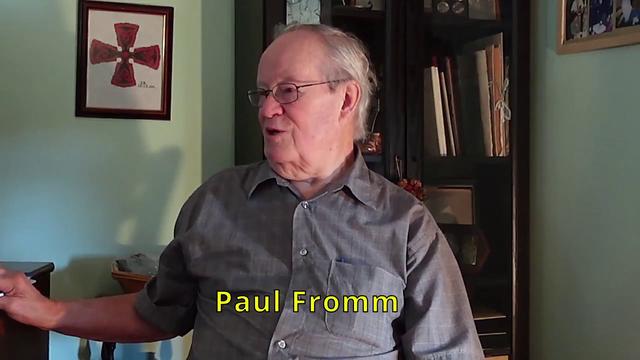
Paul Fromm on “The Political Cesspool” :The End of Trudeau & Major Positive Effects of Incoming President Donald Trump

Posted on by

Paul Fromm on “The Political Cesspool” :The End of Trudeau & Major Positive Effects of Incoming President Donald Trump

I appeared on “The Political Cesspool” tonight, hosted by James Edwards. I discussed Trudeau’s resignation and the many positive effects of Donald Trump on Canada. Change is already coming and the reversal of Woke. Radio Show Hour 1 – 2025/01/11 – The Political Cesspool Radio Programme. https://www.thepoliticalcesspool.org/radio-show-hour-1-2025-01-11/

Woke Canada & The Great Replacement in the Age of Trump

Posted on by

p

Woke Canada & The Great Replacement in the Age of Trump

Veteran Canadian Nationalist Paul Fromm joins Australian nationalist and author Nathan Sykes to discuss the impact that Donald Trump’s Presidential victory will likely have on woke Canada and its resoundingly hated Prime Minister, Justin Trudeau. They also discuss the replacement of Canadians, Australians and Europeans through the immigration pogrom.

Our Heritage: Worth Fighting For

Posted on by

Our Heritage: Worth Fighting For
https://odysee.com/@reynolds1778:9/Aryan-mankind:6

“The illiterate of the twenty-first century will not be those who cannot read and write, but those who cannot learn, unlearn, and relearn.

Category: Uncategorized | Tags:

Baltimore’s Poverty: Blame Whites

Posted on by

Baltimore’s Poverty: Blame Whites

The Curse of Multiculturalism & Diversity

Posted on by

The Curse of Multiculturalism & Diversity