The Coronavirus: Counting the Cost

Posted on by

The Canadian Red Ensign
The Canadian Red Ensign

Saturday, March 28, 2020

The Coronavirus: Counting the Cost

Let us suppose that tomorrow Justin Trudeau were to make the following announcement:

I have good news and bad news. The bad news is that the experts have told us that it will take twenty years of extreme social distancing for us to be certain COVID-19 will not resurge. The good news is that we have developed the technology to fully automate production of all essential goods and the delivery of the same. Everyone is therefore ordered to remain in their homes for the next twenty years. All of your needs will be met. Robots will produce all the food and toilet paper and everything else you need and bring it to your home. There is no need for you to go outside. Armed drones will patrol the streets nonstop to enforce your compliance with this order. I am sorry that you will not be able to see your friends or loved ones outside of your immediate household who live with you again, except through video communication, for two decades, but it is necessary to prevent COVID-19 from resurging and flooding our health care system. I will remain in office for the duration of this period to see to it that everything functions smoothly. See you in twenty years.


Would we tolerate this?

Would we agree that the total loss of our freedoms of movement and association for two decades was a price worth paying in order to protect us from this virus?

I hope – which is probably a safer word to use here than assume – that most of us would answer “no” to both of these questions. Yet, with one significant exception, the differences between the hypothetical announcement and what we are actually being told are ones of degree rather than kind. It appears, however, that most of us would answer these questions “yes” had they been asked of what the government is actually saying.

This raises the interesting question of where the line falls between what we are willing to put up with from the government in terms of suppression of our basic freedoms in order to contain or combat this pandemic and what we are not. At what point does the price become too high?

The reluctance of many to think in terms of this question comes from the mistaken notion that the cost of the measures that our country and many others are taking to combat the COVID-19 pandemic is entirely, or at least mostly, economic. Those who hold this mistaken notion, then argue from the maxim that lives are more important than money, property, the economy and the like, that no economic cost is too high to achieve the end of saving lives from COVID-19. As I observed in my last essay, the premise of this reasoning is a lie concealed behind a moral truism. While it is true, of course, that lives are more important than material goods, if you wipe out material goods you will end up destroying lives.

Let us consider the point that I sought to make in the hypothetical Trudeau speech above by that one item that is a significant exception to the rule that it differs from what he is actually saying only by degree rather than kind. In the speech, Trudeau has found a technological solution to the problem of providing people with their essential needs while everyone is locked in their homes for their own good. Robots will do it all. No such solution is available in the real world. If it were, however, it would remove the economic element from the equation entirely. Yet the problem remains. How many, even with the assurance that all their material needs will be met, would consider living under a house arrest enforced by the most Orwellian of means for twenty years to be an acceptable cost to pay in order to stop COVID-19?

My point is that the cost of “extreme social distancing”, “isolation” and “shut down” over too long of an extended period of time, even with the economic element subtracted from that cost, is too high a price to pay. It is not a rational solution to the problem of the pandemic. Which is not surprising considering that it was quickly put in place by governments, on the advice of epidemiological experts, when they suddenly found that their earlier inattention to the outbreak when it was confined to China had brought it to their own doorsteps. Decisions made in haste are not likely to be thoroughly thought out rational decisions. Especially when you are trying to compensate for having earlier underreacted to a potential crisis. That is what leads to overreaction.

Andrew Cohen of the Ottawa Citizen in his recent comparison of the Canadian and American methods of handling this crisis clearly expresses his preference for the Canadian way of doing things over the American. I too prefer the Canadian way, although for me, that way is and always will be, defined by the Canada of 1867, whereas for Cohen, the Canadian way seems to be defined by whatever the Liberal Party says Canada is all about in the present moment. He mentions that Canadians tend to listen to and respect experts more than Americans, or at least the sitting American president. Perhaps that is true. In this case, however, the Canadian government is acting like it has been listening to only one kind of expert.

The kind of people we call experts today are the result of the centuries long process of the specialization of knowledge. If you are looking for something to do in your time of isolation you might want to consider reading Richard Weaver’s discussion of this process in Ideas Have Consequences. We have gone from prioritizing the ability to see the big picture to prioritizing the mastery of small subsets of knowledge. The person who has so mastered his own field of knowledge is the expert. Being an expert in one field does not translate into being an expert in all, or even competently knowledgeable in fields other than his own, and, while this is an over-generalization, of course, it is nevertheless the case that experts tend to have a kind of tunnel vision and are often grossly ignorant of other fields than their own.

Thus, the epidemiologists called upon to advise on how to deal with the COVID-19 pandemic and prevent the medical system from crashing by being swamped have provided a solution that would work according to the knowledge available to them. That knowledge is limited to their own field. They are incapable of calculating the number of lives that would be lost due to problems such as mass starvation if we crash the economy in order to practice extreme social distancing. Note that the United Nations Food and Agricultural Organization is already warning of a looming global food shortage caused by these Communist anti-COVID measures. Indeed, they seem incapable of understanding that if you crash the economy to save the medical system, you lose the medical system too, because it is the economy that pays for the medical system. The people advising this strategy clearly do not possess even a basic understanding of economics, history (other than the history of disease outbreaks), and constitutional law. The government is clearly not listening to experts in these fields. If it was, it would not be so quick to take measures that could potentially recreate the Great Depression and the inflation of the Weimar Republic. Nor would it have attempted, as it did earlier this week, to pass a bill eerily similar to that which made Adolf Hitler into the dictator of Germany eighty seven years ago.

The government needs to listen to voices knowledgeable in these areas as well as those knowledgeable in containing epidemics. It would do well to pay heed to Dr. Garrett Hardin’s First Law of Human Ecology – “You cannot do only one thing”, which means that anything you do to produce a particular end or solve a particular problem, will have other repercussions elsewhere.

We also need to be listening to those who can tell us something about the long-term consequences of conditioning people to fear normal human contact – the friendly handshake, the warm hug, etc. – as the harbinger of death, and to treat electronic, long-distance, communication as an adequate substitute to be preferred. We had a big enough problem with people gluing their eyes to their smartphones or other electronic devices, immersing themselves in an online virtual world, and shutting themselves off from the real world and the living, breathing, people around them, before this crisis. “Extreme social distancing” will only make it worse. Perhaps someone can tell us what the likely repercussions will be of instilling in our populace the exact opposite mindset to those who went to war for us in 1939, willing to sacrifice themselves and die a horrible death rather than that we lose our freedoms. Karen Selick has made a convincing argument that one of the results of the shut down and stay home approach will be a huge rise in domestic violence. Obviously she is talking about the effects on people who have families. It would also be good to know from mental health experts what the effect on single people who live alone – a much larger percentage of our population than ever before – of cutting them off completely from human contact for months will be. How long will they be able to keep their sanity? How long before the suicide rates skyrocket? How long before people start to snap and do terrible things?

All of this must be factored into the cost that the government is forcing us to pay for stopping COVID-19.

One wiser and more knowledgeable than all the experts put together once said:

“For whosoever will save his life shall lose it: and whosoever will lose his life for my sake shall find it.” (Matt. 16:25)

He was speaking of those who believe in Him and are martyred for their faith. Perhaps we should be considering the broader implications of the principle.

Now That Canada Is Rationing Masks, Trudeau Faces Backlash for Donating Medical Supplies to China

Posted on by

Now That Canada Is Rationing Masks, Trudeau Faces Backlash for Donating Medical Supplies to China


[The problem with Minorityitis — putting the interests of privileged minorities before those of your own people — is that you eventually reveal your suicidal bad judgment. Despite kidnapping our citizens and trying to damage us economically, Red China still has many friends in high places in the Liberal hierarchy. The Chinese CAUSE of this virus got medical supplies Canadians now desperately need. Hence our slogan: CANADA FIRST!]

 
Tobias Hoonhout
a box on a table: Boxes of N95 protective masks for use by medical field personnel in New Rochelle, New York, March 17, 2020. © Mike Segar/Reuters Boxes of N95 protective masks for use by medical field personnel in New Rochelle, New York, March 17, 2020.
Canada’s Official Opposition Conservative Leader Andrew Scheer took aim at Prime Minister Justin Trudeau for shipping tons of medical supplies to China in February, calling the move “outrageous” with current concerns that Canada is running short on supplies amid its own fight against coronavirus.“Drs. across the country are facing urgent shortages of critical supplies. PM must explain why he sent 50,118 face shields, 1,101 masks, 1,820 goggles, 36,425 medical coveralls, 200,000 nitrile gloves and 3,000 aprons from Canada’s own gov’t reserves overseas in Feb,” Scheer tweeted.Canada’s Foreign Affairs department announced on February 9 that “Canada has deployed approximately 16 tonnes of personal protective equipment, such as clothing, face shields, masks, goggles and gloves” overseas to China, the epicenter of the coronavirus pandemic.

The move came after the World Health Organization warned the international community that “further international exportation of cases may appear in any country” and that “severe coronavirus-related disruptions” would occur as a result.

“It was absolutely certain in early February that we would need this equipment,” Amir Attaran, a professor at University of Ottawa’s school of epidemiology and public health and its faculty of law, told The Globe and Mail. “This decision went beyond altruism into high negligence and incompetence because Canada did not, and does not, have surplus equipment to spare.”

A spokesman for Foreign Affairs explained to the paper that the decision was made “when the spread of COVID-19 was primarily limited to China,” and that Canada had since “welcomed donations from Chinese companies” to boost its own stockpiles.

Local European news outlets reported this week that the majority of rapid coronavirus test kits supplied by China to Spain and the Czech Republic are faulty.


More For You

Ontario intensive care units see jump in patients

The number of confirmed COVID-19 patients in intensive care units around Ontario has doubled in less than two days, prompting concern that the virus has actually been spreading more rapidly than previously thought. There were 43 patients hospitalized in Ontario’s ICUs on Friday, up from 29 on Thursday and 17 on Wednesday, according to figures from the province’s associate chief medical officer of health, Dr. Barbara Yaffe. That rapid jump in the…

cbc.ca Logo cbc.ca Canada News

Photos

In photos: See how the world reacts to COVID-19 pandemic

Photos Logo Photos Photos

Could pandemic drive a surge in ‘Canada-first’ isolationism? | Analysis

“At the end of the day,” Deputy Prime Minister Chrystia Freeland remarked this week, “the reality of a global pandemic is that it is global.” Three weeks ago, Health Minister Patty Hajdu made a similar argument. “A virus knows no borders,” she said. The coronavirus pandemic is an object lesson in interconnectedness: what started as a problem in one city in China now threatens lives in every country on Earth. But the virus also has made us newly…

cbc.ca Logo cbc.ca Canada News

Countries turn to militaries for assistance

Italy has recorded its single biggest leap in coronavirus deaths, announcing that 919 people have died from Covid-19 over the past 24 hours. Seemingly dashing hopes the rate of infection might be flattening there, Italy also became the second country to overtake China in terms of the number of coronavirus infections, reaching 86,498 cases. That included 66,414 current infections, up 4,401 from Thursday. On Thursday the US became the country with…

The Guardian Logo The Guardian World News

Social distancing beginning to slow spread: B.C. official

cbc.ca Logo cbc.ca Canada News

One of U.S.’ worst weeks draws to a close

The Washington Post Logo The Washington Post World News

Gatherings restricted, schools closed: What’s being done to fight…

The Canadian Press Logo The Canadian Press Canada News

Coronavirus fact check: Analyzing the patterns in Trump’s falsehoods

The New York Times Logo The New York Times World News

How a curling event became a hotspot for virus outbreak in Canada

National Post Logo National Post

Russia sees no epidemic but starts shutdown

BBC News Logo BBC News World News

Pandemic conspiracy theories test truth, government: experts

VICTORIA — The novel coronavirus threatens the health of Canadians, but to some people the pandemic stokes fears of a government plot to subvert freedoms, say experts who study conspiracy theories. Terrorist attacks, natural disasters, economic shocks and the ongoing COVID-19 outbreak are events that fuel conspiracy theories, says Edwin Hodge, a sociologist at the University of Victoria who studies far-right extremism. “Believing that it just…

The Canadian Press Logo The Canadian Press Canada News

Inside the largest U.S. bailout

The Washington Post Logo The Washington Post News

Discussing deportation issue with U.S.: Freeland

Deputy Prime Minister Chrystia Freeland says Canada is seeking assurances from the United States that it won’t deport asylum-seekers turned back by Canada at its borders through temporary pandemic containment measures. As part of the temporary agreement to halt the spread of the novel coronavirus across the shared border, Canada agreed last week to return asylum-seekers attempting to enter the country outside of official border points —a stark…

cbc.ca Logo cbc.ca Canada News

How can Johnson run U.K. while suffering from COVID-19?

CNN Logo CNN World News

Budget watchdog urges Ottawa to trim spending after COVID-19 retreats

National Post Logo National Post Canada News

Trump ‘uninformed’ about N.Y.’s ventilators: Cuomo

CNN Logo CNN News

Small businesses applaud Ottawa’s pledge to cover 75% of payroll

Calgary Herald Logo Calgary Herald Canada News

Wuhan partly reopens after coronavirus lockdown

BBC News Logo BBC News

Watchdog warns against Air Canada’s proposed deal to buy Transat

MONTREAL — Air Canada’s proposed acquisition of Transat AT Inc., which owns Air Transat, likely will hinder competition and result in less choice for Canadian travellers, the Competition Bureau says. In a report delivered to Transport Minister Marc Garneau, the watchdog said Friday that eliminating the rivalry between the two Montreal-based carriers would result in higher prices, fewer services and ultimately less travel by Canadians on a range…

The Canadian Press Logo The Canadian Press Canada News

‘White-collar quarantine’ over virus spotlights class divide

For about $80,000, an individual can purchase a six-month plan with Private Health Management, which helps people with serious medical issues navigate the health care system. Such a plan proved to be a literal lifesaver as the coronavirus pandemic descended. The firm has helped clients arrange tests in Los Angeles for the coronavirus and obtained oxygen concentrators for high-risk patients. “We know the top lab people and the doctors and nurses…

The New York Times Logo The New York Times World News

Ottawa too slow in dealing with economic impact of virus | Opinion

National Post Logo National Post Canada News

Indian man who refused to self-isolate sends 40,000 in quarantine

Business Insider Logo Business Insider World News

Injured Humboldt Bronco player launches lawsuit against drivers

The Canadian Press Logo The Canadian Press

Joseph Lowery, civil rights icon and MLK aide, dies at 98

NBC News Logo NBC News News

Indigenous leaders ‘disappointed’ with federal response on…

As COVID-19 cases continue to rise in the Calgary zone, some Indigenous communities in the area continue to ramp up measures to protect their members, and say nothing is off the table in an effort to keep the virus out. “Our number one priority is protecting the health of nation members,” Tyler White, CEO of Siksika Health, said. “We took some early steps to respond not only by getting our structure organized but also in identifying essential…

Calgary Herald Logo Calgary Herald Canada News

Macron says France is there for Italy, Europe must not be ‘selfish’

Reuters Logo Reuters World News

Alberta confirms 56 new COVID-19 cases

Edmonton Journal Logo Edmonton Journal Canada News

Brazil’s ‘anti-science’ coronavirus response sparks alarm

The Guardian Logo The Guardian World News

A lung specialist explains how COVID-19 can wreak havoc on the body

cbc.ca Logo cbc.ca Canada News

Asian Americans fear for their safety as coronavirus fuels racism

Tony Du is a first-generation Chinese American epidemiologist living in Maryland who has closely followed COVID-19 and its path of destruction since its very beginning in Wuhan. Now that it’s hitting the U.S. hard, he’s doing what he can to help out locally. A couple of weekends ago, he spent some of his down time training to join the Maryland Responds Medical Reserve Corps, a community, volunteer group that bolsters the U.S. public health…

cbc.ca Logo cbc.ca World News

Funerals during coronavirus pandemic happen in parking lots, by livestream

HuffPost Canada Logo HuffPost Canada

Fears of domestic violence rise as millions confined

With families across Europe confined to their homes to curb the spread of the novel coronavirus, fears are rising of a surge in domestic violence. On top of the stress caused by confinement, fears around job security and financial difficulties are also increasing the likelihood of conflicts.

AFP Logo AFP World News

Controversial malaria drug tested as a therapy for COVID-19 at…

Global News Logo Global News Canada News

Iran urges U.S. to free Iranian prisoners amid pandemic

Al Jazeera Logo Al Jazeera World News

Sask. man waiting 3 weeks for EI to kick in

Global News Logo Global News Canada News

Erdogan urges voluntary quarantine as Turkey’s virus deaths rise

Bloomberg Logo Bloomberg World News

Nunavut: Socially distanced, it’s one of the last places without…

POLITICO Logo POLITICO Canada News

U.S. teen who died of COVID-19 denied treatment because he…

Gizmodo Logo Gizmodo World News

Military on notice to provide logistic support, help vulnerable amid…

Ottawa Citizen Logo Ottawa Citizen Canada News

The only countries not reporting coronavirus cases

Newsweek Logo Newsweek World News

T.O. police officer, TTC employee, 4 people in shelter system test…

A TTC Wheel-Trans operator, a Toronto police officer, and four people in the city’s shelter system are among the latest Toronto residents to test positive for COVID-19, it was announced on Friday. The TTC said the operator — its third TTC employee to test positive — has a travel history and was last at work on March 12. The employee began showing symptoms on March 17, the TTC said in a statement Friday, adding that this means he did not work in…

cbc.ca Logo cbc.ca Canada News

Trump seeks to force GM to make ventilators

DETROIT — President Donald Trump issued an order Friday that seeks to force General Motors to produce ventilators for coronavirus patients under the Defence Production Act. Trump said negotiations with General Motors had been productive, “but our fight against the virus is too urgent to allow the give-and-take of the contracting process to continue to run its normal course.” Trump, who had previously been reluctant to use the act to force…

The Canadian Press Logo The Canadian Press News

The latest numbers on COVID-19 in Canada

The latest numbers of confirmed and presumptive COVID-19 cases in Canada as of 10:08 p.m. ET on March 27, 2020: There are 4,757 confirmed and presumptive cases in Canada. _ Quebec: 2,021 confirmed (including 18 deaths, 1 resolved) _ Ontario: 993 confirmed (including 18 deaths, 8 resolved) _ British Columbia: 792 confirmed (including 16 deaths, 275 resolved) _ Alberta: 542 confirmed (including 2 deaths, 33 resolved) _ Saskatchewan: 104 confirmed…

The Canadian Press Logo The Canadian Press Canada News

Trump warns governors to be ‘appreciative’

WASHINGTON (AP) — After days of pleading from the nation’s governors, President Donald Trump took steps Friday to expand the federal government’s role in helping produce critically needed supplies to fight the coronavirus pandemic. Yet the president rejected any criticism for the federal government’s response to a ballooning public health crisis that a month ago he predicted would be over by now. “We have done a hell of a job,” Trump told…

The Canadian Press Logo The Canadian Press News

She’s 95. He’s 102. Their love still shines through the window of B.C. care…

Vancouver Sun Logo Vancouver Sun Canada News

How panic-buying exposed a problem with our modern world |…

The Atlantic Logo The Atlantic World News

Cdn cruise passenger dies from COVID-19 in Brazil

National Post Logo National Post Canada News

Trump signs $2 trillion coronavirus bill into law

The Washington Post Logo The Washington Post World News

Canada’s latest COVID-19 developments

The Canadian Press Logo The Canadian Press

Trump and allies strike markedly different tone on China over pandemic

CBS News Logo CBS News World News

John Ibbitson & Other Immigration Addicts Deplore That Coronavirus Has Temporarily Halted The Immigration Invasion

Posted on by
% buffered
00:00

Immigration, Refugees and Citizenship Canada (IRCC) contractors, including translators, wait for the arrival of Syrian refugees at the Welcome Centre in Montreal in December, 2015.

CHRISTINNE MUSCHI/The Globe and Mail

Until last week, there was a very good chance Canada would accept more immigrants this year than at any time in living memory. Instead, this could be a year when fewer people make Canada their new home than in the past.

The ambitious plans of this Liberal government to expand immigration targets and create new programs have been dashed by the coronavirus pandemic.

The challenge is to ensure the downturn is only temporary, that Canada returns to its open-door policy as quickly as possible. Otherwise, closed borders could be the most damaging legacy of this disease.

In late February, Immigration Minister Marco Mendicino outlined aggressive plans to further increase immigration to Canada. To the problems created by an aging society, low fertility and growing labour shortages, “immigration is the only solution,” the minister said in a speech to the Canadian Club in Toronto, as he outlined proposed new programs, including one that would allow municipalities to recruit immigrants.

Canada accepted 341,000 immigrants in 2019, 10,000 above target and the most since the great immigration surges that filled the Prairies before the First World War.

On March 12, the department released targets for this year and the next two years of 341,000, 351,000 and 361,000 – so a little more than a million people over three years.

About 60 per cent of those would be economic migrants, with most of the rest family members. About 50,000 would be admitted each year as refugees.

But March 12 was so long ago. Today, most of the country is in lockdown under provincial states of emergency, and the Canadian border is closed to newcomers.

“Workers, students and approved permanent residents who haven’t landed should not travel yet,” the Immigration website states, although there are plans to admit some temporary foreign workers.

Ottawa is also turning away those who had been making irregular border crossings in order to seek asylum.

It’s likely now that Canada will not meet its target of 341,000 immigrants this year – an unfortunate but inevitable consequence of the pandemic.

What will happen in 2021? Will the Liberal government greatly increase the target to make up for 2020′s reduced intake, keep to the current level of 351,000 or set a lower one? In the midst of the chaos created by this pandemic, it’s too soon to know.

Kevin Lemkay, a spokesman for Mr. Mendicino, said in a statement to The Globe and Mail that the restrictions on entry to Canada are only temporary, and that the department was continuing to accept and process applications. “Our government will remain focused on welcoming highly skilled people who can help build a stronger country,” he said.

Given its past record, it’s reasonable to expect the Liberal government will try to make up lost ground. The leading Conservative leadership candidates, Peter MacKay and Erin O’Toole, have also stressed that their party remains as open to high levels of immigration as it was when Stephen Harper was prime minister.

But Samuel Hyman, a Vancouver-based immigration lawyer, worries the pandemic could fuel nativist sentiment. No country is immune to the rising tide of nationalism that’s attacking liberal democracies and their institutions in Europe, the United States and elsewhere.

“We must be vigilant in never forgetting the lessons of history,” Mr. Hyman warned in an interview.

In 1913, when the population of Canada was only 7.2 million, more than 400,000 immigrants arrived in Canada – over five per cent of the population. But the First World War was followed by both recession and the devastating Spanish flu, which killed 55,000 people in Canada. Attitudes toward immigration hardened: by the late 1920s, the intake was down to 160,000 a year, and it cratered during the Depression.

Canada is a much more diverse and tolerant country today. In last October’s federal election, Maxime Bernier’s nativist People’s Party of Canada secured a scant 1.6 per cent of the popular vote – an impressive tribute to the continuing openness of Canadians toward newcomers.

Logically, there should be no change in attitudes toward immigration as a result of the pandemic. But logic doesn’t always guide public policy. Sometimes, policies are governed by fear.

Politicians in all parties need to fight that fear by supporting a return to wide-open immigration once this pandemic has passed.

Listen to THE ETHNOSTATE, With William Johnson, Paul Fromm & Kenn Gividen: When Based Boomers Met Woke Millennials

Posted on by
Listen to THE ETHNOSTATE, With William Johnson, Paul Fromm & Kenn Gividen: When Based Boomers Met Woke Millennials

PLUS
Tennessee’s GOP governor targets day honoring Nathan Bedford Forrest
https://dailykenn.blogspot.com/2019/07/tennessees-gop-governor-targests-day.html
 
Chinese diplomat triggers Susan Rice over “racist” tweet
https://dailykenn.blogspot.com/2019/07/chinese-diplomat-triggers-susan-rice.html
 
Biden: Trump is the most openly racist president in American history
https://dailykenn.blogspot.com/2019/07/biden-trump-is-most-openly-racist.html
 
 
Category: Uncategorized

Why They’re Called ‘Wet Markets’ — And What Health Risks They Might Pose

Posted on by

Why They’re Called ‘Wet Markets’ — And What Health Risks They Might Pose

• Jan 31, 2020
Originally published on February 8, 2020 6:35 am

A “wet market” in Wuhan, China, is catching the blame as the probable source of the current coronavirus outbreak that’s sweeping the globe.

Patients who came down with disease at the end of December all had connections to the Huanan Seafood Market in Wuhan China. The complex of stalls selling live fish, meat and wild animals is known in the region as a “wet market.” Researchers believe the new virus probably mutated from a coronavirus common in animals and jumped over to humans in the Wuhan bazaar.

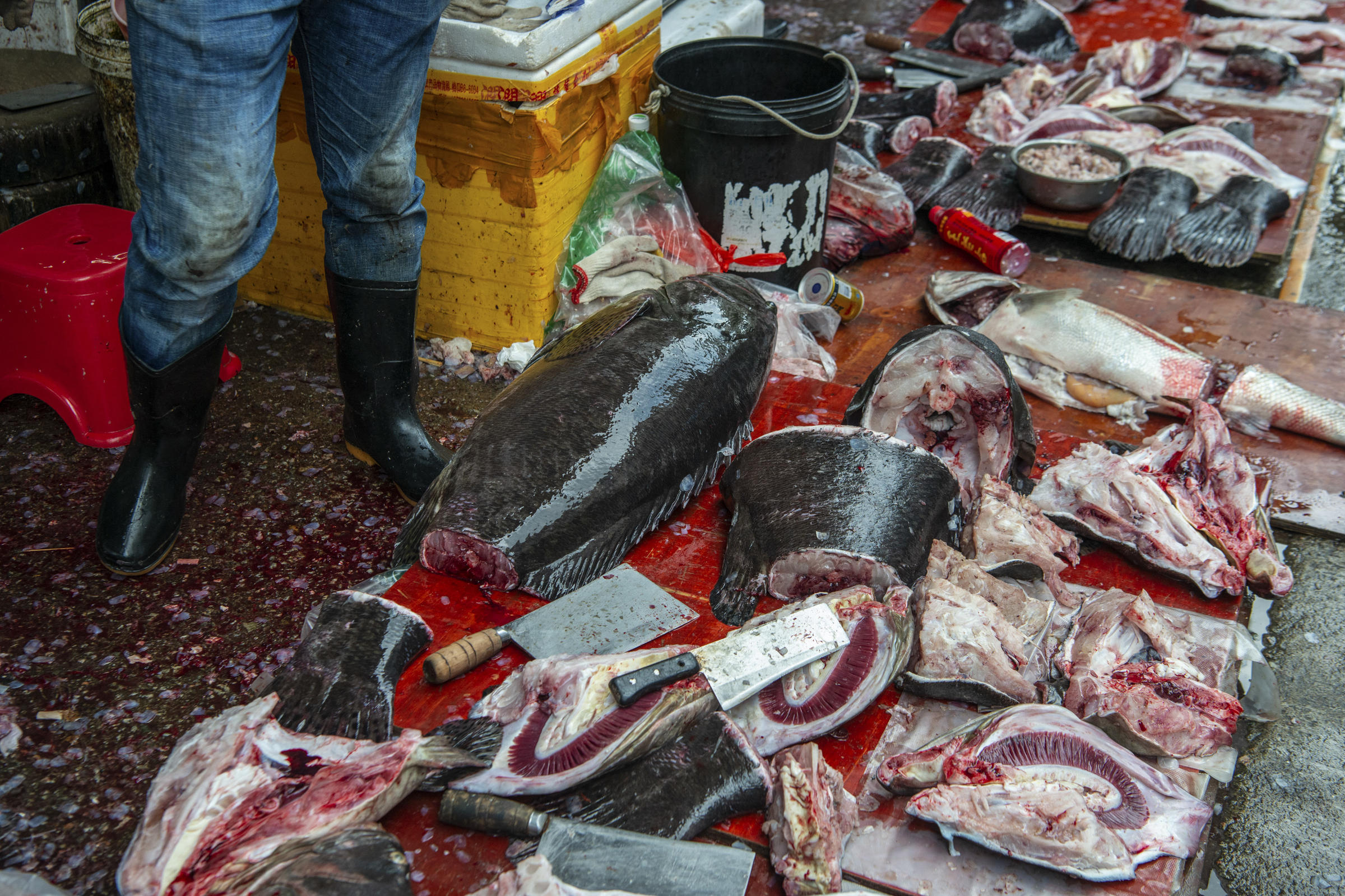
I visited the Tai Po wet market in Hong Kong, and it’s quite obvious why the term “wet” is used. Live fish in open tubs splash water all over the floor. The countertops of the stalls are red with blood as fish are gutted and filleted right in front of the customers’ eyes. Live turtles and crustaceans climb over each other in boxes. Melting ice adds to the slush on the floor. There’s lots of water, blood, fish scales and chicken guts. Things are wet.

At the Tai Po market, a woman who runs a shellfish stall — she only wants to give her name as Mrs. Wong — says people blame wet markets for spreading disease. But she says that’s not fair. Like just about everyone else in the market. Wong is wearing a surgical face mask because of the coronavirus outbreak. She’s heard about the links between the wet market in Wuhan, China, and the coronavirus but doesn’t think something like that would happen in Hong Kong.

“It’s much cleaner in the Hong Kong markets. It’s so different from what’s happening in mainland China,” she says. “When I go to mainland China and I’m trying to eat something, I’m concerned about what’s in the food.”

Meanwhile, this kind of market is not just an Asian phenomenon. There are similar markets all over the world — places where fish, poultry and other animals are slaughtered and butchered right on the premises.

But researchers of zoonotic diseases — diseases that jump from animals to humans – pinpoint the wet markets in mainland China as particularly problematic for several reasons. First, these markets often have many different kinds of animals – some wild, some domesticated but not necessarily native to that part of Asia. The stress of captivity in these chaotic markets weakens the animals’ immune systems and creates an environment where viruses from different species can mingle, swap bits of their genetic code and spread from one species to another, according to biologist Kevin Olival, vice president for research at the EcoHealth Alliance. When that happens, occasionally a new strain of an animal virus gets a foothold in humans and an outbreak like this current coronavirus erupts.

The Tai Po market in Hong Kong does have some live animals besides the seafood but the selection is rather boring compared to the exotic assortment of snakes, mammals and birds on offer in some markets in mainland China. They’re known to sell animals such as Himalayan palm civets, raccoon dogs, wild boars and cobras.

The only live birds in Tai Po are chickens, which are kept behind the butchered pork section of the market.

Chan Shu Chung has been selling chicken here for more than 10 years. He says business is really good right now because the price of pork — his main competition — is through the roof. Pork is in short supply due to trade tensions between China and the U.S. and a recent bout of swine flu.

A chicken for sale at the Tai Po market in Hong Kong. Customers say that buying chickens that are slaughtered on the spot makes them feel that they’re getting meat from fresh, healthy birds.
Jason Beaubien / NPR

So people are buying more chicken. Customers can select a live bird from Chung’s cages. Chung pulls them out by their feet, holds them upside down to show off their plump breasts. If the customer is happy with the bird, Chung puts a plastic tag with a number on the chicken’s foot. He gives the customer a matching tag, sort of like a coat check. Fifteen minutes later the shopper can come back and pick up the chicken meat.

Chung says he and his colleagues do their best to keep the area clean. They wash down the stalls regularly and disinfect the countertops to stop germs from spreading.

Chung, however, is one of the few people in the market who is not wearing a face mask. Face masks have become so common in Hong Kong since the coronavirus outbreak started that pharmacies across the city are sold out of them.

Chung says he isn’t afraid of this new coronavirus. He always gets his annual flu shot so he believes he’s protected against this new disease, even though scientists say the flu shot will not protect people against this new coronavirus.

Chung adds confidently that he’s even immune to SARS — for which there also is no commercially available vaccine.

But he does keep his chicken stalls incredibly clean, which public health officials say is one important step in stopping the spread of diseases. So maybe he’s on to something.

: 2/07/20

An earlier version of this story incorrectly spelled the name of the Huanan Seafood Market in Wuhan, China as Hunan.

One Victory Against the Encroaching Totalitarianism

Posted on by

The Canadian Red Ensign

The Canadian Red Ensign

Wednesday, March 25, 2020

One Victory Against the Encroaching Totalitarianism


If anyone was under the impression that my harsh, negative, assessment of our civil leadership’s response to the COVID-19 pandemic in my last essay was overblown, they need only look at the dirty trick the Liberals tried to pull this week. Parliament, which adjourned on March 13th until Hitler’s birthday – draw your own conclusions, was temporarily called back on Tuesday to vote on an emergency spending bill. The problem was not the $82 billion that the government was seeking permission to spend. The problem was that the bill, as originally drafted, included several provisions that would give them the power to increase spending and taxation without submitting the increases to Parliament for a vote.

Perhaps they thought that the panic that the media – which in Canada is almost monolithically the mouthpiece of the Liberal Party – has generated would be sufficient for them to get away with this. Or possibly they thought that all of their efforts over decades to get Canadians to devalue the traditions and institutions we inherited from Britain and to forget the history and significance of those traditions and institutions had finally paid off, and that we would be willing to let them overturn the Magna Carta and the very foundation of Parliamentary government and our Common Law liberties.

Mercifully, it appears they were wrong. Tuesday morning it was reported that Her Majesty’s Loyal Opposition were doing their job and firmly standing up for our traditional, constitutional, limits on government powers and that in the face of this staunch defence, the Liberals had backed down from their proposed power grab. Which is grounds for hope in this troubling times. The spirit of liberty has not yet been entirely crushed within us.

Later in the day, it was clarified that the tax powers were all that the Liberals had removed from the bill and that they were still pushing for the spending and borrowing powers. The Tories dug in in their opposition to these as well. The parties entered into negotiations but the day ended without the House being called upon to vote. This Wednesday morning – the Feast of the Annunciation of the Blessed Virgin Mary – it was announced that the Liberals had dropped all the provisions for extended powers from the bill, which as an emergency spending bill has just passed the House, and will undoubtedly clear the Senate and receive Royal assent within a day or two.

I have been very critical of Andrew Scheer’s past performance as Opposition Leader and his bumbling in the last election but now, when it counts the most, it looks like he has come through for Canadians. Andrew Cohen, writing for the Ottawa Citizen, has praised the Prime Minister’s performance in this crisis saying “This has been his finest hour.” I beg to disagree. This – not the Kokanee Grope, not the costume party in India, not the Blackface/Brownface Scandal, not the SNC Lavalin Affair – has been Justin Trudeau, revealed at his worst – an opportunistic, tyrant, who has tried to take advantage of a global health crisis to attack the foundations of our constitution and expand his own powers. This is Andrew Scheer’s finest hour, not Justin Trudeau’s.

I am under no illusions that the majority of my countrymen see it my way rather than Cohen’s. Canadians have been far too apathetic for far too long towards the riches of our inheritance in the Common Law and the Westminster System of Parliament. It is almost one hundred years since the famous incident when Lord Byng, Governor General of Canada, exercised the reserve powers of the Crown and refused Liberal Prime Minister William Lyon Mackenzie King’s request for a dissolution of Parliament. King, who had been allowed to form a government despite not having won the plurality in the House, wanted the dissolution to save his own bacon because he faced an imminent censure in Parliament over a corruption scandal. Lord Byng’s refusal was an entirely appropriate use of the Crown’s powers to protect Parliament’s right to hold the government accountable, as such champions of our constitution as John Farthing and Eugene Forsey demonstrated in their books on the subject. In the next Dominion election, however, the Canadian electorate bought King’s execrable lies about the matter hook, line, and sinker and awarded him a majority government.

That the government’s first thoughts with regards to dealing with this crisis were that they need to expand their powers beyond what the constitution allows them is itself sufficient evidence that they do not deserve to be trusted with such powers.

The approach they have been taking to the COVID-19 pandemic is further grounds not to trust them. Remember that this is a virus which in over eighty percent of the cases we know about has produced no symptoms to moderate symptoms. The actual percentage of those who have contracted the virus of whom this is true is probably closer to 99.99%. Most people who are asymptomatic would not have been tested unless they were in a situation where they were known to have been exposed to the virus. Thus, an approach to containing the disease which focuses on protecting those most vulnerable to experience it at its worst rather than protecting us all by shutting everything down and forcing us all into isolation makes the most sense. Countries that have aggressively pursued such an approach have succeeded in containing the spread of the disease without going into extreme shut down mode. Ironically, the countries which Mr. Cohen lists in the second paragraph of his column have all followed this approach, unlike Italy and the United States whose mishandling of the crisis he decries, despite the fact that they are following the same kind of approach, albeit with varying degrees of severity, as our own government.

The model which Mr. Trudeau is following is that of advising – and probably eventually compelling – all Canadians to stay at home, away from the threat of contagion, and also from the sun and fresh air which are man’s most important natural allies in the fight against disease. This involves shutting down all “non-essential” businesses and promising that the government will take care of the huge segment of the workforce which now founds itself unemployed. Since government is not a wealth generating institution – despite sometimes having delusions to the contrary – this means that the burden it is taking upon itself must fall upon the only part of the private economy that remains open – the “essential” businesses that provide food and other necessities, putting a strain on these which will, if this lasts for any lengthy period of time, cause them to fail. This would result in far more deaths than the collapse of the medical system that Mr. Trudeau is trying to avoid by the long-term strategy of slowing the spread of the virus and pushing its peak into the future ever would. The modern economy is the way in which we have avoided the Malthusian consequences of our population size. Anybody who is not an idiot knows this. “Lives are more important than the economy” is a lie concealed behind a moral truism. Destroy the economy, and you destroy the lives that it sustains. The Holodomor of almost ninety years ago is an historical example of how a regime used that principle to destroy lives deliberately with malice aforethought. If the Trudeau Liberals accomplish the same it will be primarily through stupidity.

Nor is shrinking the economy to the point where it cannot possibly feed our population and so causing the deaths of masses by starvation the only way in which the model the Trudeau government is pursuing could produce disastrous results. As unemployment skyrockets, suicide rates are likely to rise as well. Furthermore, if “extreme social distancing” is kept in place for as long as the Liberals are saying is necessary – months rather than weeks – there will be a general breakdown in psychological and emotional health. Human beings are social creatures. They are not meant to live apart from each other. Force them to live contrary to their nature for a lengthy period of time and they will start to go bonkers. This too would contribute to a rise in suicide rates as well as other dangerous and destructive behaviour.

Furthermore, just as an extended shut down will rapidly burn up accumulated material capital, so an extensive period of “extreme social distancing” will burn up social capital – the trust between members of a community and society that enables them to function in a civilized way and cooperate for their own common good. The only kind of government that would want to destroy that is a totalitarian government that hates and persecutes all social interaction that is not under its direct planning and control, which demands the total undivided allegiance of its citizens, and which fears any and all rivals for its peoples’ loyalty, trust, and affection.

Those who would rather not live under that kind of a government, who still value our constitution in which Queen-in-Parliament and not Prime Minister-in-Council is sovereign, and our Common Law rights and freedoms won a victory today. Let us practice eternal vigilance and pray that it is not short-lived.

Criticism of the Chinese government’s handling of coronavirus is not racism

Posted on by

Criticism of the Chinese government’s handling of coronavirus is not racism

Marcus Kolga: By wrapping themselves in ethno-nationalist rhetoric, the Chinese Communist Party often claims that a critique of their actions is equivalent to a critique of their people—a tried and true tactic in the authoritarian playbook

Marcus Kolga is a digital communications strategist and expert on foreign disinformation. He is a Senior Fellow at the Macdonald-Laurier Institute’s Centre for Advancing Canada’s Interests Abroad.

When we criticize the actions of governments run by autocrats and dictators, like those in Russia and China, we must bear in mind that it is not the citizens who are responsible for their government’s abuse and negligence; they are in fact, the greatest victims of it.

For instance, the Chinese people bear no responsibility for their government’s illegitimate imprisonment of Canadians Michael Kovrig, Michael Spavor and Hussein Celil. It is also the Chinese Communist Party’s (CCP) criminal negligence that directly contributed to the mass outbreak of COVID-19 in Wuhan, and the ensuing pandemic we face today. In fact, I very much doubt the families of China’s COVID-19 victims are celebrating their government’s actions today.

When we criticize the actions of these governments, we must be very specific and accurate in directing our criticism towards those who are in power. In the case of China, it is the Communist Party that holds exclusive decision-making power, and in Russia, the Putin regime. In both cases, the people of these nations have no meaningful say in the decision-making process of their governments, and face arrest and imprisonment for criticizing them.

MORE: When will the Chinese government be held accountable for the spread of coronavirus?

By generalizing our disapproval and outrage towards the citizens of these regimes, we risk hurting and stigmatizing these communities, and that plays directly into the disinformation warfare tactics that such regimes are engaged in against the Western world, including accusations of “racism.”

Authoritarian regimes frequently label foreign criticism of their policies as “racist” as a way to delegitimize them and polarize debate. By wrapping themselves in ethno-nationalist rhetoric, these regimes often claim that a critique of their actions is equivalent to a critique of the people itself; this heightens the need to be precise with our language and aware of the propaganda efforts of authoritarian regimes. It’s a tried and true tactic in the authoritarian playbook.

China’s former ambassador to Canada, Lu Shaye, accused the Canadian government of “white supremacy” last year, when Canada demanded the release of its citizens who had been arbitrarily detained in China, in retaliation after Canada complied with a U.S. extradition request for Huawei CEO Meng Wanzhou.

MORE: China kidnapped two Canadians. What will it take to free them?

Last week, the E.U. published a report that warned Vladimir Putin is seeking to use the COVID-19 pandemic to destabilize Western nations and undermine our alliances. The report states that the Russian government’s cynical disinformation attack is designed to “aggravate the public health crisis in Western countries, specifically by undermining public trust in national health care systems, thus preventing an effective response to the outbreak.”

In the apparent absence of any evidence that would disprove the E.U. claim, Kremlin spokesman Dmitry Pskov accused the E.U. of “Russophobia” in an effort to intimidate European policy-makers, critics and media into silence.

The same tactic has been used by the Russian government to discredit Canadian political leaders, like Chrystia Freeland, whose Ukrainian background has been cited as tainting her judgment. Putin critics, like myself, have also been labelled “Russophobic” for advocating for Canadian Magnitsky human rights legislation, a law that was lauded as the most pro-Russian measure that any Western government could take, according to assassinated Russian pro-democracy opposition leader, Boris Nemtsov.

Yet the concerns of Canadians who are worried about ethnic communities being stigmatized by the global pandemic must not be dismissed either. As the Washington Post’s Josh Rogin has pointed out, President Trump’s recent reference to COVID-19 being a “Chinese virus” is “simplistic but technically accurate,” and plays into the hands of Chinese Communist Party propagandists, who in turn use this to provoke anti-Trump and anti-Western sentiments.

Leading U.S.-based Chinese human rights activist Jianli Yang told me that he “may not like the term ‘Chinese virus’ that President Trump has been using in the past few days,” but he doesn’t believe “it is intended by him for any racist meaning.” He believes that Trump was using the term to counter the Chinese government’s attempts to “divert responsibility for its mishandling of the outbreak which has resulted in this global pandemic.”

Yang believes that “there should be and must be a moment when all, victimized individuals and countries, come together to hold the CCP regime accountable.”

Here in Canada, we can be fairly certain that our governments’ response to the COVID-19 pandemic, at all three levels of government, have been shaped by our sensitivity to potential accusations of racism by Chinese government propaganda. Why else did Canada refrain from limiting travel from Hubei and China, only to close off virtually all foreign travel mere weeks later?

Canada is not alone in facing such foul accusations.

In Sweden, a former, long-serving Swedish MP, Gunnar Hökmark, wrote in a recent opinion piece that “China’s leaders should apologize to the world for epidemics coming from China because of the dictatorship’s failure to address food safety, animal standards, and because its repression of truth and the freedom of its own citizens.” China’s ambassador to Sweden Gui Congyou condemned the statement and accused Hökmark of “stigmatizing” China. China’s ambassador also went on to criticize Hökmark, his colleague Patrik Oksanen and their think tank, the Stockholm Free World Forum, for being part of an “anti-China political machine” and for “attacking, slandering and stigmatizing China.”

Canadians and our government must take great care to avoid generalizations that risk stigmatizing Canadians of Chinese heritage, or any other community, whose governments engage in similar repressive behaviour, including the Russian and Iranian regimes. However, we must also be alert to regime propagandists who seek to dismiss and silence legitimate criticism of their actions when they smear critics with false accusations of “racism.”

As Jianli Yang underlined for me, “the Chinese Communist regime is not justified in accusing anyone of racism, who criticize its early-stage covering up of the COVID-19 outbreak, and the latest information (disinformation) war against other countries.”

There is a viral pandemic. The Canada-U.S. border is closed ! Unless you cross illegally—in which case #Welcome to Canada!

Posted on by
 
There is a viral pandemic. The Canada-U.S. border is closed !
 
Unless you cross illegally—in which case #Welcome to Canada!
 

By Madeline Weld


Ooops!! – If anyone was thinking of sneaking over the Canada-US border at Roxham Road, they just missed their chance! Roxham Road is closed as of Saturday, March 21st.
 
But those who would flout the law can take heart. The government says it’s only going to be temporary before Canadians again foot the bill for illegal migrants (and perhaps also pay with their health).
 
Maybe you haven’t heard of Roxham Road. That wouldn’t be too surprising, because the media have been disgracefully quiet about it. Roxham Road has been the entry point of over 55,000 illegal migrants since January, 2017. Accommodating and processing them is going to cost Canadian taxpayers over a billion dollars.
 
Their bogus claims will tie up the Immigration and Refugee Board for many years, and they will likely never be removed, even if their asylum claims are rejected in two or three years.
 
Roxham Road runs through a decommissioned border crossing between New York State and Quebec near the town of Lacolle. By crossing illegally and claiming refugee status, these migrants bypass the “safe third country” agreement between the US and Canada, under which asylum seekers are required to ask for asylum in the first safe country they enter. The agreement applies only to ports of entry.
 
The Roxham Road border hoppers (whom the government likes to call “irregular” migrants) know that their refugee claim would be rejected outright at a port of entry, that the process of legal immigration can take a long time, and that by cheating they have a pretty good chance of staying in Canada.
 
Roxham Road became the premier “irregular” entryway into Canada after Trudeau sent out his infamous virtue-signalling “#WelcomeToCanada” tweet following US President Trump’s executive order of January, 2017, to restrict travel from various countries for national security reason (nicknamed the “Muslim ban”). This tweet heard around the world unleashed a massive influx.
 
Although various remedies to close this loophole (such as declaring the entire border a port of entry) were proposed by the Conservatives and others, Trudeau’s government did nothing.
 
Even when it became obvious that people were flying to New York from places like Nigeria, taking a taxi to the border and then walking into Canada, the government remained intransigent. It seemed as if the RCMP were at the border mainly to help illegal migrants with their luggage.
 
As the inflow continued, shelters first in Montreal and later in Toronto and elsewhere became overloaded to such an extent that the “irregular” migrants were sometimes housed in hotels.
 
And that was before the Covid-19 pandemic. One of the big worries about Covid-19 is that it will make so many people ill, it will overburden the hospitals beyond their capacity to provide adequate care (as happened in Italy). It is to stem transmission in the early stages that we are being asked to self-isolate as much as possible, that businesses are temporarily shutting down, that schools, recreational facilities, theatres, and libraries are closing, and that many restaurants are doing take-out only.
 
In response to the pandemic, Trudeau announced that Canada would deny entry to everyone except Canadian citizens and permanent residents, US citizens, diplomats, and flight crews. And he was very clear that if you were a travelling Canadian, you’d better get back here fast or you might not get in.
 
On March 18, Trudeau announced that the US and Canada had agreed to stop all non-essential travel across the border, and did not discount the possibility of implementing the Emergencies Act to restrict travel within Canada and even to implement a countrywide lockdown. So surely he closed off Roxham Road, right?
 
Not a chance! Even as headlines screamed “Closing the Gates!” and Trudeau expressed his concern about the spread of the virus (he himself was in self-isolation after his wife had tested positive for it), he did nothing to keep people from streaming in at Roxham Road, as documented by Rebel News journalist Keean Bexte. The only thing that the government was going to do was to quarantine the migrants for 14 days.
 
After that, it seems, we were simply to believe that every one of the people who ignored the “Do Not Cross” sign at Roxham Road would take the official guidelines about self-isolation to heart should they experience any symptoms. And this, despite not knowing where they were coming from or where they had been.
 
We can only hope that none of the over 1000 people who have entered since January of this year (or any of those who entered before) were exposed to the virus at some large public gathering, such as this prayer meeting in Bangladesh. Of course, it would be churlish to think that anyone would illegally cross the border just to benefit from free Canadian health care as they wait for their case to be adjudicated.
 
Why would Trudeau so recklessly leave a gaping big hole in Canada’s safety measures in the face of the pandemic? Perhaps he hoped that those among the illegal border crossers who remain in Canada will become loyal voters for the Liberal party. This could also be why he ramped up already high levels of immigration to a stratospheric 350,000 annually with no end in sight. Perhaps Trudeau is simply implementing his vision of a post-national Canada (as he told the New York Times shortly after his election in 2015) and applying the Global Compact on Migration in his own way. (The United Nations Global Compact for Safe, Orderly and Regular Migration deserves a bulletin of its own as a reminder of its disastrous implications for Canada. Under conditions of a pandemic, it would more accurately be called the Global Compact for Safe, Orderly and Regular Migration of Viruses.)
 
Why would the media not raise a ruckus about this situation? Why were there no headlines screaming “Dozens of Unvetted Migrants Illegally Cross at Roxham Road Each Day While Canada’s Borders are Closed”? Perhaps the obvious answer is what’s been called Trudeau’s media bailout, the provision of $600 million to select media over five years, officially called tax credits and incentives. The Global Compact urges governments to “stop allocation of public funding” to media outlets that promote “intolerance, xenophobia, racism and other forms of discrimination toward migrants…”
 
And nothing says racist and xenophobe like someone who questions the Liberal government’s immigration policies or its refusal to stop illegal entry into Canada at non-ports-of-entry like Roxham Road.
 
But – miracle of miracles – on March 20th Trudeau announced that the illegal entry point at Roxham Road would be closed. Did he finally see the light? Or was it political pressure, such as the reports from Rebel Media and a petition by Conservative MP Erin O’Toole, that finally prodded him to act?
 
At least one Facebook poster who calls herself Marlene Crandlemire believes that “It was Trump who closed Roxham Road at the request of Canadians.” I don’t know where Marlene got her information or if it is accurate, but if the Canada-US border reopens when the pandemic has subsided and if Trudeau again allows the illegal inflow at Roxham Road, it will be worth sending the US president a petition to please close it again!
 
Lord knows what we can do if there should be an open borders president in the White House.

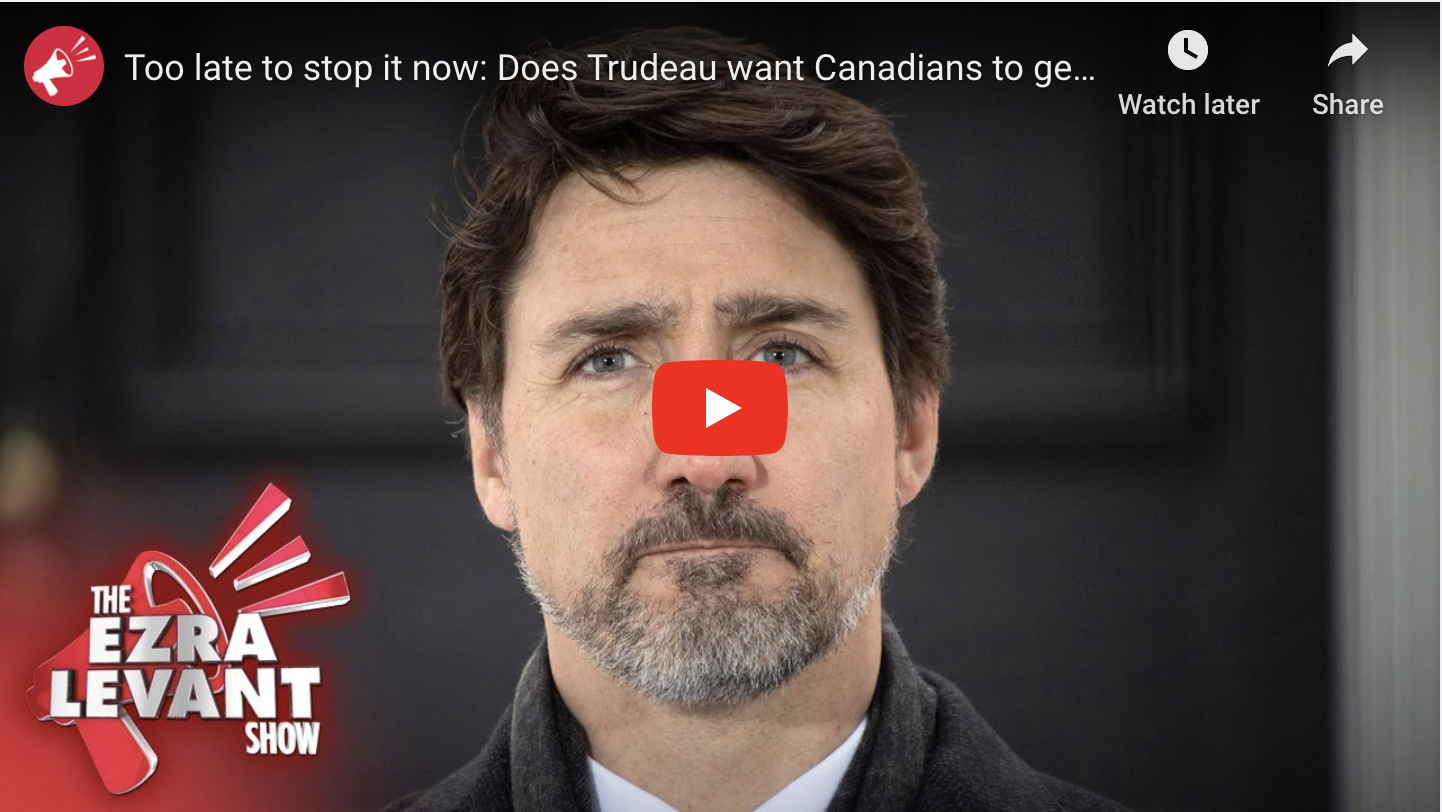
Rebel NewsPOLITICALLY CORRECT TRUDEAU’S RESPONSE TO THE WUHAN VIRUS — ILLEGALS CONTINUE TO STREAM ACROSS THE BORDER AT ROXHAM ROAD & CHINESE CONTINUE TO POUR IN FROM ASIA

Posted on by

Rebel NewsPOLITICALLY CORRECT TRUDEAU’S RESPONSE TO THE WUHAN VIRUS — ILLEGALS CONTINUE TO STREAM ACROSS THE BORDER AT ROXHAM ROAD & CHINESE CONTINUE TO POUR IN FROM ASIA
 
POLITICALLY CORRECT TRUDEAU’S RESPONSE TO THE WUHAN VIRUS — ILLEGALS CONTINUE TO STREAM ACROSS THE BORDER AT ROXHAM ROAD & CHINESE CONTINUE TO POUR IN FROM ASIA

Canada is supposed to be on lock-down because of the global coronavirus pandemic — but did you know that unvetted flights are still arriving from China, we are doing less screening than at airports in Pakistan, and mask-wearing illegals are just walking into Canada at the Roxham Road checkpoint?

Justin Trudeau and his health minister Patty Hajdu are just so bad, so slow, so indecisive, so incompetent, I can’t understand it. It’s almost as if they want Canada to become infected by the coronavirus. But you wouldn’t know it if you only trusted the Trudeau-friendly mainstream media to deliver the news.

Well, at Rebel News, we’re still working tirelessly to tell the other side of the story. In this extended highlight from my nightly show, The Ezra Levant Show — I have two exceptional clips to show you today — I have dissected the early timeline and spread of the novel coronavirus and tracked it right down to Trudeau’s fake entry ban — check it out:

And in this second extended highlight from my show, expert analyst and lawyer Manny Montenegrino called in from his home in Ottawa to discuss if victims can actually sue China for its gross negligence in unleashing a deadly pandemic on the world. I think Manny is on the money, and you won’t want to miss it!

So, what do you think? Do you want to see more of myself and Manny? If so, you’ll just have to become a subscriber of Rebel News Plus.

We don’t receive billions of dollars per year to pay for our journalism like the CBC, so we have to rely on our generous viewers to keep going, and offering Rebel News Plus subscriptions is a fantastic way for you to support our work.

As a subscriber, you will receive premium access to all of our shows, such as The Ezra Levant Show, The Gunn Show with Sheila Gunn Reid, and Rebel Roundup with David Menzies.

If you’re in self-isolation and you’re looking for something to help pass the time, I can’t think of a better fix — and it’s only $8/month or $80/year!

Click here to su

“Watch Paul Fromm On COVID-19 & Seniors!

Posted on by
“Watch Paul Fromm On COVID-19 & Seniors!” on YouTube
PAUL AND HAMILTON LILY ALTERNATIVE FORUM
https://youtu.be/r189h3Riq5A With Hamilton Lily.