Professor Frances Widdowson and the aboriginal industry. She exposes the deception of the216 graves supposedly detected at the former Kamloops Residential School. Professor Widdowson received the George Jonas Free Speech Award from the Justice Centre for Constitutional Freedom this past June in Toronto.
Blog Archives
I AM ISRAEL
I never miss a chance to claim victimhood while inflicting violence.
In 1947, the United Nations handed me more than half of someone else’s land, a gift I didn’t earn, from colonial powers who didn’t own it. I accepted.
My neighbors objected. I called it war, and in the chaos, I began my cleansing. Over 700,000 Palestinians were driven from their homes—some fled, yes, but many were forced out at gunpoint, their villages razed, their names erased.

Then I planted pine trees over the ruins to hide the memory. Forests where homes once stood. Parks over cemeteries. I made it green so the world wouldn’t see the black underneath. I called it “reforestation.” They called it erasure.
I am Israel. I have never chosen peace only dominance.
In 1967, I launched a pre-emptive war and seized Gaza, the West Bank, East Jerusalem, the Golan Heights, and Sinai. I claimed it was for security.
I held onto it for power. I built settlements, one by one, choking Palestinian towns. International law said it was illegal, I ignored it. My map grew. Their freedom shrank.
I am Israel. I could have ended the occupation. Many times. But I ALWAYS said NO!
In 2000, at Camp David, I offered a patchwork of disconnected enclaves surrounded by walls, checkpoints, and soldiers. I called it peace. Palestinians walked away. I called them extremists. Then I built a wall, not on my border, but deep in theirs.
I called it security. They called it theft.
I am Israel. I glorify militarism. I raise children to believe they are chosen.
My textbooks erase Palestine. My soldiers patrol streets with rifles pointed at teenagers. My media justifies bombings. My politicians joke about flattening Gaza. I send airstrikes to refugee camps, schools, and hospitals. Then I say they were human shields.
I am Israel. I elected Netanyahu. Again and again.
Not once, by mistake, but knowingly, I voted for leaders who vowed to crush the Palestinians, to expand settlements, to NEVER allow a Palestinian state.
My ministers speak of “the Arabs” as a demographic threat. My settlers burn olive trees. My mobs chant “Death to Arabs.” I call it patriotism.
I am Israel. I speak of democracy but deny it to millions under my control.
I rule over millions who cannot vote in the country that controls their lives. I build roads they cannot drive on. I issue permits for them to breathe, to move, to live. I bomb Gaza, then seal it off and say it’s their fault. I say I left Gaza, but I control its air, sea, and borders.
I say they are free…. then I starve them.
I am Israel. I demand recognition but give none in return.
I demand that Palestinians accept me as a Jewish state, while refusing to even say the word “Nakba.”
I ignore the homes, lands, and history of those I displaced. I hold their keys in museums, not their hands. I deny the refugees their right to return.
I make laws that call them “absentees,” even when they’re just over the hill.
I am Israel. I cry antisemitism, when what I fear is truth and accountability.
I call any critic a hater. I blur the line between Judaism and Zionism, using one to shield the crimes of the other.
I weaponize history to excuse apartheid. I manipulate trauma to justify conquest. I say “Never again” but let it happen to others, by my own hand.
I am Israel. I will never be secure.
The whole world agrees that Israel is not a state, but rather an organized terrorist organization supported by the American government.

Clear cut anti-White discrimination and you pay for it at the taxpayer-funded Canadian Broadcasting Corporation (CBC). They’ll gorge themselves on White male taxpayers’ money but won’t give them a job.

[This history of internment camps ignores the fact that patriotic pro-fascists like John Ross Taylor, Adrien Arcand and others were interned simply for their non-violent political views. As well, even the Mayor of Montreal Camelien Houde was interned for opposing conscription.]
Canada Post Unveils New Stamp
by Aarjavee RaajOpens – July 18, 2025 Friday
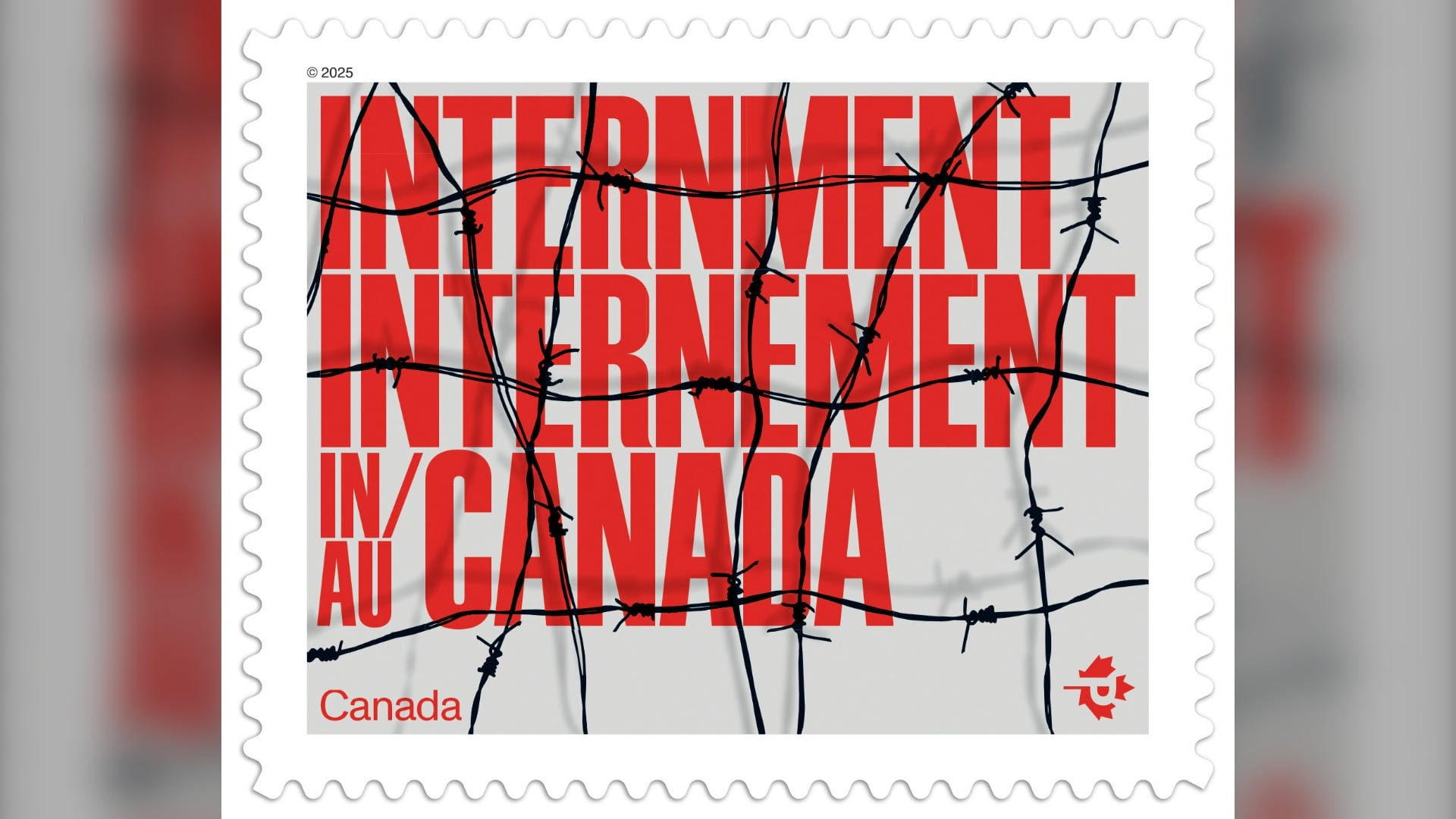
Canada Post unveils new stamps as a tribute to the civilian internment camps during the World Wars. (Canada Post)
A new stamp unveiled by Canada Post on Thursday pays tribute to the history of civilian internment in Canada during both the First and Second World Wars.
The Canadian government carried out large-scale internment drives during both wars when the War Measures Act was invoked, according to The Canadian Encyclopedia.
In their press release announcing the new stamp, Canada Post says thousands of people were interned in camps across Canada under the guise of national security.
“Canada Post hopes today’s stamp issue will raise awareness about this history and the resilience of the people and communities whose lives were profoundly affected by this forced displacement, confinement and hardship,” the statement said.
The stamp has vertical, bilingual text in red behind barbed wires, creating the visual of a fence, which Canada Post states “captures the gloom and fear of Canada’s internment camps.”
Recounting camps during the wars
The War Measures Act was invoked for the first time during the First World War on Aug. 22, 1914, ending on Jan. 10, 1920, according to the national encyclopedia states. This act empowered the federal cabinet to suspend any civil liberties and impose laws without the approval of Parliament.
According to the news release, more than 8,500 men – including more than 5,000 Ukrainians, people from the Austro-Hungarian Empire, Croats, Czechs, Hungarians, Jews, Poles, Romanians, Serbs, Slovaks, Slovenes, people from the Ottoman Empire, including Armenians and Turks, the German Empire and the Kingdom of Bulgaria, were held at these internment camps during this time. More than 200 women and children chose to voluntarily join their male relatives in internment.
An additional 80,000 people, the majority of whom were from Ukraine, were made to register as “enemy aliens,” the news release said.
“People experiencing homelessness and unemployment, conscientious objectors and members of outlawed political groups, especially socialists, were also interned,” the release said, adding that detainees were put to work on labour-intensive projects in harsh conditions, which made them vulnerable to disease, injuries and death.
More than 100 people died during this time and many were buried in unmarked graves, the news release recounts.
The War Measures Act was invoked a second time shortly before the beginning of the Second World War, on Aug. 25, 1939, and later replaced by similar legislation on Dec. 31, 1945, the online publication reads. More than 40 internment camps held over 20,000 people, out of which around 26 camps were in Ontario, Quebec, Alberta and New Brunswick.
People targeted during the Second World War included Germans, Italians, Jews, Japanese, members of the outlawed organizations in Canada and labour leaders.
The War Measures Act was repealed in 1988 and replaced by the Emergencies Act, which does not allow the cabinet to act on its own during a national emergency.
“It also reminds us of our responsibility to learn from the past,” Canada Post said.
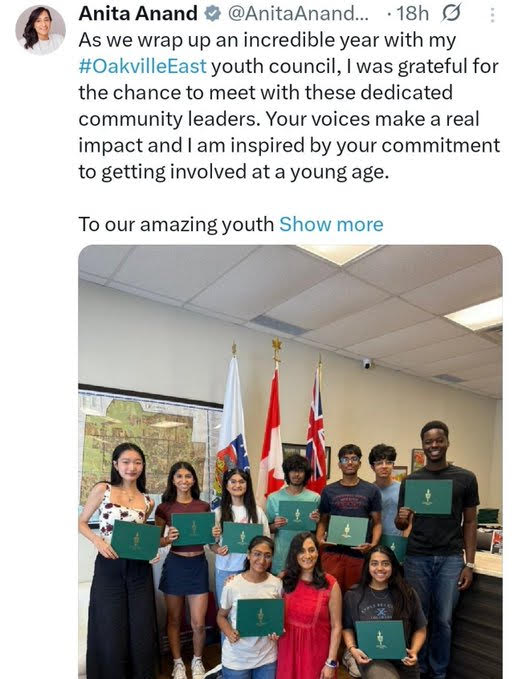
So, Foreign Affairs Minister Anita Anand, are there no White kids left in Oakville? Has Liberal government’s decades long scheme to replace Canada’s European founding/settler people achieved full success?
Toronto police identify 14-year-old wanted for murder in stabbing of Shahnaz Pestonji
Posted July 18, 2025 5:43 pm.
Last Updated July 18, 2025 6:40 pm.
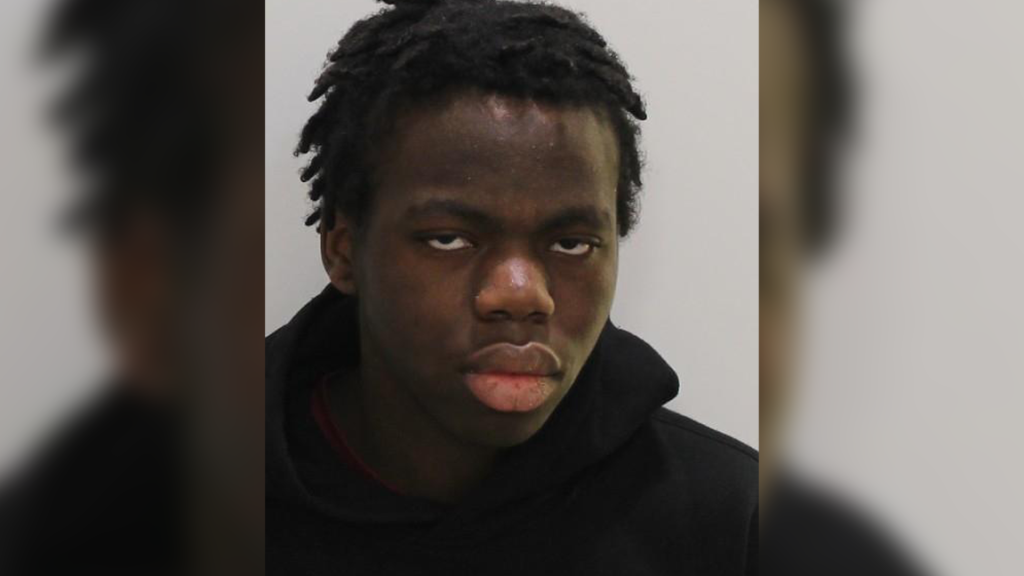
Toronto police are searching for a 14-year-old young offender in connection with the fatal stabbing of a 71-year-old woman in North York.
Investigators say Shahnaz Pestonji had just finished buying groceries in the Parkway Forest Drive and Sheppard Avenue East area near Don Mills Road and was loading them into her vehicle when she was attacked just after 9:30 a.m. on Thursday.
Pestonji was rushed to a local trauma centre, where she was later pronounced dead.
“We now believe this was a robbery that escalated into a deadly attack,” said Det. Matthew Pinfold on Friday.
Police say 14-year-old Kymani Wint of Toronto is wanted for second-degree murder.
Police have obtained judicial authorization to identify Wint, which will expire on Wednesday, July 23, at 4:00 p.m.
Wint is described as approximately five-feet-seven, 135 pounds with a skinny build, wearing black pants, a black hooded sweatshirt with “New York – 555” written on the front in white lettering. He was last seen wearing a balaclava-style face covering with his hood up, and carrying a black satchel.
Related:
Pinfold says Wint is known to move around the city using the TTC and was last seen around noon on Thursday at Kennedy Station.
“Since the homicide took place, police have conducted an extensive search – canvassing door-to-door, using canine units and drones, and reviewing surveillance footage from the area – and we continue to follow every investigative lead,” said Pinfold.
“We believe this individual is dangerous, and the public should not approach him.”
Pinfold urged Kymani to turn himself in, adding, “We are actively looking for you and we will find you.”
Shelley Carroll, the city councillor who represents the area, said she was “heartbroken” to learn about the attack.
“This is a devastating and senseless act of violence, and my thoughts are with her family, friends, and everyone in the community who has been shaken by this tragedy,” she said in a statement shared on social media.
Carroll said support was available for local residents and businesses impacted by the “violent” and “traumatic” incident.
Indians Win With Anti-White Discrimination in the Canadian Job Market
chttps://youtu.be/DUvGPXfokwA?si=JAL_ghGGlDSX30x
What’s his immigration status?
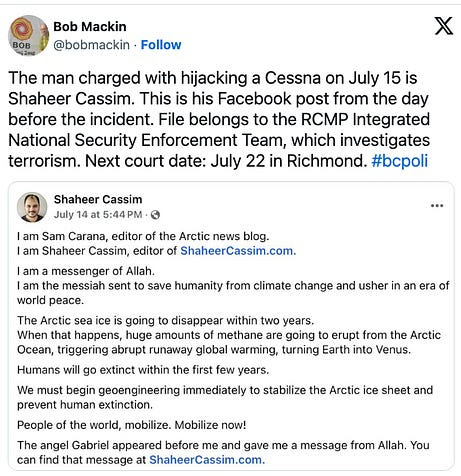
| Forwarded this email? Subscribe here for more‘CLIMATE ACTIVIST’ citing ‘Allah’ charged with TERRORISM in B.C. airplane hijacking Accused Shaheer Cassim allegedly referred to himself as a “messenger of Allah” and “the messiah sent to save humanity from climate change” Quinn Patrick, True NorthJul 17∙Guest post READ IN APP Shaheer Cassim/FacebookU.S. fighter jets were called to Vancouver International Airport after a small plane was allegedly hijacked by a climate activist in Victoria before it flew in circles around the airport for nearly half an hour.The man who allegedly seized the Cessna 172 aircraft in Victoria on Tuesday has been charged with hijacking and terrorism offences The pilot is believed to be a former commercial airline pilot based in Victoria named Shaheer Cassim, who had previously been involved in climate activism.In 2012, Cassim held a news conference in Victoria at the start of a cross-country bicycle trek to raise awareness of global warming.Shortly thereafter, Cassim posted to Facebook claiming that he was a “messenger from Allah” and that “humans will go extinct within a few years.”The post further stated: “I am the messiah sent to save humanity from climate change and usher in a new era of world peace.”Police in Richmond received a report that the small plane “had been hijacked” and was on its way to Vancouver around 1 p.m. Vancouver air-traffic control first mentioned a “rogue aircraft” around the same time, asking nearby aircraft to watch for the Cessna and relay to controllers should they need to “manoeuvre as necessary.” The incident resulted in what the Vancouver airport called a 39-minute “ground stop” for arrivals.The RCMP have yet to disclose any potential motive in the incident, but a Vancouver air traffic controller was recorded suggesting the alleged hijacking appeared to be “some type of protest.”Flight radar showed the Cessna flew straight to Vancouver’s airport from Victoria before circling the area for about 25 minutes.The U.S. fighter jets were still en route to the Canadian airport when the Cessna landed. The jets responded from Washington State’s Joint Base Lewis-McChord base, while Canadian CF-18 Hornets also responded.The U.S. base is part of the North American Aerospace Defence Command’s western air defence sector and is home to personnel from the Washington Air National Guard, the Royal Canadian Air Force and the United States Navy. Canada’s CF-18 Hornets were coming from Canadian Forces Base Cold Lake in northern Alberta.Some CF-18s are also based at Canadian Forces Base Bagotville in Saguenay, Quebec.The aircraft landed at YVR around 1:45 p.m. Social media videos and photos show a swarm of police closing in on the plane as it comes to a halt before the pilot, who appeared to be Cassim, exited the aircraft. |