Blog Archives
Traitor Mark Carney Apologizes for the Komagata Maru: No Apology Needed: These Sikh Illegals Deserved Deportation
May 23 was the 112th anniversary of the expulsion of the Komagata Maru, a Japanese ship commissioned by Sikh radicals in Vancouver to sneak about 376 of their countrymen into Canada. A determined Dominion government, largely relying on information from immigration officer William Hopkinson, eventually declared the invaders unwelcome and sent them packing. Sikh radicals over the past few decades have sold a false tale and successive politicians — Harper, Trudeau and now Carney — have apologized. The Sikhs have collected grovelling apologies and lots of money. The government even helped fund a recent film glorifying Mewa Singh the radical Sikh who assassinated William Hopkinson in the summer of 1914.
Hopkinson is a real Canadian hero. No apology needed.
Here is Mark Carney’s shameful apology: ” The Komagata Maru tragedy is one of the darkest chapters in our history — a moment where Canada failed to uphold our values, with horrific consequences. Today, we honour the memory of all the passengers, their descendants, and their communities who suffered.” The only one who suffered was William Hopkinson, a gifted linguist and undercover agent, who was assassinated and Hopkinson’s widow and two young daughters.Great video by Harrison Faulkner on the Komagata Maru. .
https://x.com/i/status/2058312402886959525
Here’s a broadcast I did on the Komagata Maru 18 years ago.
https://youtu.be/8Fu9l-h1SBY?si=7wwztNeMwyK6yv1-Paul FrommDirector Canada First Immigration Reform Committee
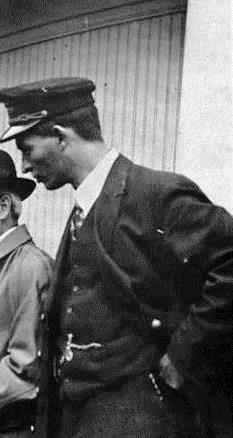
William Hopkinson, a real Canadian Hero.

Hands Off Our Heritage Rally in Hamilton
Today we rallied in Gage Park (Hamilton, ON) where radical activists tore down a statue of Sir John A Macdonald back in 2021.
Canadians will no longer stand idly by while out of touch elites and radical activists tear down our monuments, rename our institutions and rewrite our history.
We’re getting organized, we’re getting active, and we will take our country back
Nathaniel-Erskine Smith: He Chose Moslems Over Traditional Canadians: The Moslems Chose One of Their Own Over Him — Serves Him Right
East End Toronto MP, Nathaniel Erskine-Smith has bowed and scraped to Moslems for years. An X post shows him in various Moslem garb explaining how he backed an anti-free speech bill on Islamophobia. “For over a decade, I’ve shown up for the Muslim community not just at election time, but in Ottawa. I’m running to bring that same advocacy to Queen’s Park.” Nathaniel Erskine-Smith
He was seeking the Liberal nomination in the provincial by-election in Scarborough South-west. He’s trying to lay the ground work for a run at the Provincial Liberal Leadership. A Moslem Bangladeshi pizza chain owner in good with the pooh bahs of the Provincial Liberal Party beat an angry Erskine-Smith by 19 votes. He’s crying foul. Apparently, many voters had no ID — an epidemic of forgetting them at home. Many took pictures of their ballots on their cellphones — suggesting pay for votes. Well, Nathaniel or “Nate” or would-be-Mohammed, that’s politics Third World style, which you and your treacherous party imported into Canada. SERVES YOU RIGHT!
That’s Erskine-Smith the dude in the blue, a real man of the people, just not OUR people. Well, he threw is his lot with them, and they threw this scalawag out!

That’s Erskine-Smith the dude in the blue, a real man of the people, just not OUR people. Well, he threw is his lot with them, and they threw this scalawag out!
Earworm Kars4Kids ad banned in California. Here’s why

16 May 2026
A long-running charity ad campaign familiar to Canadians for its catchy Kars4Kids jingle will no longer play in California after a court found it violates false advertising laws.
The popular ad shows children singing the tune while playing musical instruments and asking people to donate their cars.
In 2021, however, California cabinetmaker Bruce Puterbaugh, who is in his 70s, filed a lawsuit after donating a 2001 Volvo XC worth $250 US. Puterbaugh claims he was under the impression the charity helped “underprivileged kids from all over the U.S,” according to court documents.
Those documents show it wasn’t until later that he learned the main purpose of Kars4Kids is not helping local disadvantaged children but instead funding a Jewish organization called Oorah.
In his decision earlier this month, Judge Gassia Apkarian of the Superior Court of California noted
Oorah’s programs include “matchmaking for young adults and gap year trips to Israel for 17 and 18-yearolds.”
Kars4Kids gets failing grade from charity watchdog
Similar ads are also running in Canada, and have been for years. That’s a red flag for one Toronto-based charity watchdog.
Charity Intelligence Canada gave Kars4Kids its sole one-star rating, meaning it found failures on multiple issues, including reporting to donors about how their money helped.
“It’s a fail when it comes to transparency,” said Kate Bahen, the managing director. “You have better giving options.”
Wendy Kirwan, Kars4Kids’ director of public relations, did not respond when asked whether any of the proceeds raised in Canada go to help Canadian children.
But according to Kars4Kids Canada’s website, the entity is also part of Oorah Charitable Organization, a non-profit Jewish group. Oorah is listed as a registered charity with the Canada Revenue Agency.
Canadian tax filings show the organization transferred $12.6 million to the U.S. and Israel in the fiscal year ending May 31, 2025 – the most recent data available for projects such as the Texas Torah Institute and the Cincinnati Hebrew Day School.
Oorah’s CRA filings show $19 million in expenditures in 2024-25 fiscal year, including $3.7 million on advertising and promotion.
The law and the facts are clearly on our side.”- Wendy Kirwan, Kars4Kids’ director of public relations
In an emailed statement to CBC News, Kirwan said Kars4Kids Canada is a separate organization from the one in the United States.
But regarding the California ruling, she added that “the decision is deeply flawed, ignores the facts, and misapplies the law. Kars4Kids expects to win on appeal because the law and the facts are clearly on our side.(CBC, May 16, 2026)


No Wonder Auto Insurance Rates Are So High in Brampton
Yet another gift of “diversity”.

Love Bringing “Diversity” of Business Morals to Canada
Law firm founded by former Brampton MP Raj Grewal connected to multi-million dollar fraud investigation
Joel Wittnebel • May 13 at 8:00 PM
A pair of court cases with alarming allegations of fraud involving an allegedly improper land sale and millions of dollars in fake cheques led to Scotiabank freezing accounts belonging to a Brampton law firm founded by former MP Raj Grewal, plunging at least one local family into chaos, tying up $714,000 dollars the firm was supposed to transfer for the mortgage on a home.
The accounts of several numbered Ontario and Canadian companies have also been frozen in relation to the matters which are before the Ontario Superior Court of Justice.
The Pointer is investigating the names linked to the allegations of wrongdoing outlined in court documents, including the individuals behind the numbered companies.
One of the cases involves allegations that Grewal’s firm, which represented a seller in a property transaction last year, failed to transfer the funds to the company that had provided a mortgage to RSG’s client after the property was sold.
When a court injunction was requested by the company that had provided the mortgage, WIGI (a real estate management company), Justice Fred Myers granted the injunction, writing, “I can think of no honest or honourable reason for the mortgagor, its management, owners, and counsel to think they could take advantage of what had to be an error and ignore the VTB (Vendor Take Back mortgage) that they knew and acknowledged had to be paid out using the proceeds of sale of the secured land.”
He continued, addressing the entities RSG represented in the transaction: “On the evidence before me, the mortgagor and its directors have assets in Ontario. I infer from their seemingly intentional and dishonest scheme that there is a serious risk they will dissipate the proceeds of sale referable to the plaintiff’s VTB security.”
Grewal is a former Brampton MP who resigned in 2019 after he publicly declared a gambling addiction had led to “significant personal debts”. In September 2020 Grewal was charged by the RCMP with fraud and breach of trust during his time as an MP. In March 2023, Grewal was found not guilty of using his MP position to solicit loans to cover his debts, but the case exposed his disturbing behaviour while serving as an elected official and frequenting an Ottawa casino, when he said a gambling addiction influenced many bad decisions.
Grewal is not named in any of the court documents The Pointer reviewed. He did not respond to questions sent this week.
Nitan Waryah, a Brampton resident, told The Pointer a $714,000 transfer from his lawyer to RSG was made on April 15 for a real estate transaction, but it remains frozen in the RSG account after Scotiabank locked the law firm’s trust account, tying up much of his parents’ life savings.
On Friday, May 8, he was given assurances by Grewal personally that he would deal with the matter. In the same breath, during the same phone conversation, Grewal claimed to Waryah that he had sold RSG Law two years ago and is no longer involved in the day-to-day operations.
Then, two days later, on Sunday May 10, Grewal called Waryah, reassuring him the matter would be resolved by the coming Friday, May 15.
The firm name, RSG, stands for Rajvinder Singh Grewal, the former MP’s full name.
Waryah questions why Grewal would tell him he has nothing to do with RSG Law anymore.
“If that was the case, why would he be the one calling me, assuring me he would be the one to take care of it by Friday?” Waryah said.
Grewal did not respond this week when asked about his status with RSG.
Lawyers for RSG declined to comment on the specifics of the allegations made in the court filings as the matters are still going through the judicial process, but claimed the transactions responsible for freezing the company’s account “did not originate with RSG or its clients”.
“(Scotiabank) has traced funds from those transactions and has alleged that some of the funds may have ended up with RSG in connection with different transactions, which RSG had no reason to doubt were legitimate,” Simon Bieber, a lawyer with Adair Goldblatt Bieber LLP, explained in a statement on behalf of RSG. “There does not appear to be any sort of allegation by BNS (Scotiabank) that RSG was involved in any misconduct and RSG has instead been caught up in an unfortunate set of circumstances.”
Bieber also declined to comment on Grewal’s current relationship to RSG, the law firm he founded. When The Pointer followed up on those questions, Bieber said he would not be answering because “there is nothing to address.”
“None of the Court proceedings have anything to do with Mr. Grewal, there are no allegations about him and that you’ve raised questions about Mr. Grewal (when none of the parties have) is concerning. I need to be absolutely clear that any reporting that impugns the reputation of Mr. (Davinder) Khattra [a lawyer with RSG], Mr. Grewal or RSG Law will attract a response. I have cautioned about statements that are potentially defamatory and reiterate that now.”
In a paid article that appeared in the Toronto Star this past July, Grewal represented himself as RSG’s leader. Describing the unique business model of RSG Law, the sponsored article, published July 15 2025, reported this was “Raj Grewal’s vision for RSG Law.” It later includes a quote by Grewal: “We aim to be the last law firm a client ever needs.”
As recently as December, the RSG website featured an image of Grewal and described him as the company’s principal lawyer.
Sometime prior to the end of January, Grewal’s name and image were removed from the RSG website, months after the property sale involving WIGI in June of 2025, which triggered the company’s eventual legal action against RSG.
Grewal is also listed as the President of RSG Group, a separate entity from RSG Law, which shares the same address in Mississauga.
Google Reviews of RSG Law, some posted as recently as two months ago, mention Grewal by name, and thank him for his work.
On Wednesday, May 13, Waryah wrote his own Google Review outlining his current situation and uploaded the court documents to the review detailing the allegations against RSG and the injunctions filed against it. Immediately after he posted his negative review and linked the court documents a series of five star reviews appeared for RSG which included similar wording and praise for the company.
Then, earlier today, on May 14, it appears RSG Law deleted its Google account or stopped sharing its reviews publicly as they have all now vanished from the search engine.
Nitan Waryah says Raj Grewal told him he sold RSG Law two years ago and is no longer involved in the day-to-day operations. Google reviews captured this week, in May, from as recently as two months ago suggest Grewal was still working at RSG.
As recently as December, the RSG website featured an image of Grewal and labelled him as the company’s principal lawyer.
Grewal is also listed as the President of RSG Group, a separate entity from RSG Law, but one that shares the same address in Mississauga.
Raj Grewal is listed as the President of RSG Group, which shares the same Mississauga address as RSG Law.
The Pointer confirmed that Grewal told Nitan Waryah this week that he is no longer involved with RSG Law, but his claim was confusing as it came during the same conversation when Grewal assured Waryah that the matter involving RSG would be personally handled and resolved by him this week.
Grewal did not respond to emails or questions left at his office.
According to court documents, on April 23, WIGI Restructured Bond Corporation, was granted an injunction to have bank accounts of RSG, three officials of an Ontario numbered company, and other third parties, frozen after a piece of land on which it held a $3.6 million mortgage was sold in June last year (WIGI had owned the property previously then provided the mortgage to the entity that purchased it from the real estate company). When the entity later sold the property it failed to pay off the remaining balance owing to WIGI.
The location of the land is not mentioned in the court document. It was sold to a numbered company in 2022 that had received a Vendor Take Back (VTB) mortgage from WIGI, an agreement that sees the seller of the land act as a lender.
RSG represented the seller that was supposed to pay back the mortgage amount to WIGI. RSG never transferred the amount. It’s unclear if the funds were ever made available to RSG.
According to the court documents, Davinder Khattra, a lawyer with RSG, committed to WIGI in March 2025 that the mortgage funds would be paid out by mid-June. Then in May, Khattra said the payout would be pushed to September 2025.
According to the court records, the land was sold in June without notifying WIGI and the funds to pay off the WIGI mortgage were never sent.
In granting the injunction requested by WIGI, Justice Myers said he could think of “no honest or honourable reason” the transaction was carried out the way it was, labelling it a “seemingly intentional and dishonest scheme.”
“(WIGI) submits as soon as the directors of the mortgagor and their counsel decided to proceed with a sale without recognizing the VTB, that they had already acknowledged recently to the plaintiff, they made the mortgagor single purpose company an instrument of their fraudulent design. While it is not clear what purpose they had to ask to extend the date of the VTB to September, a suspicious person might suggest that they were buying time to deflect attention and perhaps move the money,” Justice Myers wrote in his court order.
As part of the injunction granted by Justice Myers, RSG and the other companies involved were ordered to provide information about the land deal and how the mortgage would be repaid within 48 hours of the order on April 23, last month. This did not happen.
After a hearing on May 1, Justice Myers described the lack of action as “unusual and, frankly, quite troubling”.
RSG is named as one of the defendants.
“None of the defendants have yet to provide any of the information required of them under the court’s order…I am very concerned that the law firm has yet to provide any of the information sought. It has not confirmed if it froze any of its trust funds as ordered. It has not disclosed what it did with the funds it received that ought to have been referrable to the plaintiff’s mortgage. It has let days go by for funds to be moved again if someone were inclined to do so,” Justice Myers wrote. “No one put in any evidence today. There was not even a one-line denial of liability or explanation.”
In a decision on May 4, Justice Myers reported that RSG provided documents showing how the money from the land sale had been paid out to the numbered company and several other entities.
With the information, Justice Myers ruled the injunction should be extended beyond the normal 10-day period due to the seriousness of the allegations.
“The Plaintiff has established a strong prima facie case against the lawyers in conspiracy, conversion and knowledge receipt, if not deceit,” Justice Myers ruled. “Given the strong appearance of dishonesty in this case, it is just and convenient to hold funds presumptively subject to proof that they are trust funds belonging to others.”
When asked whether further documents have been provided to the courts following the May 4 order, Bieber, the lawyer representing RSG, said the firm is “addressing each of the matters before the Court with the parties to the proceeding and in compliance with the Court orders.”
While the WIGI case continued to unfold without a resolution, RSG was connected to a separate injunction requesting its accounts be frozen.
On April 28, Scotiabank requested a court order against RSG and several other numbered companies after millions of dollars in fraudulent cheques were issued, two of them ending up in the accounts of RSG.
The fake cheques originated with Brampton law firm Rajkiran Sidhu Law Professional Corporation (RSL), which deposited three cheques worth $6,095,000 into a trust account at the Bank of Nova Scotia on April 14. The Pointer was unable to contact RSL. A reporter visited two addresses listed as the headquarters of RSL, but neither were occupied by the company.
The cheques were immediately flagged by the bank as this was “out of keeping with the ‘usual’ pace of activity in this trust account for a sole practitioner,” the court order details.
A lawyer for Scotiabank declined to comment.
The cheques had the appearance of legitimacy with encoding and a watermark banner, but further investigation on April 15 by Scotiabank and TD, where the cheques originated, revealed they were drawn from fake accounts and two of the businesses named on them did not exist.
“TD advised the same day that it had no record of any accounts matching the accounts upon which the cheques had purportedly been drawn. The cheques were completely fraudulent,” the April 28 injunction details.
Through a series of wire transfers and deposits, some of the proceeds of the fraudulent cheques ended up in the accounts of RSG.
The injunction requested by Scotiabank makes no allegations of wrongdoing against RSG. Bieber says RSG had no reason to doubt the transactions were fraudulent.
The RSL money was immediately wired to five different entities. Two of these allegedly then transferred the funds to RSG.
On April 14, $1,414,000 was transferred from RSL to a numbered company. The same day, RSG deposited a cheque of an almost identical value ($1,410,000) from the same numbered company.
Also on April 14, RSL wired $2.6 million to another Ontario numbered company. The next day, the same company deposited $1,947,000 into the RSG Scotiabank account.
According to the injunction request by Scotiabank, RSG provided redacted documents “purporting to show” that the money from the first transaction was used to fund a loan from a borrower whose name was not disclosed.
“No continuing activity in the RSG trust appears to show the advance of such funds to the unknown borrower,” the court order by Justice Sean Dunphy of the Ontario Superior Court of Justice reports. “The Applicant (Scotiabank) has not yet recovered these funds nor received information from RSG sufficient to determine what portion, if any of the funds in the RSG trust account may be traced to the RSL wire transfer of the proceeds of the fraudulent cheques”.
While accepting the injunction and freezing the accounts of RSG and RSL, Justice Dunphy made no determination of wrongdoing.
“RSL’s trust account was clearly the instrument of fraud whether knowingly or otherwise,” his ruling highlights.
Nitan Waryah and his family are stuck in the middle of the ongoing legal saga. On the same day the fraudulent cheques were being dispersed, Waryah was closing on the sale of his parents home.
“My dad recently went blind due to some health challenges and my parents could no longer afford to own the house they are living in. I was buying my parents house and they were going to move into a smaller space and rent it as it’s easier for my dad to move around due to him being blind,” he told The Pointer in an email.
RSG was representing his parents in the sale, and it seems when Nitan Waryah sent the $714,000 for the purchase of the home, the money was soon frozen inside the accounts of RSG. It has left his parents paying the $514,000 mortgage, preventing them from receiving the $200,000 profit from the sale and Nitan is now paying a separate $840,000 mortgage on the same property.
Bieber says RSG is working to rectify all the issues and ensure the Waryah family receives their money.
After repeated assurances from Grewal himself, which went nowhere, and claims that he isn’t even involved with the law firm that bears his initials, Nitan is now taking matters into his own hands.
“I’ve filed a police report and retained a lawyer now to try and get our money back.”
Email: joel.wittnebel@thepointer.com