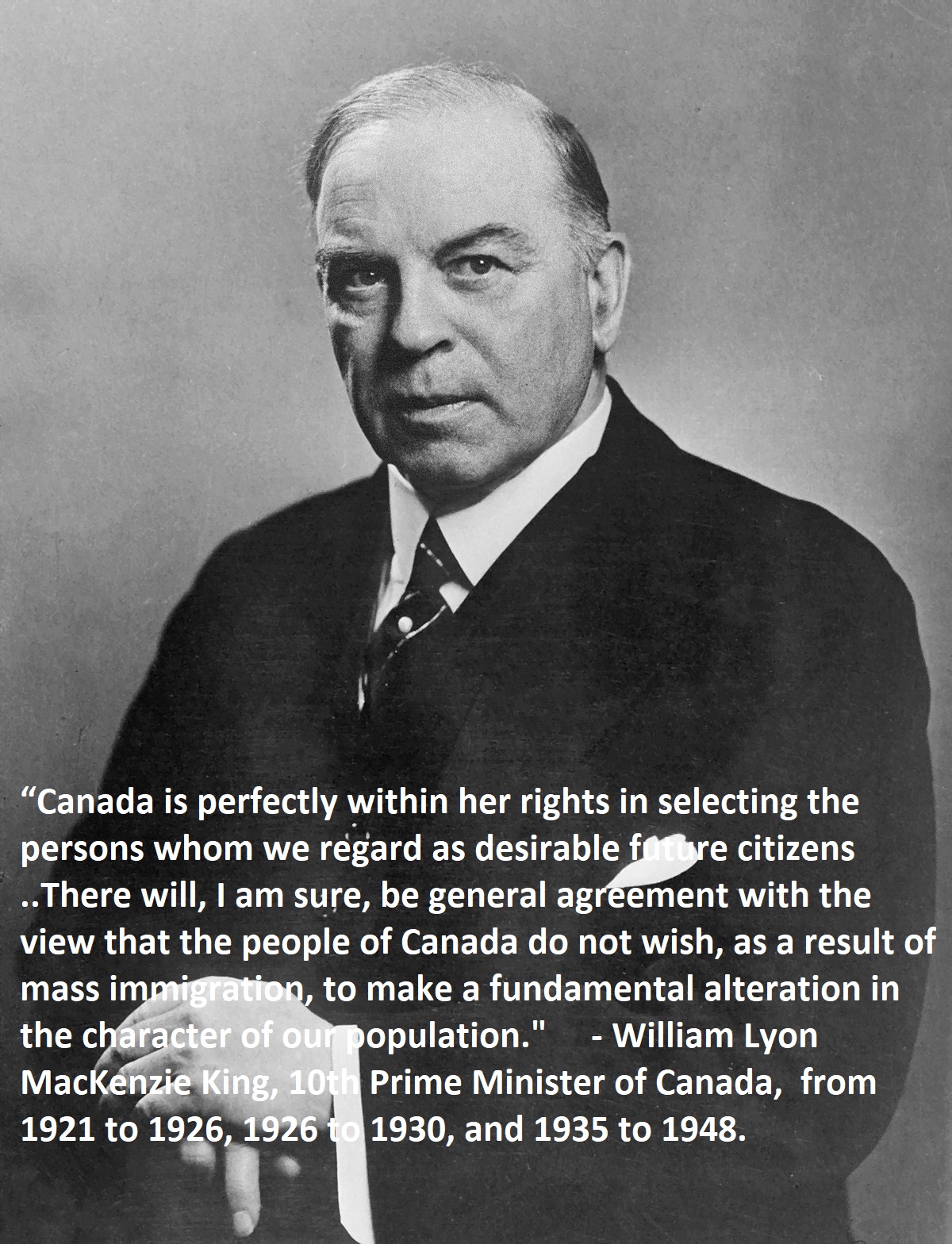
Canada’s Housing Crisis — It’s Immigration, Stupid!
National Post (August 11, 2023) below lays out all the figures. The cause of Canada’s horrific housing crisis and the lack of affordability is not some deep mystery. It’s Trudeau’s invasion level immigration intake, now approaching half a million a year — that’s a city almost the size of Hamilton, Ontario (537,000) EVERY year. But that’s not all. Almost another half million foreign bodies — international students and temporary (often not so temporary) foreign workers need rental housing. Yet, Trudeau pal, Marc Miller, the new Immigration Minister shows no sign of reducing the numbers, even in face of the housing shortage. The Bible (Proverbs 26:11) notes: “As a dog returneth to his vomit, so the fool returns to his folly.” CIC News (August 9. 2023) reported: ” “I don’t see a world in which we lower [immigration targets], the need is too great … whether we revise them upwards or not is something that I have to look at but certainly, I don’t think [we will] lower them.” According to Miller, immigration is not the reason that Canada is facing housing supply challenges across the country. Therefore, Miller takes issue with the fact that immigrants are often blamed for taking away homes from Canadians and causing housing inflation”. Ontario Premier Ford, in the midst of a scandal for selling off portions of the Province’s Green Space for housing, pleaded that Ontario will grow by adding the size of two Torontos — roughly 5.4-million people — in the next decade, almost all immigrants. Yet, foolish Ford does not blame the federal government’s immigration policies — Paul Fromm
Foreign student surge adds to housing crisis
- National Post
- 11 Aug 2023
- Bryan Passifiume

Record numbers of international students coming to Canada is making the already inflated cost of housing worse, said Steve Pomeroy, a policy research consultant and senior research fellow at Carleton University’s centre for urban research.
The biggest strain on Canada’s housing market, he said, isn’t only the rising rate of permanent residents, with more than 400,000 permanent residents in 2022, and the Liberal government determined to hit 500,000 a year in the next couple of years. Those coming here seeking temporary residence, either temporary foreign workers or international students, are fuelling rental price increases.
“Temporary foreign workers and students are going to be renters, as opposed to owners,” he said.
Average rents nationally jumped more than 10 per cent last year and are expected to rise again this year, although rents in hotter markets, such as Toronto and Vancouver, are up significantly more.
Data released earlier this year by Immigration, Refugees and Citizenship Canada (IRCC) show 807,750 international students with valid student visas studying at Canadian post-secondary institutions as of the end of 2022.
At 30 per cent higher than the 617,315 students in 2021, it’s now at the highest level it’s ever been.
With the exception of 2020, where numbers were impacted by the COVID-19 pandemic, Canada’s complement of international students historically saw between six to nine per cent growth annually.
Pomeroy said universities are driving the numbers as a way to generate more revenue, because they can charge international students much higher tuitions.
“In Ontario, university tuition fees are frozen, grants are frozen, but the only variable that universities have to generate new revenues is international students, so they naturally go and chase those,” he said.
More visiting students, he said, create inordinate demand at the very bottom of the rental market, where there’s already a tight market for low-income workers, fixed-income seniors and those who rely on social assistance.
Benjie Rustia, an official with an international immigration and study agency located near the Philippine capital of Manila, said his international-student clients know that coming here means fighting
fighting a tight entry level rental market.
“They are well informed by their relatives or friends in Canada,” he told the National Post.
“Making informed decisions is the basic aspect for the process for international students, and are based on thorough research and understanding.”
Late last month, news of an international student from India found living under an east Toronto bridge brought attention to the problem, and highlighted concerns from advocates that Canada’s affordability crisis is rendering increasing numbers of foreign students homeless.
Most international students coming to Canada flock to Ontario, which in 2022 saw more than 411,000 foreign students enrolled in the province’s post-secondary institutions.
British Columbia ranked second with 164,000 students last year, followed by Quebec with 93,000, Alberta with 43,000 and Manitoba with 22,000.
While India’s 319,130 international students rank as Canada’s biggest cohort, followed by China with 100,075, the Philippines is seeing big bumps in the number of their students coming here.
Canada issued 25,295 study permits to Filipino students to study here in 2022, a 76 per cent increase from the 14,355 visas issued to students from that country in 2021.
As of June 2023, 11,400 permits were issued to students from the Philippines.
Rustia said his clients typically search for schools that offer on-campus residence living or look for schools near where they can stay with friends and relatives already in the area.
News reports on Wednesday described long wait-lists for on-campus housing at Calgary universities, with 740 students waiting for housing at the University of Calgary, and the city’s Mount Royal University establishing a waiting list for their 950 dorm rooms for the first time in the school’s history.
Solving this problem, Pomeroy said, could be done by striking partnerships between schools, governments and developers.
“If the government was smart, it would say ‘OK, we’re causing the problem by giving out these visas to international students, how can we solve this problem,’” he said.
“Let’s work with the universities, let’s work with the private developers for some incentives and stimulus.”
He suggested using existing programs, such as the Canada Mortgage and Housing Corporation’s rental construction financing initiative — which provides low-cost loans to encourage rental apartment projects — to encourage student-centred rental construction to keep the pressure off local residential rental markets.
A statement to the National Post from Universities Canada, a post-secondary institution lobby group, agreed the federal government should be doing more to address the issue.
“Solving the housing crisis will require collaboration among all levels of government, and universities remain willing partners in these efforts,” wrote interim president Philip Landon.
Canada’s universities, he wrote, are doing more to approve and build more on-campus housing, as well as provide resources to help students access off-campus living space, as well as developing “innovative housing models” to relieve local rental market pressures.
Emails to Immigration Minister Marc Miller went unacknowledged.
Tom Kmiec, the Conservative party’s immigration and citizenship critic, said that the current government’s housing and immigration policies are leaving newcomers on the streets.
“More homes were being built in 1972 when Canada’s population was half of what it is today,” he said in a statement.
“The Liberal government has failed to deliver on their housing promises and failed to come anywhere close to building the number of houses we need, leaving Canada short millions of homes and Canadians struggling to afford a place to live.”
a tight entry level rental market.
“They are well informed by their relatives or friends in Canada,” he told the National Post.
“Making informed decisions is the basic aspect for the process for international students, and are based on thorough research and understanding.”
Late last month, news of an international student from India found living under an east Toronto bridge brought attention to the problem, and highlighted concerns from advocates that Canada’s affordability crisis is rendering increasing numbers of foreign students homeless.